
AI Video Trends 2025: 7 Shifts Reshaping Brand Marketing
By 2026, 75% of marketing videos will be AI-generated. Learn the 7 AI video trends transforming brand content—from digital avatars to instant multilingual localization.
TL;DR: By 2026, 75% of marketing videos will be AI-generated or AI-assisted. The biggest AI video trends 2025 include AI avatars replacing traditional filming, personalized video at scale, multilingual localization with lip-sync, and shoppable video driving direct conversions—all achievable in minutes, not weeks.
The way brands create video content is undergoing a structural shift. According to industry research, 87% of creative professionals now use AI tools for video creation, with 66% using them weekly. This isn't a future prediction—it's happening right now.
For e-commerce merchants, marketing teams, and content creators, understanding the key AI video trends 2025 isn't optional. It's the difference between spending weeks on a single product video and generating dozens of localized versions in an afternoon. Let's break down the seven trends reshaping brand video marketing and how you can act on each one.
AI-Generated Video Becomes the Default
The first major shift: AI video production is no longer experimental. Tools like Google's Veo 3 and OpenAI's Sora have crossed the quality threshold where AI-generated content is indistinguishable from traditionally produced video in many contexts.
What does this mean practically? A cross-border e-commerce seller can now input a product URL and receive a ready-to-use video ad in minutes. No filming. No editing suite. No production team.
The Cost Equation Has Flipped
Traditional corporate video costs $1,000-$5,000 per finished minute and takes weeks to produce. Research from Zebracat shows that 63% of businesses using AI video tools reduce production costs by approximately 58%. More importantly, production time drops from weeks to minutes.
Quality Has Caught Up
Early AI video suffered from the "uncanny valley"—awkward movements, inconsistent lighting, robotic delivery. The 2025 generation of tools has largely solved these problems. Animations now include natural movements and appropriate emotional responses. For talking-head content and product demos, the quality gap has closed.
AI Avatars Replace Traditional Filming
One of the most practical AI video trends 2025 is the rise of AI avatars and digital presenters. According to industry data, AI-generated avatars appear in 36% of brand-produced videos, and that number is climbing fast.

Executive Stand-Ins Save Calendar Time
Imagine your VP of Sales records themselves once. From that single session, L&D teams generate dozens of personalized training videos using that avatar—without ever booking their calendar again. This is already happening in corporate communications and training departments.
With AI avatar and voice cloning tools, brands can create consistent spokesperson content across campaigns without coordinating shoots or managing talent availability.
Voice Cloning Enables Authenticity at Scale
AI-generated voiceovers now appear in 58% of marketing videos. The difference from earlier versions: modern voice cloning captures tone, pacing, and emotional inflection. A founder can record once and have that same authentic voice deliver hundreds of video variations.
Personalized Video at Scale
Nearly half (45%) of companies identify personalized videos as the biggest trend heading into 2026. The reason is simple: over 55% of consumers prefer personalized AI-generated videos over generic content.
From One Video to Fifty Versions
The real breakthrough isn't just personalization—it's personalization without proportional effort. One CEO town hall becomes 50 department-specific versions with relevant examples spliced in. One product demo becomes 200 variations tailored to different customer segments.
Platforms offering AI video ads now enable batch generation: input your product, define your audience segments, and generate tailored creatives automatically.
Dynamic Content for Dynamic Audiences
Text-to-video platforms help over 62% of marketers cut content creation time by more than half. The workflow has shifted: instead of producing one polished video, teams now produce dozens of targeted versions and let performance data guide optimization.
Multilingual Localization Goes Mainstream
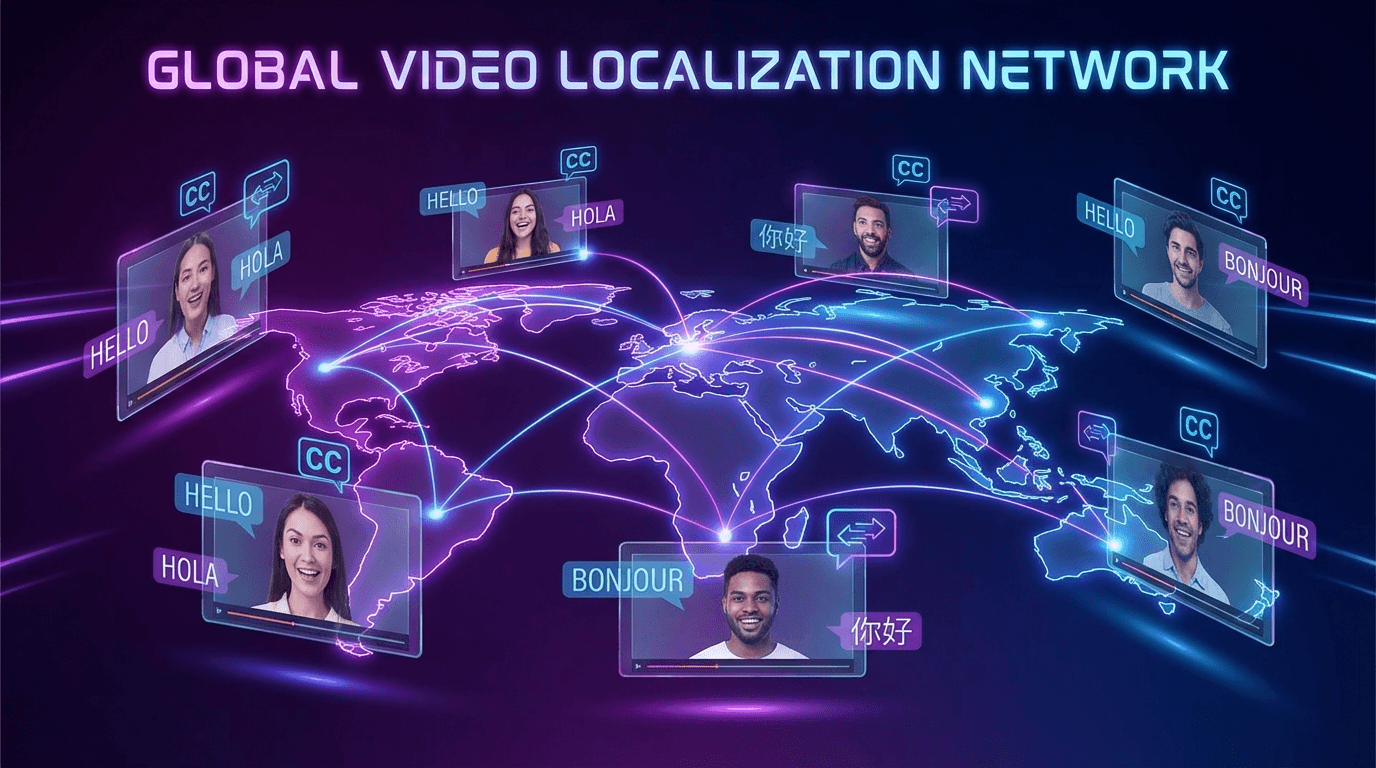
For cross-border e-commerce, this trend is transformative. Video localization used to require separate productions for each market—different voice talent, new subtitle sessions, manual lip-sync adjustments. AI has collapsed this entire workflow.
Lip-Sync Translation Changes the Game
Modern video translation and dubbing tools don't just swap audio tracks. They adjust lip movements to match the new language, creating a natural viewing experience. A product video shot in English can reach Japanese, German, and Portuguese markets with authentic-looking localized versions.
70+ Languages, One Production
Platforms now support 70+ languages with 178 dialects. For Amazon, Shopify, or eBay sellers targeting multiple regions, this means one product shoot becomes a complete global content library. The time investment is identical whether you're localizing to 3 markets or 30.
Tip: When localizing video for e-commerce, prioritize markets based on existing traffic data. Start with your top 3 international traffic sources and expand based on conversion rates.
Shoppable Video Drives Direct Conversions
Interactive and shoppable video transforms passive viewers into active buyers. In-app checkout, live shopping, and clickable product tags have removed friction from the path to purchase.

Short-Form Shoppable Content Converts
Research shows short-form interactive videos can boost sales and conversions by up to 80%. The format works because 55% of consumers watch videos before making purchases. Meeting them with shoppable content at that decision point shortens the sales cycle.
URL to Video for E-Commerce
Tools that convert product URL to video automatically have become essential for e-commerce operations. Input your Amazon, Shopify, or Etsy listing URL; receive a product video ready for TikTok, YouTube Shorts, or Instagram Reels.
This capability is particularly valuable for sellers managing large catalogs. Generating individual videos for hundreds of SKUs manually is impractical. Automated URL-to-video conversion makes comprehensive video coverage achievable.
AI-UGC Hybrid Content Emerges
The most disruptive content trend combines user-generated content authenticity with AI scalability. A customer-created video can be optimized, captioned, and translated at scale—extending reach without losing the authentic feel that drives engagement.
Authenticity as a Differentiator
The content that builds trust now often looks less polished, not more. A founder talking directly to camera about a real challenge, shot on their phone with zero editing, outperforms slick corporate productions in many contexts.
AI Enhances Without Replacing
The winning formula: capture authentic moments, then use AI to optimize distribution. AI handles captions, translations, format adaptations, and A/B testing variations. Humans provide the story, personality, and genuine connection that can't be automated.
Video Becomes a Measurable Marketing Channel
The final shift: video is no longer a brand awareness black box. Modern video platforms incorporate performance analytics into every project—views, retention rates, click-through rates, heatmaps, and A/B testing for voiceover options and CTA placement.
Data-Driven Optimization
82% of online video platforms now use AI analytics to track engagement, suggest improvements, and optimize content in real-time. This means brands can treat video like any other performance marketing channel, with clear metrics and continuous optimization.
Batch Generation Enables Testing
When producing video takes weeks, testing is impractical. When AI enables minute-level production, brands can generate multiple versions, test them against each other, and iterate based on performance data. The feedback loop that drives improvement in other channels now applies to video.
Frequently Asked Questions
What percentage of marketing videos will be AI-generated by 2026?
Industry projections estimate 75% of marketing videos will be AI-generated or AI-assisted by 2026, representing a structural shift from experimental adoption to standard practice.
How much can AI video tools reduce production costs?
Research indicates businesses using AI video tools reduce average production costs by approximately 58% compared to traditional methods, with the most significant savings in time—from weeks to minutes for finished content.
Can AI video maintain brand consistency across multiple languages?
Modern AI video platforms support 70+ languages with lip-sync technology that adjusts mouth movements to match dubbed audio. Combined with voice cloning that preserves brand spokesperson characteristics, brands can maintain consistent identity across global markets.
Are AI avatars replacing human presenters entirely?
AI avatars are replacing traditional filming for specific use cases—particularly repetitive content like training videos, product updates, and localized versions. Human presenters remain valuable for high-stakes content requiring genuine emotional connection, but AI avatars handle the scaling.
Conclusion
The AI video trends 2025 represent more than incremental improvements. They're a fundamental restructuring of how brands create, localize, and distribute video content. The brands gaining competitive advantage aren't waiting—they're implementing AI video workflows that enable minute-level production, 70+ language localization, and personalized content at scale.
For e-commerce merchants and marketing teams, the practical question isn't whether to adopt these tools, but how quickly you can integrate them into existing workflows. The gap between brands using AI video and those still relying on traditional production will only widen.
