
How to Translate Video to Spanish with AI
AI-powered video translation to Spanish delivers professional results in minutes. This complete tutorial covers transcription, dubbing, lip-sync, and subtitle generation.
TL;DR: Translating videos to Spanish with AI takes minutes, not weeks. Upload your video, select Spanish as your target language, and AI handles transcription, translation, dubbing, and lip-sync automatically. Modern platforms support 70+ languages with natural voice cloning and subtitle generation.
Breaking into Spanish-speaking markets shouldn't require hiring translation agencies or professional voice actors. With over 460 million native Spanish speakers worldwide, video localization opens massive opportunities for e-commerce sellers, content creators, and businesses expanding internationally.
AI-powered video translation eliminates the traditional barriers of time, cost, and technical complexity. This guide walks you through the complete process of translating videos to Spanish using AI technology, from selecting the right tools to publishing your localized content.
Why Translate Video to Spanish
Spanish ranks as the second most spoken language globally by native speakers. Translating your video content to Spanish unlocks access to major markets across Spain, Latin America, and the United States, where Spanish is the second most common language.
Video localization drives measurable business results. According to research from Maestra, businesses that localize video content see significant increases in engagement and conversion rates among Spanish-speaking audiences. Subtitled and dubbed videos improve accessibility, increase watch time, and reduce bounce rates.
For cross-border e-commerce merchants, Spanish video translation enables product demonstrations and marketing materials to resonate with customers in their native language. Educational institutions use multilingual video to reach international students, while corporate teams deploy translated training materials across global offices.
How AI Video Translation Works
AI video translation combines speech recognition, neural translation, and voice synthesis into a streamlined workflow. The process starts with automatic speech recognition (ASR) technology that analyzes your video's audio track, converting spoken words to text transcripts. Advanced systems recognize multiple speakers and handle background noise.
Modern platforms like Keevx process transcription in real-time, delivering text transcripts within minutes. Neural machine translation engines then convert your source text to Spanish, understanding context, idioms, and cultural nuances beyond word-for-word substitution.
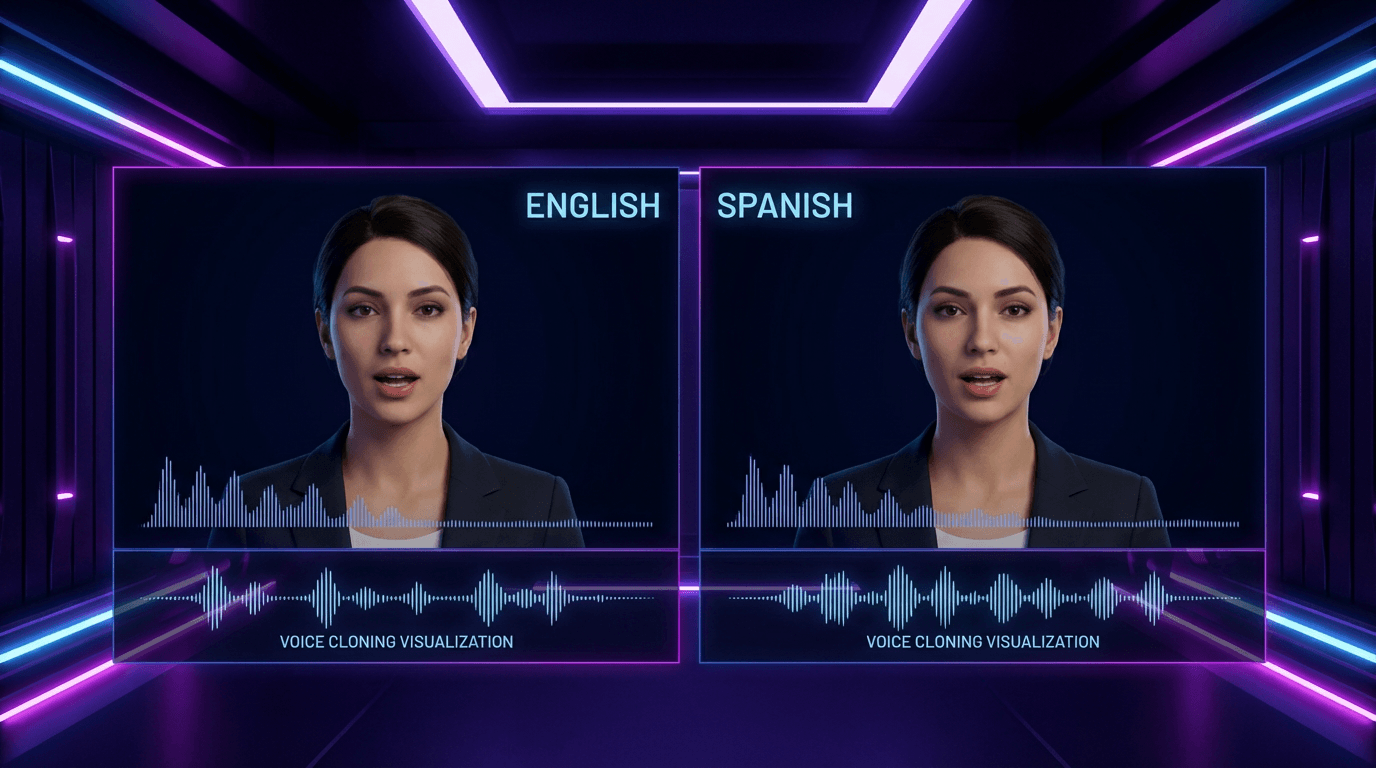
Finally, text-to-speech (TTS) technology generates Spanish audio. Premium tools offer voice cloning capabilities, maintaining your original speaker's vocal characteristics while speaking Spanish. This creates authentic dubbed versions that sound like the original presenter learned Spanish fluently.
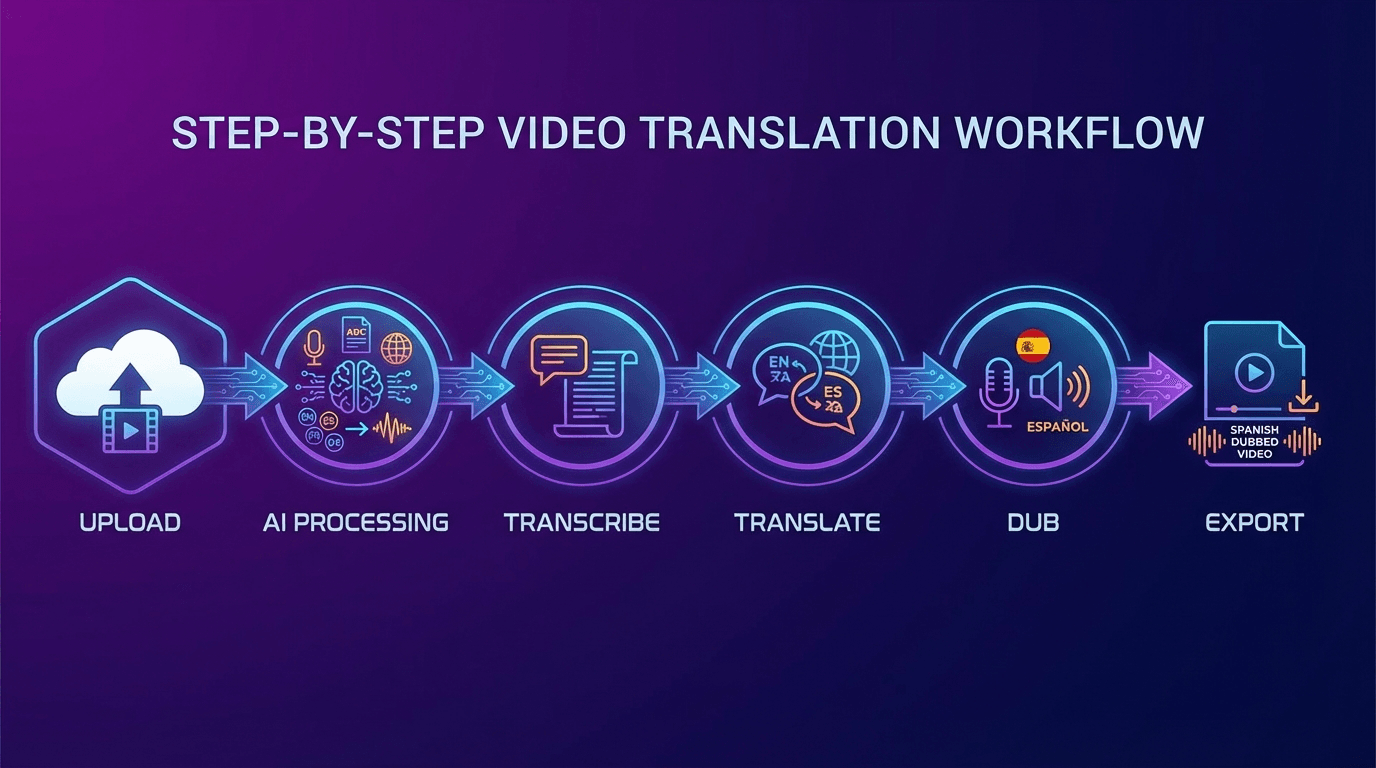
Step-by-Step Guide to Translate Video to Spanish
Follow this systematic process to translate your videos to Spanish using AI platforms.
Step 1: Select Your Video Translation Platform
Choose a platform based on your specific needs. Keevx stands out for e-commerce sellers with one-click URL-to-video conversion and supports 70+ languages with lip-sync capabilities. The platform integrates directly with Amazon, Shopify, eBay, and Etsy for seamless product video creation.
Other options include HeyGen for basic translation needs, Kapwing for free starter projects, and Descript for content creators requiring subtitle editing. Evaluate platforms based on voice quality, lip-sync accuracy, subtitle customization, and pricing structure.
Step 2: Upload and Configure Settings
Upload your video file (MP4, MOV, or AVI) directly from your device, paste YouTube URLs, or connect cloud storage. Select Spanish as your target language, choosing regional variants like European Spanish, Mexican Spanish, or other Latin American dialects based on your target audience.
Configure voice selection (AI voices or voice cloning), subtitle preferences, lip-sync options, and audio mixing to balance original background music with new Spanish voiceover.
Step 3: Review and Edit Translations
AI translation achieves high accuracy but benefits from human review. Most platforms provide transcript editors where you can refine translations before generating final audio. Review for brand terminology, technical terms, and cultural context. Add custom translation rules for product names or industry-specific vocabulary.
Step 4: Generate and Export Your Spanish Video
After confirming translations, generate your video. The platform processes dubbed audio, lip-sync adjustments, and subtitles. Export options include multiple quality settings (720p, 1080p, 4K), subtitle file formats (SRT, VTT), and platform-optimized versions for YouTube, TikTok, or Instagram.
Key Features to Look for in Translation Tools
Not all video translation platforms deliver equal results. Prioritize these capabilities when evaluating tools.
Natural Voice Quality and Cloning
Voice quality separates professional results from obviously AI-generated content. Voice cloning technology maintains your original speaker's unique vocal characteristics while speaking Spanish, creating continuity across multilingual content and strengthening brand consistency.
Accurate Lip-Sync Technology
Lip-sync capabilities synchronize mouth movements with translated audio. This technology proves critical for videos featuring on-camera speakers, as mismatched lip movements distract viewers. Advanced platforms handle complex scenarios including multiple speakers, profile angles, and rapid speech.
Batch Processing and Workflow Integration
Scale your translation efforts with batch processing capabilities. Upload multiple videos simultaneously and apply consistent translation settings across your entire content library. For e-commerce applications, Keevx's image-to-video features generate product demonstrations from existing product images, then translate them to Spanish in a single workflow.
Best Practices for Spanish Video Translation
Maximize translation quality and audience engagement with these proven strategies.
Prepare Your Source Content
Clean source audio significantly improves translation accuracy. Record in quiet environments, use quality microphones, and speak clearly at a moderate pace. Script-based content translates more accurately than improvised speech.
Understand Regional Spanish Variations
Spanish varies significantly across regions. Mexican Spanish differs from Castilian Spanish (Spain) in vocabulary, pronunciation, and expressions. Research your target market and select the appropriate Spanish variant. For broad Latin American reach, Mexican Spanish serves as a neutral option.
Maintain Brand Voice Consistency
Provide glossaries of brand terms, product names, and key phrases that require specific translations or should remain in English. Custom pronunciation guides ensure proper handling of technical terms and branded terminology.
Optimize for Platform Distribution
Different platforms favor different video specifications. YouTube prioritizes longer content with comprehensive subtitles, while TikTok demands short, attention-grabbing clips. AI video ads tools help optimize your Spanish videos for each distribution channel's unique requirements.
Common Use Cases for Spanish Video Translation
Spanish video translation serves diverse business objectives across industries.
E-Commerce Product Demonstrations
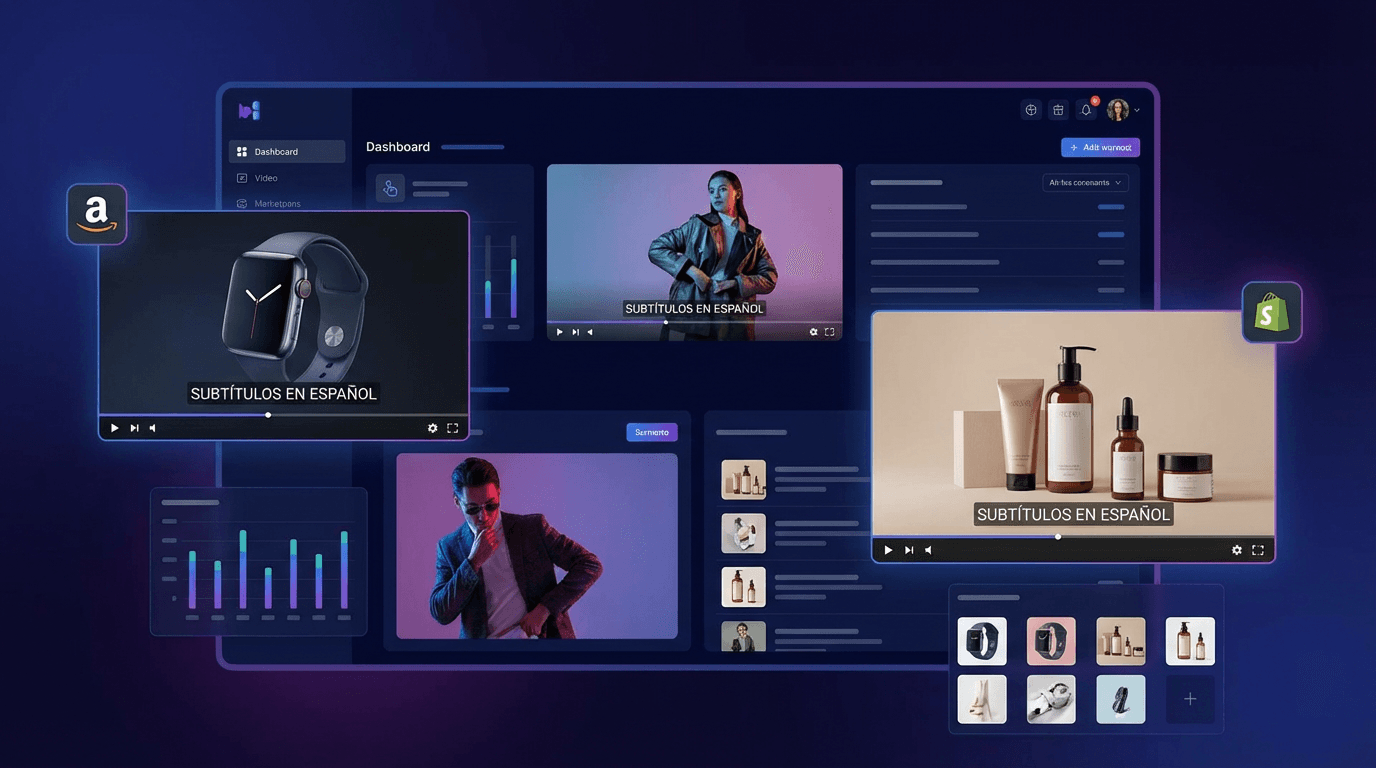
Online sellers use translated product videos to enter Spanish-speaking markets. Cross-border merchants on Amazon, eBay, Shopify, and Etsy deploy translated videos to improve conversion rates among Hispanic customers. Product features, assembly instructions, and unboxing videos all benefit from Spanish localization.
Marketing and Training Content
Brand awareness campaigns require localized messaging that resonates culturally. Social media ads, explainer videos, and promotional content achieve broader distribution when available in multiple languages. Corporate training departments localize onboarding materials and compliance training for Spanish-speaking employees.
Content Creator Monetization
YouTube creators, podcasters, and influencers grow their audiences by offering Spanish versions of popular content. Multi-language content increases discoverability through platform algorithms and expands potential sponsorship opportunities with brands targeting Hispanic markets.
Comparing Translation Methods
Three primary approaches exist for translating video to Spanish.
Subtitle-Only Translation represents the fastest and most cost-effective option. Viewers hear original English audio while reading Spanish text. Limitations include requiring continuous reading, which may reduce engagement.
Professional Voice Actor Dubbing delivers the highest quality results with natural emotion and perfect pronunciation. However, it requires significant time and budget, with production timelines extending to weeks or months.
AI-Powered Dubbing balances quality, speed, and cost. Modern platforms deliver near-professional results in minutes at a fraction of traditional dubbing costs. Video translation tools continue improving as AI models evolve.
Pricing and Platform Comparison
Video translation costs vary significantly across platforms. Several platforms offer free plans with limitations like watermarks and reduced quality. Kapwing provides free translation with watermarked output, while BlipCut offers 30 minutes of free translation monthly.
Most professional platforms operate on subscription models ranging from $20-$100 monthly depending on included minutes and advanced features. Keevx offers flexible pricing with low trial barriers, enabling cost-effective scaling. Some platforms charge per video ($0.50-$2.00 per minute), suiting occasional users.
Frequently Asked Questions
How long does it take to translate a video to Spanish with AI?
AI video translation typically processes videos in 2-5 minutes for standard 5-minute content. A 30-minute video might take 10-15 minutes total. Some platforms like Keevx deliver minute-level production with batch processing capabilities.
Can AI translation maintain the original speaker's voice?
Yes, voice cloning technology preserves the original speaker's vocal characteristics while speaking Spanish. Advanced platforms analyze voice patterns, tone, and speaking style to generate Spanish audio that sounds like the original person speaking fluently.
How accurate is AI video translation to Spanish?
Modern AI translation achieves 90-95% accuracy for clear audio with standard vocabulary. According to Kapwing, their system leverages GPT, Google, and DeepL for 99% translation accuracy. Most platforms provide transcript editors to review and correct translations before generating final audio.
Do I need to re-record my video to add Spanish translation?
No, AI translation works with your existing video files. Upload your completed English video, and the platform handles all translation, dubbing, and synchronization automatically.
How do I choose between different Spanish dialects?
Select your Spanish dialect based on your target audience geography. Mexican Spanish works well for general Latin American audiences and the United States Hispanic market. European Spanish (Castilian) suits Spain specifically. Research your primary market and test translations with native speakers.
Can I edit the Spanish translation after it's generated?
Yes, most platforms provide editing capabilities. Review generated transcripts and adjust translations before finalizing audio. Some tools allow post-generation edits requiring audio regeneration.
Conclusion
Translating videos to Spanish with AI delivers professional results in minutes without the cost and complexity of traditional localization methods. Modern platforms handle transcription, translation, voice synthesis, and lip-sync automatically, enabling businesses to expand into Spanish-speaking markets quickly.
Success requires choosing the right platform for your needs, preparing quality source content, and understanding regional Spanish variations. Whether you're an e-commerce merchant creating product videos, a content creator expanding your audience, or a business training global teams, AI video translation removes language barriers efficiently.
Ready to translate your videos to Spanish? Start Free Trial and create your first Spanish video in minutes with AI-powered translation, dubbing, and lip-sync technology.
