
Video SEO Tips: Optimize Your AI Videos for Search
Learn proven video SEO strategies to optimize AI-generated videos for search engines and AI-powered discovery tools. Increase visibility with technical quality, metadata, and smart distribution.
TL;DR: Video SEO optimization for AI-generated content requires strategic metadata, high-quality transcripts, and platform-specific distribution. Focus on technical quality (1080p+), structured data markup, and optimization for both traditional search engines and AI-powered discovery tools like ChatGPT and Google AI Overviews to maximize visibility.
AI-generated videos are revolutionizing content creation, enabling businesses to produce professional content in minutes without filming or editing expertise. However, creating compelling videos is only half the battle. Without proper video SEO optimization, your AI-generated content risks remaining invisible to your target audience.
According to recent research from Search Engine Land, more than 25% of Google search results now include video snippets, and YouTube citations appear in 78% of AI Overviews for product comparison searches. As AI-powered search tools like ChatGPT, Perplexity, and Google's AI Overviews reshape content discovery, understanding video SEO tips has become essential for marketers, e-commerce merchants, and content creators.
This comprehensive guide explores proven strategies to optimize your AI videos for search discovery, increase visibility across platforms, and drive meaningful engagement with your target audience.
Understanding the Video SEO Landscape in 2026
The video SEO environment has transformed dramatically with the rise of AI-powered search. Traditional optimization tactics remain important, but new considerations have emerged for content creators using platforms like Keevx to generate digital avatar videos at scale.
The Rise of AI-Powered Search Discovery
Large Language Models now actively index and cite video content. Research shows video content is 3.1x more likely to be cited than text in AI-generated responses. Your video optimization strategy must serve both traditional search algorithms and AI models that process multimodal content.
AI search tools analyze video transcripts, metadata, and visual elements for context. When users query ChatGPT or Google's AI Overview, these systems pull from indexed video content, making proper optimization critical for discovery.
YouTube as Core Search Infrastructure
YouTube has evolved from a social platform into essential search infrastructure. According to Search Engine Land, YouTube is no longer a peripheral channel for awareness campaigns but a structured, searchable data source that feeds directly into Google's most visible experiences.
This integration means YouTube optimization directly impacts your visibility in Google search results, AI Overviews, and video carousels. For businesses using AI video generation platforms, strategic YouTube distribution becomes a non-negotiable element of content strategy.
Technical Quality Requirements for Video SEO
Technical video specifications significantly impact both search engine indexing and AI model comprehension. Compromising on quality means compromising on discoverability.
Resolution and Visual Clarity
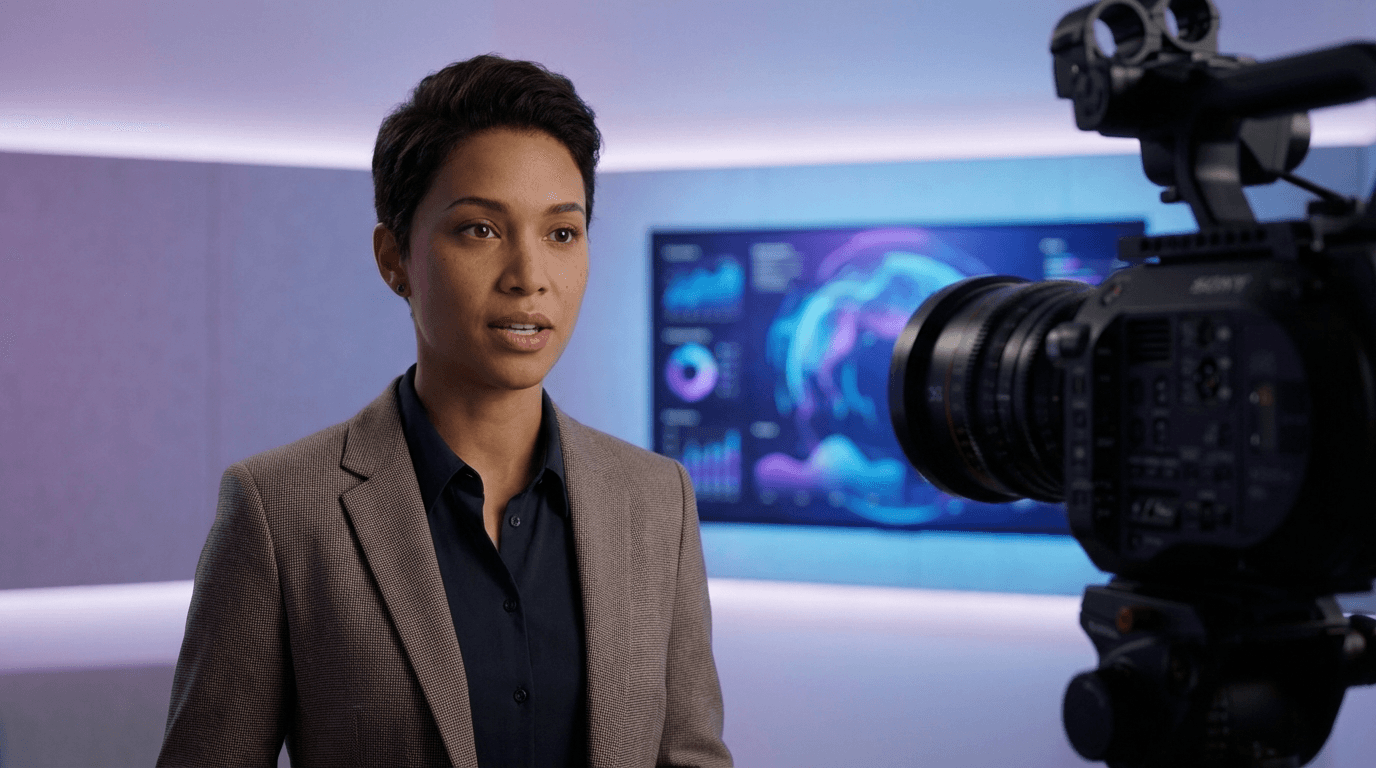
Avoid low-quality video as OCR accuracy degrades below 360p. Crisp 1080p video delivers optimal AI model processing. Visual clarity directly affects how AI tools extract meaning and index your content accurately.
Platforms like Keevx automatically generate studio-quality videos optimized for multiple platforms, removing technical barriers that prevent proper indexing.
Text and Typography Considerations
For on-screen text, use bold, simple fonts like Arial or Helvetica for machine readability. White text on black backgrounds provides 21:1 contrast ratio, making elements easily identifiable by viewers and AI analysis tools.
This matters for product demonstration videos where pricing or specifications appear on screen, ensuring search engines accurately extract and index information.
Mastering Metadata Optimization
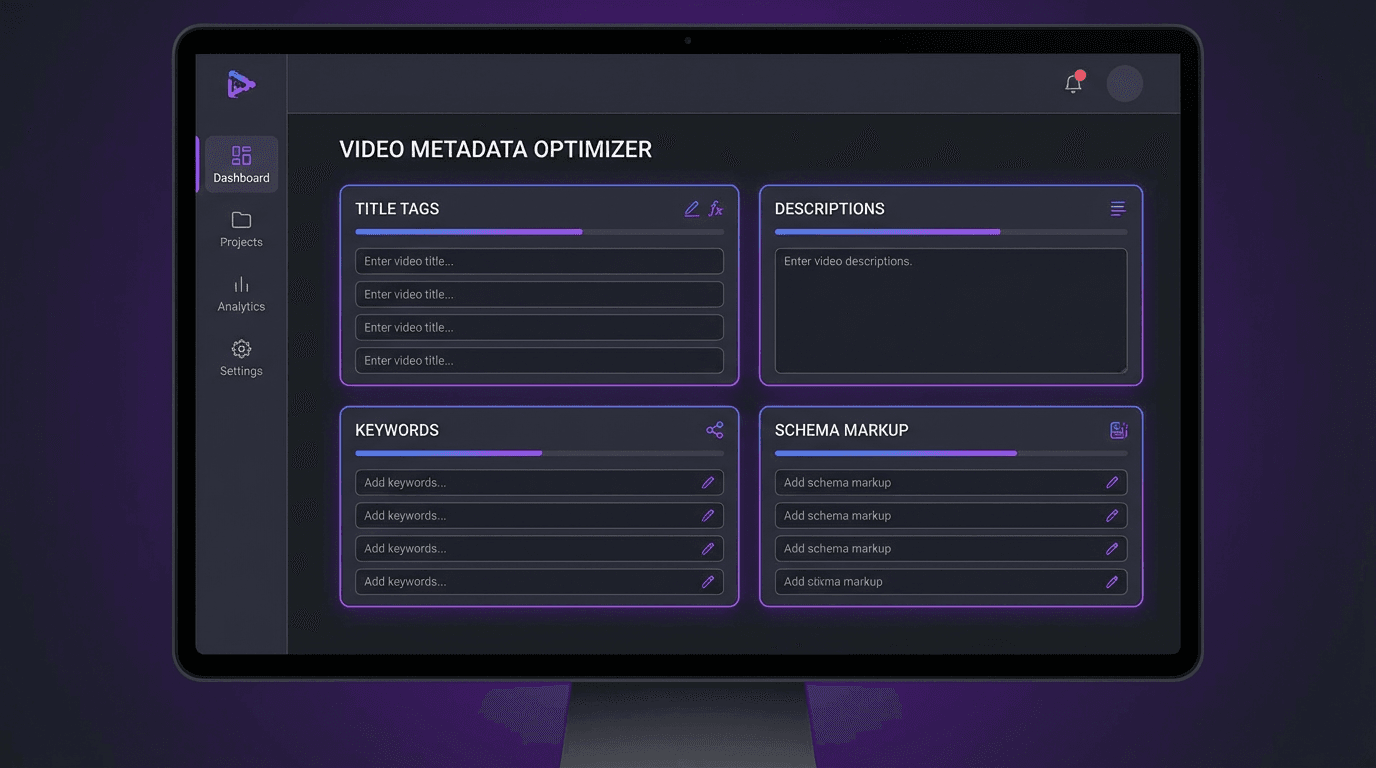
Metadata serves as the foundation of video SEO. Properly optimized titles, descriptions, and tags help search engines understand your content while matching user search intent.
Crafting Search-Intent Titles
Reframe titles as queries by moving away from branding-heavy phrasing toward language that mirrors user intent. Instead of "Company Product Demo Q1 2026," use "How to Automate Video Production with AI Avatars."
Research from Backlinko shows that keyword placement in titles remains a primary ranking factor. Include your target keyword naturally within the first 60 characters while maintaining readability and user appeal.
Strategic Description Writing
YouTube displays the first 125 characters of your description in search results, so front-load critical information and keywords. Use this prime real estate to compel clicks while incorporating relevant search terms.
Structure descriptions with:
- First 125 characters: Compelling summary with primary keyword
- Middle section: Detailed content overview with secondary keywords
- Final section: Links to resources, timestamps, and calls-to-action
Tag Strategy for Discoverability
While tags carry less weight than titles and descriptions, they still signal content relevance to search algorithms. Use a mix of specific and broad tags, including your primary keyword, related terms, and category descriptors.
Limit yourself to 5-10 highly relevant tags rather than stuffing dozens of tangentially related terms. Quality and relevance outweigh quantity in modern video SEO.
The Critical Role of Transcripts
Your transcript serves as the Rosetta Stone for your video, translating sights and sounds into plain text that AI models process most efficiently. Even advanced AI models are faster at reading text than watching video frame by frame.
Transcript Quality and Accuracy
Provide clean, human-verified transcripts in video descriptions or via closed caption files (SRT/VTT format). Auto-generated captions often contain errors that confuse search algorithms and reduce accessibility.
For multilingual video content, ensure transcripts are professionally translated rather than machine-translated. Search engines evaluate content quality across languages, and poor translations harm rankings in international markets.
Strategic Keyword Integration in Transcripts
While your AI avatar delivers scripted content, ensure your script naturally incorporates target keywords and semantic variations. Search engines analyze transcript content for relevance signals, making script optimization a crucial video SEO tip.
Tools like Keevx's ideas to video feature can help generate SEO-optimized scripts that naturally include target keywords while maintaining conversational flow appropriate for video content.
Implementing Structured Data and Schema Markup
Structured data helps search engines understand your video content and eligibility for rich snippets and featured placements in AI-enhanced search results.
Video Object Schema
Implement VideoObject schema markup on pages hosting your videos. According to Google's official documentation, this structured data should include:
- Video title and description
- Upload date and duration
- Thumbnail URL
- Content URL or embed URL
This markup makes your video eligible for video carousels, rich results, and enhanced display in search results.
Video Sitemap Implementation
A video sitemap helps Google find your videos faster and understand content details. Include metadata like video title, description, thumbnail URL, and play page location. Update sitemaps regularly as you publish new content to maintain indexing efficiency.
For businesses publishing videos at scale using AI video generation tools, automated sitemap generation ensures new content is promptly indexed without manual intervention.
Multi-Platform Distribution Strategy
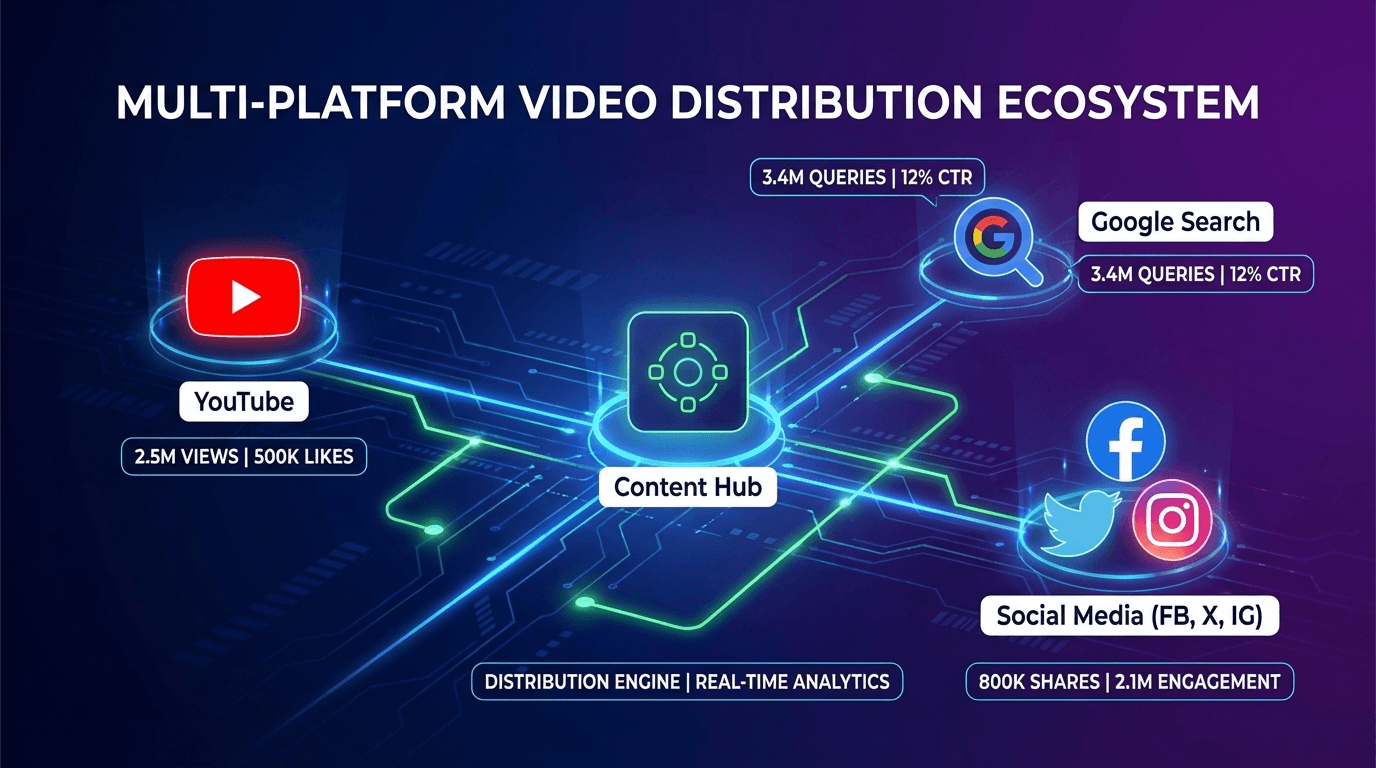
Strategic distribution across platforms where AI models actively scrape content maximizes discoverability and citation opportunities.
YouTube as Primary Distribution Hub
Publish all videos to YouTube first. The platform's integration with Google search and AI Overviews makes it the most important distribution channel for SEO purposes. Optimize each upload completely before moving to secondary platforms.
Website Embedding for SEO Benefits
Embed videos on your website to keep visitors engaged longer and reduce bounce rates. E-commerce merchants can create product videos from URLs and embed them on product pages to boost conversions while improving SEO performance.
LinkedIn for B2B Visibility
LinkedIn excels for B2B content distribution. Native video uploads often outperform external links, making direct uploads valuable for reaching executives and decision-makers.
Optimizing for Multilingual Markets
For international audiences, multilingual video optimization drives significant growth. Videos with multilingual subtitles see higher engagement from global viewers. Professional video translation and dubbing with lip-sync maintains viewer experience while expanding reach.
Research keywords in target languages rather than translating English terms directly. Search behavior varies by region, so conduct independent keyword research for each market to match actual search demand.
Measuring Video SEO Performance
Track essential metrics to understand what drives results. Monitor impressions, click-through rate, watch time, engagement rate, and traffic sources through YouTube Analytics and Google Search Console.
Test different titles, thumbnails, and descriptions systematically. According to Backlinko, custom thumbnails dramatically impact click-through rates. Change one element at a time to isolate performance drivers and apply learnings to future content.
Frequently Asked Questions
What is video SEO and why does it matter?
Video SEO is the process of optimizing video content to rank higher in search engine results pages and AI-powered discovery tools. It matters because proper optimization increases visibility, drives traffic, and helps your content get cited by AI search platforms, leading to higher audience reach and engagement.
How long does it take for video SEO to show results?
Video SEO results typically appear within 2-4 weeks for YouTube and 4-8 weeks for Google search results. However, timing varies based on competition, content quality, and optimization thoroughness. Consistent optimization and regular content publishing accelerate results.
Do I need different SEO strategies for AI-generated videos?
AI-generated videos require the same core SEO principles as traditionally filmed content, but with additional emphasis on transcript quality, technical specifications, and structured data. The content source matters less than optimization execution and distribution strategy.
What's more important: YouTube SEO or website video SEO?
Both are important and complementary. YouTube SEO provides access to the platform's massive audience and Google integration, while website video SEO improves page performance, user engagement, and direct conversion opportunities. Implement both for maximum impact.
How do transcripts improve video SEO?
Transcripts provide searchable text content that search engines and AI models can easily index and analyze. They improve accessibility, enable keyword optimization, and help algorithms understand video content context and relevance, significantly boosting discoverability.
Conclusion
Video SEO optimization combines technical excellence, strategic metadata, and smart distribution to maximize your content's discoverability. As AI-powered search tools reshape content discovery, optimizing for both traditional algorithms and Large Language Models becomes essential.
For businesses creating content at scale with AI video generation platforms, implementing these video SEO tips ensures your investment in content creation translates into measurable visibility and engagement results. Focus on technical quality, comprehensive metadata, accurate transcripts, and strategic multi-platform distribution to stay ahead in the evolving video SEO landscape.
The key to success lies in consistent execution. Apply these strategies systematically to every video you produce, track performance metrics, and refine your approach based on data. With proper optimization, your AI-generated videos can achieve prominent placement in search results and AI-powered discovery tools.
