
How to Translate Videos Online: Free & Paid Methods
Compare free and paid video translation methods. Learn which platforms deliver quality multilingual localization that matches your budget, timeline, and production scale.
TL;DR: You can translate video online using either free tools (basic subtitle translation) or paid platforms (AI dubbing with lip-sync and voice cloning). Free methods work for simple projects, while paid solutions deliver professional multilingual localization at scale.
Breaking into global markets requires speaking your audience's language. Video translation removes language barriers, turning a single piece of content into dozens of localized versions that connect with viewers worldwide. Whether you're selling on Amazon, creating YouTube content, or building training materials, the right translation method determines your reach and ROI.
This guide compares free and paid methods to translate video online, helping you choose the approach that matches your budget, quality requirements, and production scale.
Understanding Video Translation Methods
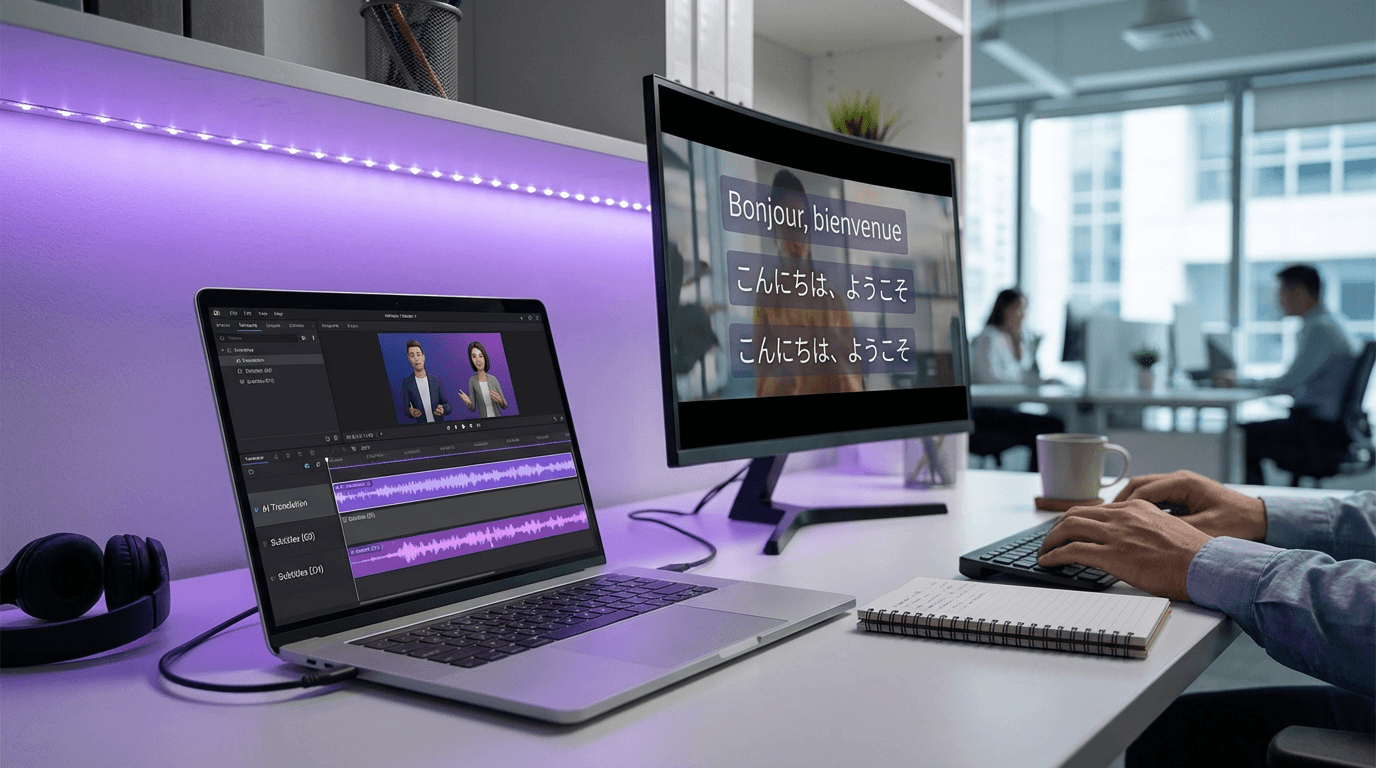
Video translation converts your original content into multiple languages through two core approaches: subtitle-based translation and AI-powered dubbing.
Subtitle Translation
Subtitle translation transcribes spoken dialogue, translates the text, and displays it as on-screen captions. This method preserves the original audio while making content accessible across languages. According to research from HappyScribe, subtitle translation reaches audiences in 120+ languages while maintaining the authentic voice and emotion of original speakers.
AI Dubbing with Lip-Sync
AI dubbing replaces the original audio track with translated voiceovers that match speaker lip movements. Advanced platforms use voice cloning technology to preserve tone, emotion, and speaking style across languages. HeyGen reports that lip-sync capabilities align translated speech with facial movements, making localized content feel native rather than dubbed.
Free Video Translation Methods
Free tools democratize video localization, enabling creators with limited budgets to reach international audiences.
Google Translate Video Features
Google Translate provides no-cost translation for hour-long videos without subscription fees. Users copy video URLs or upload files, select source and target languages, and receive translated subtitle files. The service supports 100+ languages but delivers machine-translated output that requires manual review for accuracy.
Online Subtitle Generators
Platforms like Kapwing and Clideo offer free tiers for subtitle generation and translation. Free plans typically restrict video length (5-10 minutes), export quality (720p maximum), monthly processing minutes (60-120 minutes), and include watermarks. These constraints work for testing workflows or producing low-volume social media content.
Open-Source Translation Tools
Developer-friendly creators access open-source solutions like Whisper combined with translation APIs. This approach demands technical setup but eliminates per-video costs.
Paid Video Translation Platforms
Professional translation platforms charge subscription or per-minute fees in exchange for advanced features, higher quality output, and commercial usage rights.
Keevx
Best for: E-commerce merchants and marketing teams requiring multilingual video localization with AI avatars
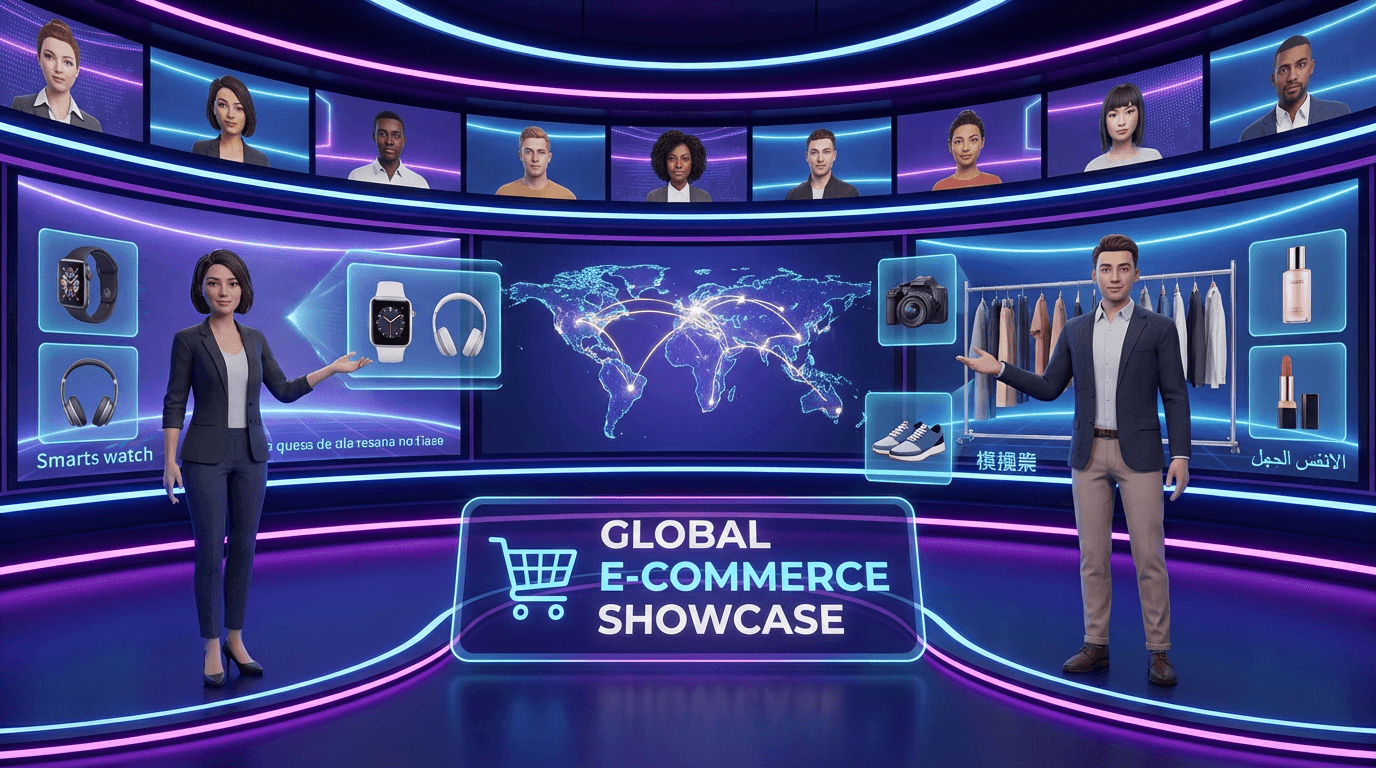
Keevx automates video production and translation through AI-powered workflows. The platform converts URLs (Amazon, Shopify, eBay product listings) directly into localized video ads featuring digital avatars speaking 70+ languages with lip-sync accuracy.
Core capabilities include:
- One-click product URL to video conversion
- Video translation and dubbing across 178 dialects with voice cloning
- 234 diverse avatars and 169 voice options
- Batch generation for scaling content production
- Cross-platform optimization (YouTube, TikTok, Instagram)
Keevx delivers minute-level production without filming or editing expertise. For teams creating product demos or viral content, Keevx offers AI video ads and market trends analysis to identify winning content formats.
HappyScribe
Best for: Accuracy-focused projects requiring human-verified translations
HappyScribe combines AI transcription with optional human editing services. The platform transcribes video audio with 85% automated accuracy, then offers professional translators for 99% accuracy refinement. Paid plans include unlimited transcription, subtitle editing tools, and removal of watermarks.
Maestra
Best for: Voice cloning and multi-speaker recognition
Maestra specializes in AI dubbing that preserves original speaker characteristics across languages. The platform identifies multiple speakers automatically and assigns unique voices to each. Premium features include custom voice cloning, avatar and voice cloning integration, and real-time collaboration tools.
Cost-Benefit Analysis: Free vs Paid
Choosing between free and paid tools requires weighing upfront savings against long-term efficiency and quality.
When Free Tools Make Sense
Free platforms deliver value for testing workflows, low-volume projects (1-5 videos monthly), internal communications, and learning content creation fundamentals. Expect to invest additional time in manual corrections and quality review.
ROI of Paid Platforms
Paid solutions justify costs through time savings (automated workflows process videos 10x faster), quality consistency (AI voice cloning maintains brand voice), scale efficiency (batch processing translates dozens of videos simultaneously), and commercial rights.
Calculate ROI by estimating manual translation costs (freelance translators charge $0.10-0.25 per word) versus subscription fees. For teams producing 10+ videos monthly, paid platforms typically break even within 3-6 months.
Step-by-Step: How to Translate Video Online
1. Upload Your Source Video
Log into your chosen platform and import video files via drag-and-drop or URL paste. Platforms like Keevx accept direct Amazon and Shopify URLs, automatically extracting product details to generate video scripts.
2. Select Translation Languages
Choose your source language and target languages. Prioritize languages by market importance. E-commerce data shows Spanish, French, German, Japanese, and Mandarin drive 70% of cross-border purchases for English-origin content.
3. Configure Translation Method
Select between subtitle-only translation or AI dubbing with voiceover. When using dubbing, choose voice characteristics that match your brand and audience expectations.
4. Review and Edit Output
Most platforms provide built-in editors for correcting mistranslated technical terms, subtitle timing synchronization, and cultural context. Professional translators recommend reviewing at least 10-20% of translated content manually.
5. Export and Distribute
Download finished videos in your required format. Tools like Keevx provide AI product video features that optimize video specs for specific platforms (TikTok's 9:16 ratio, YouTube's SEO tags).
Use Cases by Industry
E-Commerce Product Videos
Cross-border sellers use video translation to localize product demonstrations. Keevx's one-click URL-to-video conversion transforms product listings into multilingual ads featuring digital avatars explaining features in buyer languages.
Corporate Training and HR
Global enterprises translate onboarding videos, compliance training, and internal communications for distributed workforces. Organizations value consistent voice branding and secure handling of confidential content.
Educational Content
Online course creators translate lectures and tutorials to reach international student populations. Subtitle translation dominates this sector, as learners benefit from reading along while hearing original instructor voices.
Social Media and Content Creators
YouTube creators and TikTok influencers translate videos to grow audiences beyond native language markets. For content creators looking to scale, ideas to video features help generate and translate content concepts rapidly.
Quality Considerations
Translation accuracy varies significantly based on content complexity, language pairs, and tool sophistication.
Accuracy by Content Type
Simple content achieves 90-95% machine translation accuracy across major languages. Complex content (legal documents, medical information, creative marketing copy) drops to 70-85% accuracy, requiring human review.
Cultural Localization vs Literal Translation
Effective translation goes beyond word-for-word conversion. Cultural localization adapts idioms, humor, and references to resonate with target audiences. Premium platforms offer localization services that adjust messaging for cultural context.
Testing Translation Quality
Validate translation quality through native speaker review, A/B testing localized videos against engagement metrics, and customer feedback collection. Track performance differences between languages to identify translation issues impacting conversion rates.
Frequently Asked Questions
Can I translate video online for free?
Yes, platforms like Kapwing, Clideo, and Google Translate offer free video translation with limitations. Free tiers typically restrict video length, resolution, and processing minutes while adding watermarks.
How accurate is AI video translation?
AI video translation achieves 85-95% accuracy for common language pairs and straightforward content. Professional platforms like HappyScribe offer human-verified translation (99% accuracy) for projects requiring precision.
What's the difference between subtitle translation and dubbing?
Subtitle translation displays translated text on-screen while preserving original audio. Dubbing replaces the audio track with translated voiceover, often using AI to match lip movements.
Which languages are supported for video translation?
Most platforms support 70-140 languages, covering all major global markets including English, Spanish, French, German, Italian, Portuguese, Japanese, Korean, Mandarin, Arabic, Hindi, and Russian.
Can video translation tools handle multiple speakers?
Advanced platforms like Maestra and Keevx automatically detect and separate multiple speakers, assigning distinct voices to each in translated versions.
How long does video translation take?
Subtitle translation typically processes at 1:1 ratio (10-minute video takes 10 minutes). AI dubbing with voice cloning requires 2-3x video length. Batch processing tools like Keevx reduce per-video time.
Conclusion
Translating video online opens your content to billions of potential viewers who prefer consuming media in their native languages. Free tools provide entry-level access for testing and small projects, while paid platforms deliver the automation, quality, and scale that commercial projects demand.
Choose free methods for personal projects or workflow testing. Invest in paid solutions when producing marketing content, managing product catalogs, or targeting international growth where translation quality directly impacts revenue.
E-commerce teams and content creators benefit most from platforms like Keevx that combine translation with AI avatar production, batch processing, and cross-platform optimization. Start by identifying your top three target markets, then test translation quality across 2-3 sample videos before committing to a platform.
