
What Makes High-Converting Ads Different in 2025
Learn the proven elements that make ads convert at 2-3x industry benchmarks. From AI-powered video content to multilingual localization, discover what separates high-performing campaigns.
TL;DR: High-converting ads share five key elements: compelling video content, clear value propositions, strategic A/B testing, multilingual localization, and AI-powered personalization. With average conversion rates around 7.52% in 2025, top performers hit 9-15% by focusing on these fundamentals.
The difference between an ad that converts and one that gets scrolled past often comes down to seconds. According to WordStream's 2025 Google Ads benchmarks, the average conversion rate now sits at 7.52%—but top-performing campaigns regularly achieve 9-15% or higher. Understanding what separates high-converting ads from average performers is essential for any marketer looking to maximize their ad spend.
Ad conversion analysis reveals that successful campaigns share common patterns: they speak directly to audience pain points, use engaging visual formats, and deliver messages that resonate across markets. In this guide, we break down the specific elements that drive conversions and show you how to apply these insights to your own campaigns.
Understanding Conversion Rate Benchmarks
Before optimizing your ads, you need context. What counts as a "good" conversion rate varies significantly by industry, platform, and ad format.
Current Industry Standards
The 2025 data shows clear winners and areas for improvement. Automotive repair and services lead with conversion rates around 14.67%, while animals and pets follow at 13.07%. Healthcare professionals see rates around 11.62%. E-commerce, despite its massive ad spend, typically converts between 1.84% and 7% depending on the product category.
Platform matters too. Google Search ads average 4.29%, while display ads drop to under 1%. LinkedIn Ads convert at roughly 2%, though the lead quality often justifies lower volume for B2B campaigns.
Why Benchmarks Only Tell Part of the Story
Chasing industry averages can lead you astray. A 5% conversion rate might be excellent for luxury goods but disappointing for impulse-buy products. The real question is whether your ads convert profitably—meaning your cost per conversion stays below customer lifetime value.
Focus on your own historical performance first. Once you establish a baseline, incremental improvements of 10-20% become meaningful wins that compound over time.
The Video Advantage in Ad Conversion
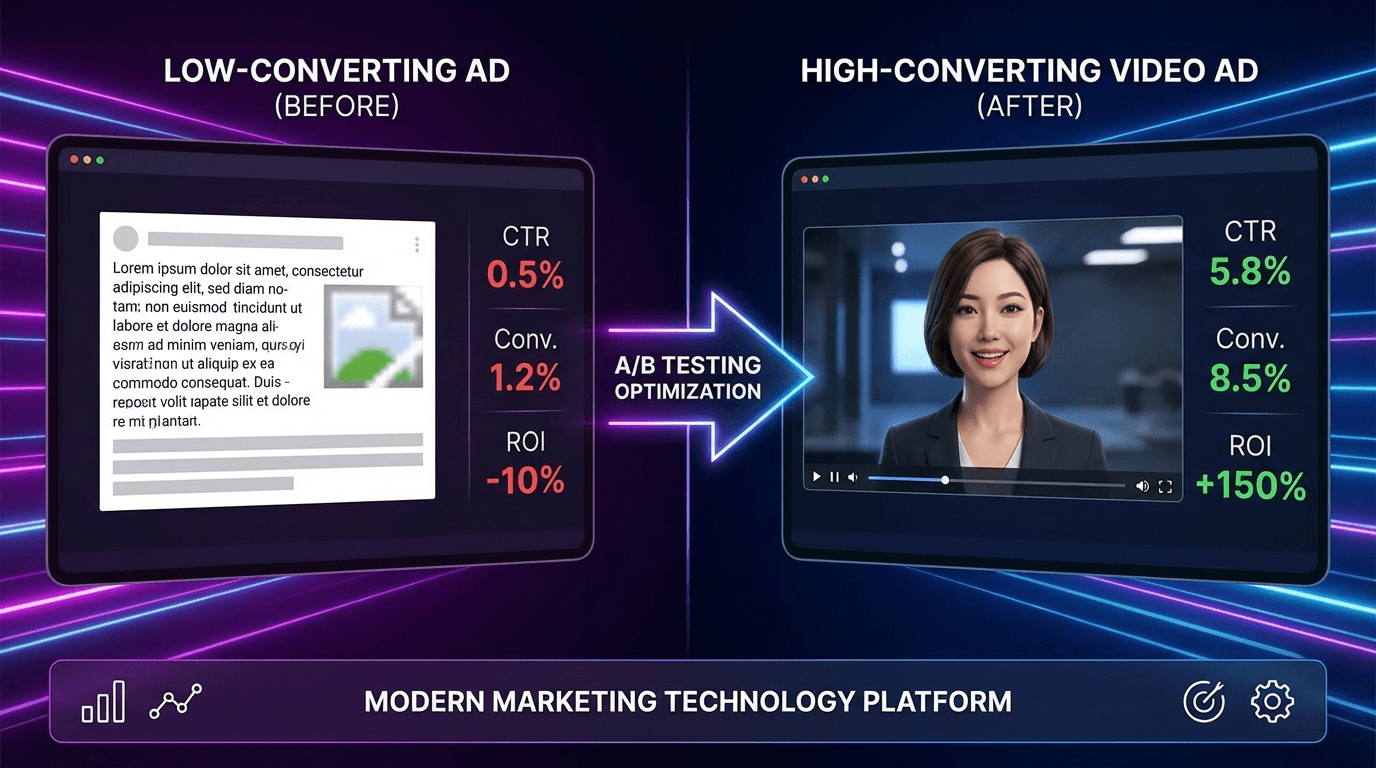
Video ads consistently outperform static images in conversion studies. The format captures attention, builds trust, and communicates complex value propositions in seconds.
Why Video Drives Higher Conversions
Movement naturally draws the eye. In crowded social feeds and search results, video stands out. But the advantage goes deeper than attention—video creates emotional connection. Viewers see products in action, hear testimonials, and develop familiarity with brands before clicking.
For e-commerce sellers on Amazon, Shopify, or Etsy, product videos showing items from multiple angles, demonstrating features, or answering common questions reduce purchase hesitation. The result: higher click-through rates and better post-click conversion.
Producing Video at Scale
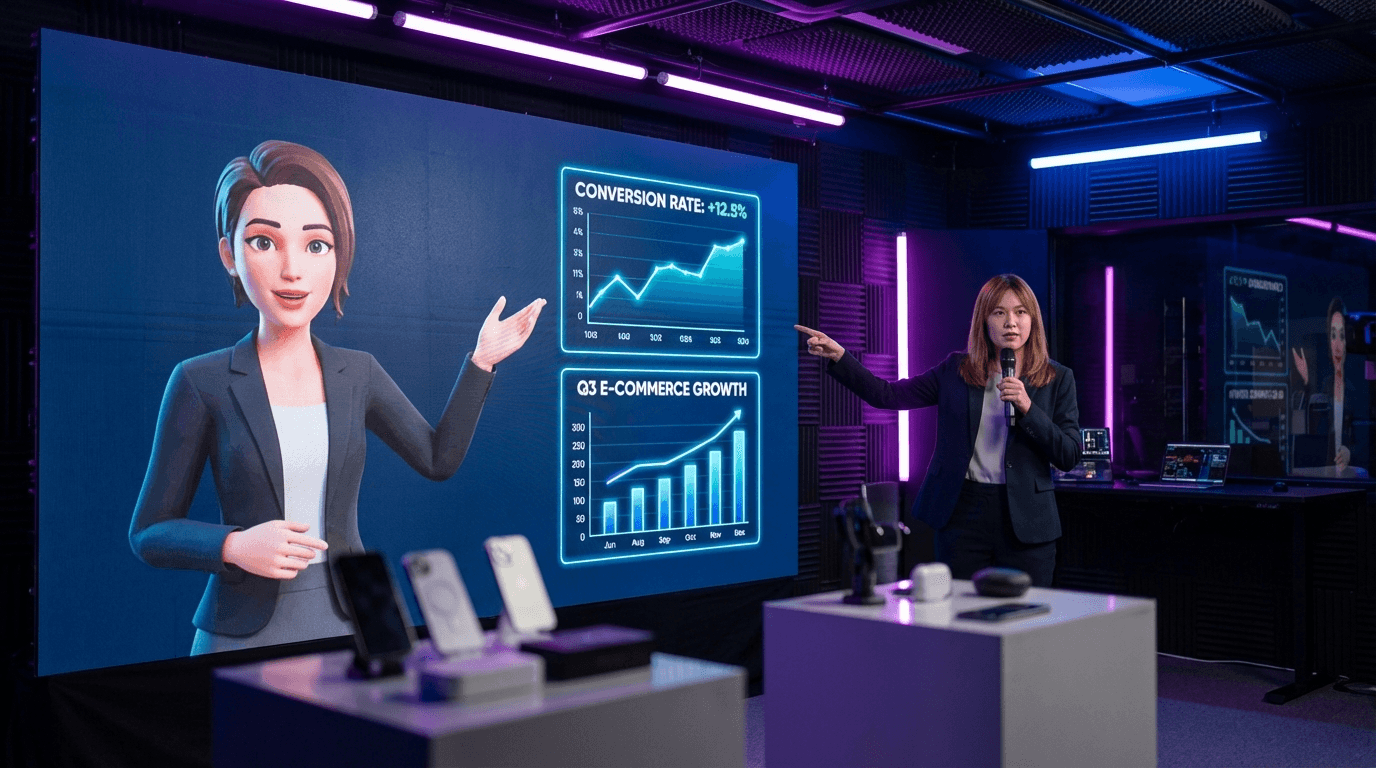
Traditional video production creates bottlenecks. Filming, editing, and talent coordination can stretch timelines to weeks. AI-powered video ad creation solves this with minute-level production—input your content, select an avatar and voice, and generate ready-to-use video without filming or editing.
This speed advantage matters for ad conversion analysis. More video variants mean more testing opportunities. More testing means faster identification of winning creative combinations.
Building Trust with AI Avatars
Digital human presenters are reshaping how brands communicate in ads. These AI avatars deliver consistent messaging with professional presence—without the scheduling constraints or costs of traditional spokespeople.
The Psychology of Human Connection
Even when viewers know they're watching a digital presenter, the human form triggers engagement. Faces hold attention. Speech patterns create rhythm that keeps viewers watching. This psychological response translates directly to ad performance metrics.
For cross-border e-commerce merchants, AI avatars with voice cloning offer another advantage: the same presenter can speak authentically in multiple languages with matching lip-sync. One campaign, multiple markets, consistent brand presence.
Choosing the Right Avatar Style
Match your avatar to your audience. Professional settings call for business attire and formal speech. Lifestyle products benefit from casual, relatable presenters. The avatar becomes your brand representative—their appearance and delivery should align with your positioning.
With libraries of 234+ diverse avatars and 169 voice options, testing different presenter styles against conversion rates reveals which human elements resonate with your specific audience.
Data-Driven Testing Strategies
High-converting campaigns don't happen by accident. They emerge from systematic testing and optimization based on conversion data.
A/B Testing Fundamentals
Split testing remains the foundation of ad optimization. Test one variable at a time: headline, thumbnail, call-to-action, or opening hook. Run tests until you reach statistical significance—typically 100+ conversions per variant.
Prioritize tests by potential impact. Small changes to high-traffic elements (like primary ad creative) move the needle more than optimizing low-traffic components.
Using Market Data to Guide Creative
Successful ad conversion analysis goes beyond your own campaigns. Market trend analysis reveals what's working across your industry—viral formats, trending hooks, emerging visual styles.
Study competitor ads that maintain heavy spend over months. Sustained investment signals positive ROI. Adapt successful patterns to your brand voice rather than copying directly.
Tip: Track not just conversions but micro-conversions along the funnel. Video view completion rate, landing page scroll depth, and cart additions reveal where prospects lose interest—and where optimization efforts should focus.
The Negative Keyword Strategy
For search ads, what you exclude matters as much as what you target. Adding negative keywords like "free," "DIY," or competitor brand names prevents wasted spend on low-intent clicks.
Regularly review search terms triggering your ads. Move irrelevant queries to negative keyword lists. This continuous refinement improves conversion rates by concentrating budget on qualified prospects.
Multilingual Localization for Global Markets
Cross-border e-commerce opens massive market potential, but language barriers destroy conversion rates. Ads in a viewer's native language convert at dramatically higher rates than English-only content shown to non-English speakers.
Beyond Basic Translation
Word-for-word translation misses cultural nuance. Effective localization adapts messaging to local idioms, humor, and purchasing motivations. A value proposition that resonates in the US may need complete repositioning for Japanese or Brazilian audiences.
Video translation and dubbing with lip-sync technology makes this practical at scale. The same source video becomes 70+ language variants, each feeling native to its market.

Platform-Specific Localization
Different platforms dominate different regions. TikTok creative that works in the US may need adjustment for Douyin audiences in China. Amazon listing videos follow different conventions than YouTube pre-roll.
Optimize for each platform's technical requirements and user expectations. Aspect ratios, length limits, and caption placement all affect conversion rates.
Landing Page Alignment
Your ad's job is to earn the click. Your landing page's job is to convert that click into action. Misalignment between these two elements tanks conversion rates.
Message Match Principles
Whatever promise your ad makes, your landing page must immediately deliver. Same headline language. Same visual style. Same offer. Visitors who feel they've landed in the wrong place bounce within seconds.
For product ads, this means the landing page should feature the exact item shown in the creative—same angle, same context. For service ads, the specific benefit highlighted should appear prominently above the fold.
Speed and Mobile Optimization
Over 61% of ad clicks come from mobile devices. Landing pages that load slowly or display poorly on phones waste ad spend. Test your pages on actual mobile devices across different connection speeds.
Every additional second of load time decreases conversions by approximately 7%. Compress images, minimize scripts, and consider AMP pages for critical landing experiences.
Frequently Asked Questions
What is a good conversion rate for digital ads?
A good conversion rate depends on your industry and platform. The average across all industries is 7.52% for Google Ads in 2025, but top performers achieve 9-15%. E-commerce typically sees 2-7%, while service businesses often convert higher due to stronger purchase intent.
How do I track ad conversions accurately?
Set up conversion tracking through Google Tag Manager or your advertising platform's native tools. Enable enhanced conversions to capture data despite cookie restrictions. Track both macro-conversions (purchases, sign-ups) and micro-conversions (video views, add-to-carts) to understand the full funnel.
Why are my ads getting clicks but not conversions?
This usually indicates landing page issues or audience mismatch. Check that your landing page delivers on ad promises and loads quickly on mobile. Review your targeting to ensure you're reaching people with genuine purchase intent, not just casual browsers.
How often should I test new ad creative?
Run A/B tests continuously, but give each test enough time to reach statistical significance. For high-volume campaigns, this might be days. For lower volume, allow 2-3 weeks. Replace underperformers but keep proven winners running while you test new variants.
Conclusion
High-converting ads result from deliberate strategy, not luck. The data points to clear patterns: video outperforms static, localization expands reach, testing drives incremental gains, and landing page alignment completes the conversion.
For e-commerce sellers, agencies, and marketing teams, the barrier to implementing these strategies has dropped significantly. AI-powered tools now enable minute-level video production, batch generation across languages, and rapid creative testing that was previously impossible without large production budgets.
Start with your current best-performing ads. Apply one optimization at a time—video format, avatar presenter, multilingual variant, or landing page alignment. Measure the impact, double down on what works, and keep iterating.
