
AI Storyboarding: Faster Creative Development in 2025
AI storyboarding transforms scripts into visual storyboards in minutes. Learn how to reduce pre-production time by 60% with the right tools and workflows.
TL;DR: AI storyboarding transforms scripts into visual storyboards in minutes instead of days, cutting pre-production time by up to 60%. Whether you're creating marketing videos, product demos, or training content, AI tools now handle the heavy lifting so you can focus on creative decisions.
Creative teams face a persistent bottleneck: visualizing ideas before production begins. Traditional storyboarding requires skilled artists, multiple revision cycles, and weeks of back-and-forth. AI storyboarding changes this equation entirely. By using artificial intelligence to generate visual frames from text descriptions, creators can now iterate on concepts at unprecedented speed.
This shift matters for anyone producing video content at scale. E-commerce sellers need product videos across multiple platforms. Marketing teams require ad variations for different audiences. Training departments must visualize complex procedures clearly. AI storyboarding addresses all these needs by making pre-production faster, more accessible, and significantly more cost-effective.
How AI Storyboarding Works
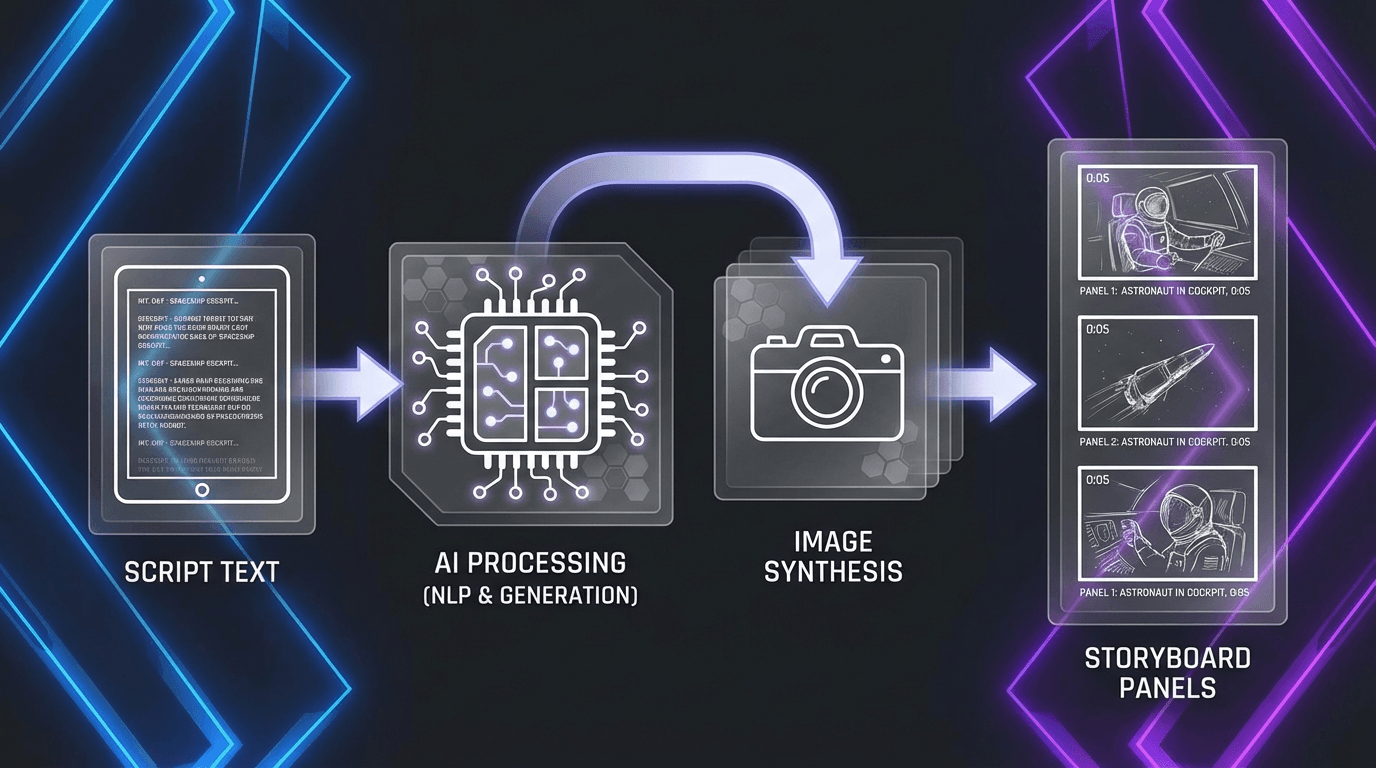
AI storyboarding uses natural language processing and generative AI to convert written descriptions into visual panels. The process typically follows five steps: input your script or scene description, let the AI analyze key visual elements, review generated frames, refine prompts as needed, and export your completed storyboard.
Modern tools can analyze detailed scripts to identify settings, actions, and dialogue automatically. You describe scenes in plain language—for example, "A woman walks through a bustling city street at dusk, surrounded by glowing billboards"—and the AI produces a corresponding visual frame.
The Anchor Shot Technique
One effective approach involves starting with an anchor shot that sets the visual tone for your entire sequence. This single image establishes mood, color palette, lighting, and camera style for everything that follows. Once you find phrases that work—like "warm morning light" or "shallow depth of field"—reuse them across prompts to maintain visual consistency.
Integration with Video Production
The real power emerges when storyboarding connects to actual video creation. Platforms that turn concepts into production-ready videos can take your storyboard frames and generate finished content with AI avatars, voiceovers, and professional editing—all without traditional filming.
Key Benefits of AI Storyboarding
The advantages of AI-powered storyboarding extend beyond simple time savings. Understanding these benefits helps teams make informed decisions about integrating these tools into their workflows.
Speed and Iteration
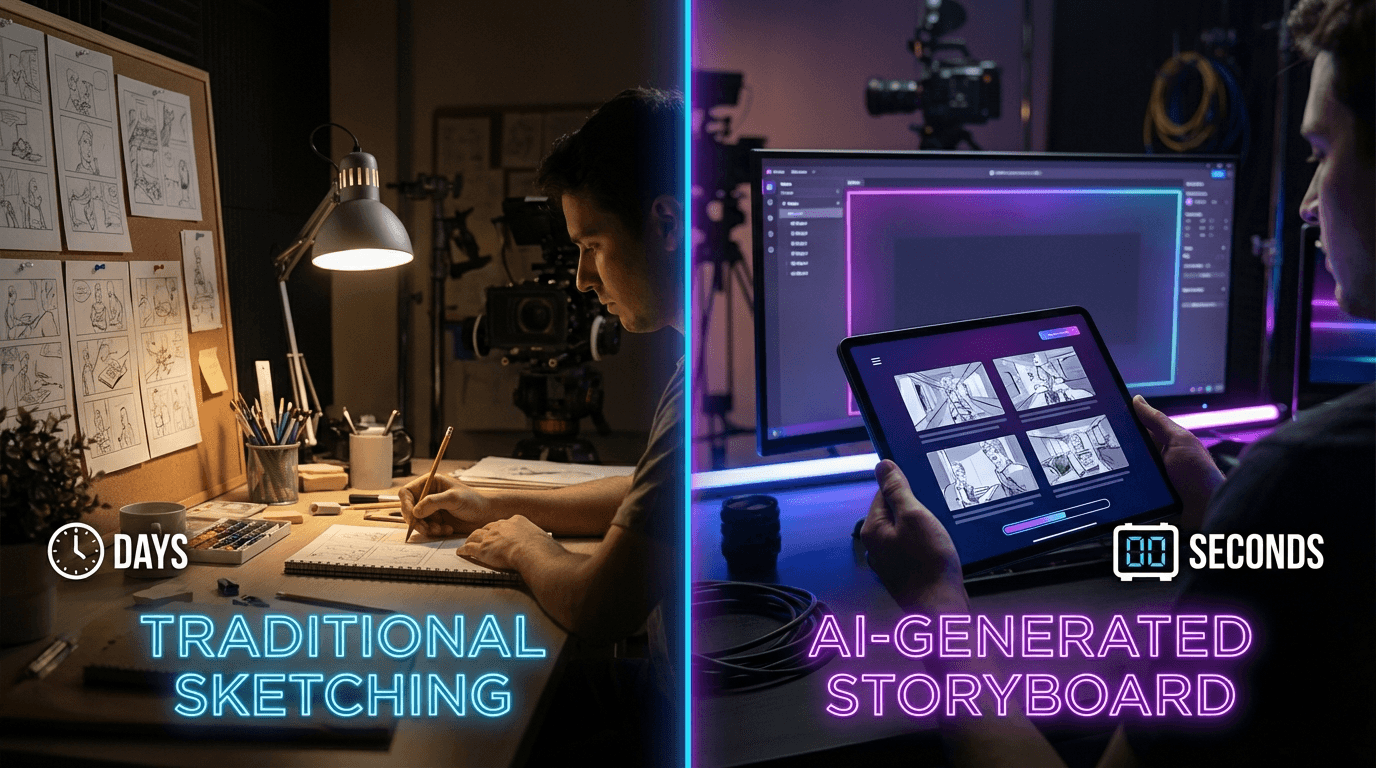
Traditional storyboarding takes days or weeks. AI generates complete storyboards in minutes. According to industry case studies, teams report up to 60% reduction in pre-production time when using AI storyboarding tools. This speed enables rapid prototyping—instead of committing to one concept, teams can explore multiple directions before investing in full production.
Cost Efficiency
Hiring a storyboard artist typically costs thousands of dollars per project. AI tools operate on subscription models, making professional-quality storyboards accessible to small teams, indie creators, and businesses with limited budgets. For cross-border e-commerce merchants producing dozens of product videos monthly, this cost difference is substantial.
Accessibility Without Artistic Expertise
You don't need drawing skills to create clear visual sequences. Producers, marketers, and non-designers can now communicate their vision effectively. This democratization means creative decisions aren't bottlenecked by access to specialized talent.
Tip: Start with simple, clear prompts and add detail incrementally. Overloading your initial description often produces less useful results than building complexity step by step.
Best Use Cases for AI Storyboarding
AI storyboarding excels in specific contexts while remaining less suitable for others. Knowing where these tools perform best helps teams apply them effectively.
Marketing and Advertising
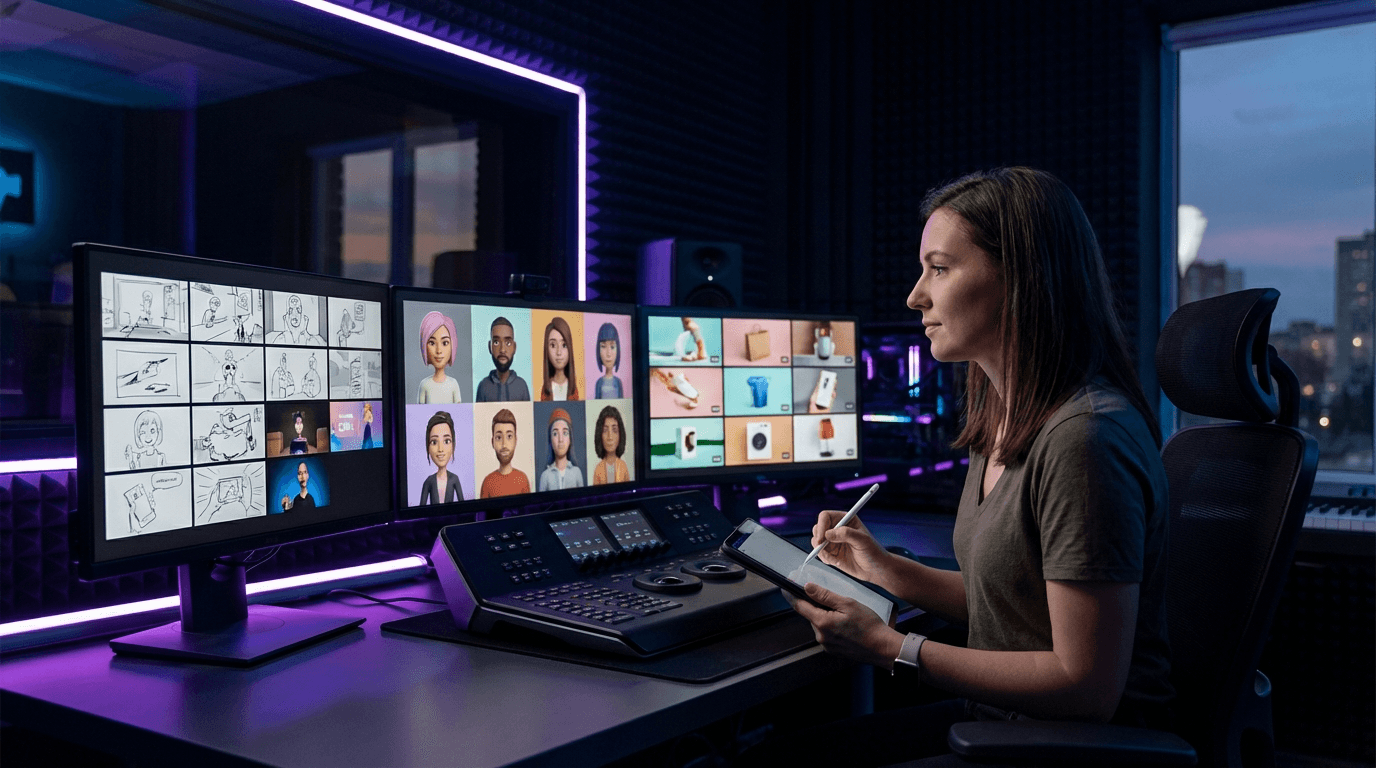
AI-powered video ads require rapid iteration across multiple concepts, audiences, and platforms. Storyboarding with AI lets marketing teams visualize dozens of ad variations before committing to production. This pre-visualization reduces wasted production costs on concepts that don't work.
E-Commerce Product Videos
Cross-border sellers on Amazon, Shopify, eBay, and Etsy need consistent product video creation across their catalogs. AI storyboarding helps plan product demonstrations, feature highlights, and lifestyle shots before batch-generating final videos. The ability to visualize these sequences upfront ensures consistency across multilingual versions.
Corporate Training and Onboarding
Training departments creating instructional content benefit from storyboarding complex procedures visually before production. AI tools help identify which steps need close-ups, which require text overlays, and where transitions should occur—all before investing in filming or animation.
Explainer Videos
Straightforward, structured content with clear visual needs represents the ideal use case for AI storyboarding. Explainers follow logical sequences that AI can interpret accurately from text descriptions.
Challenges and Limitations
AI storyboarding isn't universally applicable. Understanding its limitations prevents frustration and helps teams choose the right approach for each project.
Character Consistency
Maintaining consistent character appearance across multiple frames remains challenging for many AI tools. While some platforms have introduced character reference features, results vary. Projects requiring recurring characters may need additional manual refinement or selection of specialized tools.
Complex Narratives
Character-driven stories with subtle emotional beats or intricate visual metaphors often exceed current AI capabilities. Highly artistic projects where every frame carries specific meaning still benefit from human artists who understand narrative context deeply.
Integration with Existing Workflows
Not all AI storyboarding tools integrate smoothly with established production pipelines. Teams should evaluate export formats, collaboration features, and compatibility with their existing software before committing to a platform.
From Storyboard to Final Video
The storyboarding phase gains maximum value when it connects seamlessly to production. Modern platforms bridge this gap by enabling direct progression from concept visualization to finished video content.
AI avatars and voice cloning technology now allows creators to move from storyboard to final video without filming. Your storyboard becomes a production blueprint: each frame translates to a scene featuring digital humans, professional voiceovers, and platform-optimized formatting.
The Complete Pipeline
This integrated approach works as follows: upload your script or concept, generate AI storyboard frames to visualize the sequence, refine your narrative flow, select avatars and voices, and produce finished video ready for distribution across YouTube, TikTok, and e-commerce platforms.
For businesses producing content in multiple languages, this pipeline eliminates the traditional need for separate productions per market. A single storyboard can generate videos in 70+ languages with lip-synced avatars.
Frequently Asked Questions
Can AI completely replace human storyboard artists?
Not entirely. AI excels at speed and accessibility for straightforward content but struggles with nuanced storytelling, consistent characters, and projects requiring unique artistic vision. Many productions use AI for initial concepts before refining with human artists.
What types of projects benefit most from AI storyboarding?
Marketing videos, product demonstrations, explainer content, and training materials see the greatest benefits. These formats typically follow structured narratives that AI interprets accurately from text descriptions.
How do I maintain visual consistency across AI-generated frames?
Use an anchor shot to establish your visual style, then reuse specific phrases (lighting, color, camera angle) across prompts. Some tools offer character reference features that help maintain consistency between frames.
What should I look for when choosing an AI storyboarding tool?
Consider output quality, character consistency features, export options, team collaboration capabilities, and integration with your production workflow. Free trials help evaluate whether a tool matches your specific needs.
Conclusion
AI storyboarding represents a fundamental shift in creative development workflows. By reducing pre-production time from weeks to minutes, these tools enable faster iteration, lower costs, and broader accessibility for teams of all sizes.
The key lies in understanding where AI storyboarding fits your specific workflow. For e-commerce merchants, marketing teams, and content producers working at scale, the efficiency gains are substantial. When combined with AI video production platforms that convert storyboards into finished content with digital avatars and multilingual support, the entire creative pipeline accelerates dramatically.
The technology continues advancing rapidly. Teams that integrate AI storyboarding into their workflows now position themselves to produce more content, test more concepts, and reach more markets—all while reducing traditional production bottlenecks.
