
How Brands Use AI Avatars for Support Videos & Training
Scale video production across 70+ languages without filming
TL;DR: Leading brands use AI avatars to create customer support videos and training content in minutes, not weeks. This approach eliminates filming costs while enabling multilingual localization across 70+ languages with lip-sync technology.
The way companies create video content has changed dramatically. Fortune 500 companies like SAP and Mondelez International now use AI avatars to produce support videos and training materials at scale—without cameras, studios, or production crews. According to Fortune, AI avatar platforms currently serve over 65,000 customers, including more than 70% of the Fortune 100.
This shift addresses a core business challenge: traditional video production is expensive, time-consuming, and difficult to update. AI avatar use cases span customer support, employee onboarding, product training, and multilingual marketing. The technology transforms text scripts into professional videos featuring digital humans that speak, gesture, and maintain eye contact naturally.
This guide covers how brands implement AI avatars for support and training, the specific use cases driving adoption, and practical steps to start creating avatar-based video content today.
Corporate Training and Employee Onboarding
Training represents one of the most mature AI avatar use cases in enterprise environments. L&D teams face constant pressure to create and update content for new hires, compliance requirements, and skill development programs.
Why Training Videos Need AI Avatars
Traditional training video production requires scheduling presenters, booking studios, and managing post-production. Each update means repeating the entire process. AI avatars solve this by separating the presenter from the production workflow.
Organizations input scripts, select an avatar and voice, and generate videos in minutes. When policies change or products update, teams modify the script and regenerate—no reshoots required.
SAP demonstrates this at scale. According to their VP of Business Management Office, Andrew Steane, "We see Synthesia not just as a training tool, but as a communications platform." The company uses avatar-generated videos across sales and marketing processes globally.
Multilingual Training at Scale
Global organizations face another challenge: delivering consistent training across languages. Dubbing and subtitling traditional videos costs significant time and money per language.
AI avatar platforms with video translation and dubbing capabilities generate the same training content in 70+ languages with synchronized lip movements. A single English source video becomes ready-to-deploy content for teams in Tokyo, Berlin, and São Paulo—all with native-language delivery.

Customer Support Video Applications
Customer support teams handle repetitive queries that could be addressed through video. AI avatars enable brands to create engaging support content that reduces ticket volume and improves customer satisfaction.
Transforming Help Documentation Into Video
Mondelez International, the company behind Oreo and Cadbury, uses AI avatars to convert lengthy PDF help articles into video content. Instead of customers scrolling through text-heavy documentation, they watch a digital human walk them through solutions step-by-step.
This approach works particularly well for:
- Product setup and installation guides
- Troubleshooting common issues
- Feature tutorials and how-to content
- Account management procedures
24/7 Video Support Without Scaling Costs
AI avatar support videos provide consistent answers regardless of time zone or volume. A customer searching for help at 2 AM receives the same quality explanation as someone reaching out during business hours.
The economics differ fundamentally from live support. Creating one comprehensive video serves unlimited viewers, while each live interaction consumes agent time. Brands increasingly deploy avatar-based video libraries as the first line of support, reserving human agents for complex or emotionally sensitive issues.

E-Commerce and Product Marketing
Cross-border e-commerce merchants face unique video challenges. Products need presentation in multiple languages for different marketplaces—Amazon US, Amazon Japan, Shopify stores targeting Europe, and regional platforms across Southeast Asia.
Product Videos Without Photo Shoots
AI avatar technology combined with AI-powered product videos enables merchants to create professional product presentations from existing images. Upload product photos, add a script, select an avatar presenter, and generate marketplace-ready video content.
This workflow transforms how sellers operate:
- Amazon and eBay listings: Create video content that increases conversion rates without production budgets
- Shopify stores: Add professional product explainers across catalogs quickly
- App Store marketing: Generate preview videos for Google Play and Apple App Store submissions
Multilingual Product Content for Global Markets
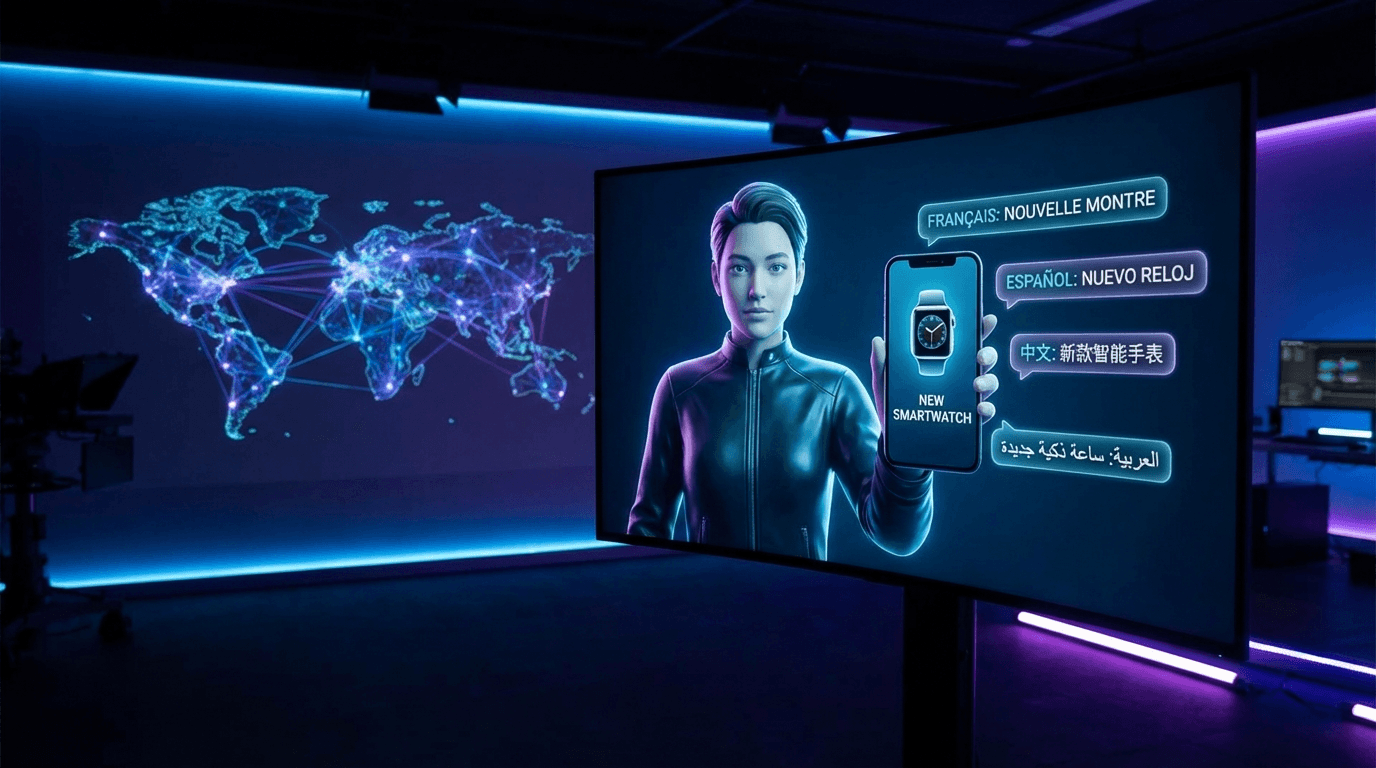
A product video that works in the US market needs adaptation for Germany, Japan, and Brazil. AI avatars with multilingual localization and lip-sync generate localized versions from a single source.
The presenter appears to speak German, Japanese, or Portuguese naturally—not dubbed or subtitled, but actually delivering the script in the target language with matched mouth movements. This creates a native viewing experience that performs better than traditional translated content.
Sales Enablement and Internal Communications
Sales teams need video content for prospecting, deal support, and team communication. Marketing teams require consistent video output for campaigns. Both face the same constraint: limited video production capacity.
Personalized Sales Outreach at Scale
Sales development representatives use AI avatars to send personalized video messages to prospects. Rather than typing emails that blend into crowded inboxes, they deliver video introductions that grab attention.
The approach enables personalization without proportional time investment. A rep can generate custom videos for high-value prospects while maintaining outreach volume. Enterprise deals often involve multiple stakeholders—AI avatars help create tailored content for each decision-maker's priorities.
Executive Communications Without Executive Time
Executives have limited bandwidth for video recording. Yet employees respond better to video messages from leadership than written memos. AI avatars bridge this gap.
Companies create digital twins of executives who can deliver announcements, thank-you messages, and updates without requiring the actual person's time for each recording. The CEO's avatar maintains consistent presence across company communications while the real executive focuses on strategic priorities.
Getting Started with AI Avatars
Implementation doesn't require technical expertise. Modern platforms simplify the entire workflow from script to finished video.
Choosing the Right Platform
Select based on your primary use case:
- Training-focused: Look for features like interactive scenarios, quiz integration, and SCORM compliance for LMS integration
- E-commerce-focused: Prioritize URL-to-video conversion, marketplace optimization, and batch generation for large catalogs
- Support-focused: Evaluate searchable video libraries, analytics, and integration with help desk platforms
Platforms offering avatar and voice cloning technology provide additional flexibility—create custom avatars that represent your brand or clone existing presenters for consistency.
Building Your First Avatar Video
The production workflow typically follows these steps:
- Input content: Paste a URL, upload a document, or write a script directly
- AI script generation: Platforms can generate conversion-ready scripts from your input
- Avatar selection: Choose from libraries of diverse digital humans
- Voice selection: Pick from natural-sounding voices in your target language
- Generation: The platform produces the video, usually in minutes
For those who want to convert ideas directly into professional videos, many platforms accept raw concepts and handle script creation automatically.
Tip: Start with internal content like team updates or process documentation. This builds familiarity with the technology before creating customer-facing materials.
Measuring Success
Track metrics that connect to business outcomes:
- Training: Completion rates, assessment scores, time-to-competency
- Support: Ticket deflection, customer satisfaction scores, video view-to-resolution rates
- Sales: Response rates, meeting bookings, pipeline influenced
- E-commerce: Conversion rate lift, time on page, add-to-cart rates
Frequently Asked Questions
What are the main AI avatar use cases for businesses?
The primary AI avatar use cases include corporate training videos, customer support content, product marketing, sales enablement, and internal communications. Enterprise adoption is highest in training and support, where video content requires frequent updates and multilingual delivery.
How do AI avatars reduce video production costs?
AI avatars eliminate traditional production expenses including filming equipment, studio rental, talent fees, and post-production editing. Updates require only script changes rather than reshoots. According to industry data, organizations produce content at a fraction of traditional costs with minute-level turnaround times.
Can AI avatar videos be translated into multiple languages?
Yes. Modern AI avatar platforms support 70+ languages with lip-sync technology. The avatar appears to speak each language naturally with synchronized mouth movements, creating native viewing experiences rather than dubbed content.
Are AI avatar videos appropriate for customer-facing content?
Major brands including SAP and Mondelez use AI avatar videos for customer-facing applications. The technology has matured significantly—digital humans now deliver natural presentations with appropriate gestures, expressions, and eye contact that viewers find engaging.
Conclusion
AI avatars have moved from experimental technology to enterprise standard for video production. Companies producing support videos and training content at scale gain significant advantages: faster production, lower costs, easy updates, and built-in multilingual capabilities.
The use cases continue expanding as the technology improves. What started with basic training videos now spans customer support, product marketing, sales outreach, and executive communications. Organizations that adopt AI avatar workflows today build competitive advantages in video-first communication channels.
The barrier to entry has never been lower. Platforms handle the technical complexity, leaving teams to focus on content strategy and message quality. Whether you're creating your first onboarding video or scaling multilingual product content globally, AI avatars provide a practical path to professional video production without traditional constraints.
