
What Is a Digital Human? Uses, Benefits & Ethics
Learn how AI digital humans are transforming business video content with photorealistic avatars, multilingual capabilities, and 24/7 availability across e-commerce, training, and marketing.
TL;DR: AI digital humans are photorealistic virtual avatars that look, sound, and communicate like real people. They're transforming video production for e-commerce, training, and marketing by enabling 24/7 availability, multilingual localization in 70+ languages, and minute-level content creation without filming or editing skills.
Picture this: You need product videos in 15 languages, personalized training content for global teams, and marketing materials updated weekly. Traditional video production would take months and cost tens of thousands. With AI digital humans, you can produce studio-quality videos in minutes.
An AI digital human is more than an animated avatar. It's a photorealistic virtual being powered by machine learning, natural language processing, and speech synthesis. These digital presenters replicate human facial expressions, lip movements, and body language to create authentic connections with viewers. According to Gartner research, the digital human economy will reach $125 billion by 2035—a clear signal that this technology is reshaping how businesses communicate.
Whether you're an Amazon seller needing product demos, a training manager creating onboarding materials, or a marketer producing ads for multiple markets, understanding AI digital humans is no longer optional. This guide covers what they are, how they work, practical use cases, key benefits, and the ethical considerations you need to address.
What Exactly Is an AI Digital Human?
An AI digital human is a computer-generated virtual being designed to look, sound, and behave like a real person. Unlike simple chatbots or basic animated characters, digital humans combine photorealistic visuals with natural speech patterns, facial expressions, and body language.
The Technology Behind Digital Humans
Digital humans rely on several core technologies working together. Machine learning algorithms analyze thousands of hours of human video to understand how people move, speak, and express emotions. Natural language processing enables understanding and generating human speech. Speech synthesis creates natural-sounding voices, while computer vision captures and replicates facial movements.
The result is a virtual presenter that can deliver your message with the warmth and engagement of a human speaker. Modern platforms offer avatar and voice cloning tools that let you create custom digital humans matching your brand identity.
Digital Humans vs. Traditional Avatars
Traditional avatars are often cartoonish or clearly artificial. Digital humans aim for photorealism—viewers should perceive them as real people on first impression. This distinction matters for professional applications where credibility and trust are essential.
The difference shows in practical results. Basic avatars work for casual gaming or simple notifications. Digital humans excel in customer-facing roles, training content, and marketing where authentic human connection drives engagement and conversions.
Real-World Uses of AI Digital Humans
Digital humans are already working across industries, handling tasks that previously required expensive production teams or constant human availability.

E-Commerce and Product Marketing
Cross-border e-commerce sellers face a common challenge: creating compelling product videos for multiple markets without breaking the budget. Digital humans solve this by enabling AI product video creation from simple product URLs or images.
A Shopify seller can now generate product demos featuring professional presenters speaking natively in English, Spanish, Mandarin, or any of 70+ languages—all from a single script. The same approach works for AI video ads across YouTube, TikTok, and marketplace listings.
Corporate Training and Onboarding
HR departments use digital humans for consistent, scalable training delivery. Instead of flying trainers to each office or recording new videos whenever policies change, organizations create digital human-led training that updates in minutes.
Compliance training, product knowledge sessions, and onboarding programs become multilingual and always current. Updates happen at the script level, with no reshoots required.
Customer Support and Sales
Digital human assistants provide instant responses to product questions, guide customers through troubleshooting, and handle routine inquiries. According to TechTarget research, businesses use digital humans on websites and applications for marketing, answering questions, and even closing sales.
The key advantage is scale. A digital human can engage hundreds of simultaneous conversations without fatigue, maintaining consistent brand messaging around the clock.
Key Benefits for Businesses
The practical benefits of AI digital humans extend beyond convenience. They address real operational challenges that traditional video production cannot solve at scale.
24/7 Availability Without Additional Staff
Digital humans work continuously without breaks, sick days, or scheduling conflicts. For global businesses serving customers across time zones, this means consistent availability without overnight staffing costs.
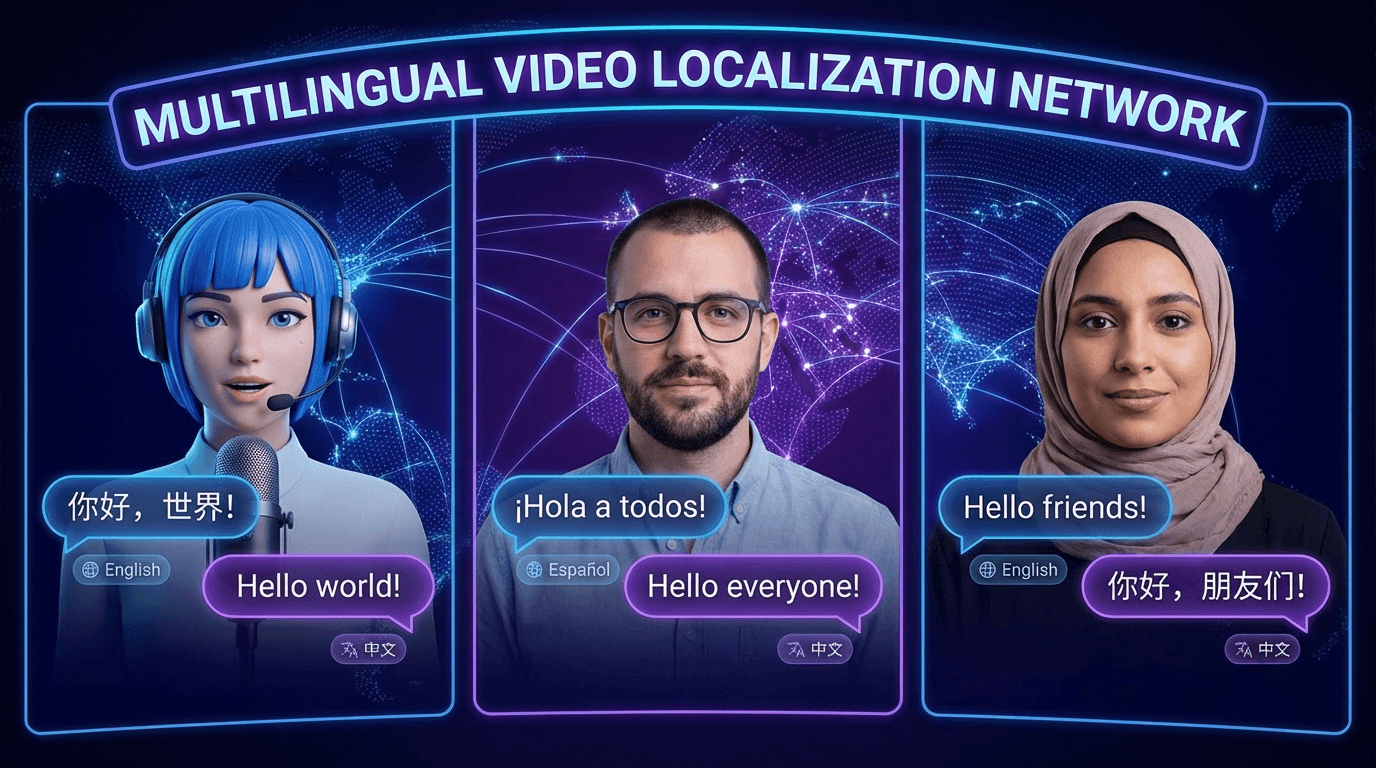
Multilingual Localization with Lip-Sync
Perhaps the most transformative benefit is multilingual capability. Modern platforms support video translation and dubbing with accurate lip-sync across 70+ languages and 178 dialects. A single video becomes market-ready for dozens of countries without reshooting.
This capability is particularly valuable for cross-border e-commerce. Product videos, tutorials, and promotional content reach international audiences in their native languages—a proven factor in conversion rates.
Minute-Level Production Speed
Traditional video production involves scheduling, filming, editing, and rendering. With digital humans, the process compresses to minutes. Input your script, select an avatar and voice, and the platform generates ready-to-use video content.
This speed enables rapid iteration. Test different messaging, update product details, or respond to market trends without production delays.
Cost-Effective Scaling
Producing videos in 15 languages traditionally means 15 separate productions. With digital humans, you produce once and localize automatically. The cost per additional language approaches zero after initial setup.
Tip: Start with your highest-volume markets to validate the approach, then expand language coverage based on performance data.
Ethical Considerations You Should Know
The power of digital human technology comes with responsibility. Organizations deploying these tools must address legitimate ethical concerns to maintain trust and avoid legal issues.

Transparency and Disclosure
Viewers deserve to know when they're interacting with AI-generated content rather than a real person. According to Guildhawk's ethical framework, clear AI disclosure builds trust and prevents deception.
Best practices include visible watermarks, disclosure statements, and provenance logging that tracks content creation and usage. Major platforms build these safeguards directly into their tools.
Consent and Likeness Rights
Creating digital humans that resemble real people raises consent questions. Reports from Medium highlight cases where digital clones were created and misused without permission—including a Hong Kong fraud case involving HK$200 million.
Organizations should use only properly licensed avatars or obtain explicit consent for custom digital humans based on real individuals.
Enterprise Responsibility
Courts are unlikely to treat digital human communications differently than other business communications. According to TechTarget analysis, enterprises are responsible for everything their digital avatars say. This means establishing strict content guidelines and human oversight processes.
Data Privacy and Security
Digital human interactions often involve personal data. Robust data protection measures, user consent mechanisms, and compliance with regulations like GDPR are essential. Users should understand how their data is collected, stored, and used.
Getting Started with Digital Humans
Implementing AI digital humans doesn't require technical expertise or large budgets. Modern platforms handle the complexity while you focus on content and strategy.
Choose the Right Use Case First
Start with a specific, high-impact application rather than trying to solve everything at once. Product videos, training content, or customer support—pick one area where the benefits are clearest and measure results.
Select Quality Avatar Options
The effectiveness of digital humans depends heavily on visual quality and natural presentation. Look for platforms offering diverse, photorealistic avatars with natural movement and expression.
Plan for Multilingual Needs
If you serve international markets, prioritize platforms with strong multilingual capabilities including accurate lip-sync. The ability to scale across languages multiplies the value of your content investment.
Frequently Asked Questions
What is an AI digital human?
An AI digital human is a photorealistic virtual avatar that looks, sounds, and communicates like a real person. It uses machine learning, speech synthesis, and natural language processing to deliver video content, conduct conversations, and represent brands across digital channels.
How much does digital human technology cost?
Costs vary significantly by platform and usage volume. Many providers offer trial options and subscription models that make the technology accessible to businesses of all sizes. The key cost advantage is scaling—additional languages and content updates require minimal incremental investment.
Are digital humans replacing human workers?
Digital humans augment rather than replace human capabilities. They handle repetitive tasks, scale communications, and enable 24/7 availability while human teams focus on strategy, creativity, and complex interactions requiring genuine human judgment.
How do I ensure ethical use of digital humans?
Maintain transparency through clear AI disclosure, use only properly licensed or consented avatars, establish content guidelines with human oversight, and implement strong data protection measures. Following established frameworks like UNESCO's AI ethics recommendations provides useful guidance.
Conclusion
AI digital humans represent a fundamental shift in how businesses create and scale video content. From e-commerce product demos to multilingual training programs, they deliver professional results in minutes rather than weeks—without filming, editing, or technical expertise.
The technology is mature, accessible, and proven across industries. What matters now is implementation: choosing the right use cases, maintaining ethical standards, and measuring results to guide expansion.
For cross-border sellers, marketing teams, and training departments, the question isn't whether to adopt digital human technology. It's how quickly you can start capturing its benefits while competitors catch up.
