
Best Video Translators: Features, Pricing & Quality Compared
AI video translators deliver minute-level multilingual localization with lip-sync at 98% lower cost. Compare Keevx, HeyGen, Synthesia across 70-175+ languages.
TL;DR: AI-powered video translators deliver minute-level multilingual localization with lip-sync and voice cloning at 98% lower cost than traditional dubbing. Top platforms like Keevx, HeyGen, and Synthesia offer 70-175+ languages, with pricing from free trials to $1.28/minute for enterprise features.
Video content drives 82% of global internet traffic, but language barriers limit reach. A product video that converts in English might fail entirely in Spanish, Japanese, or German markets. Video translators solve this by automating translation, dubbing, and lip-sync, turning one video into dozens of localized versions in minutes.
This guide compares leading video translator platforms across features, pricing, and translation quality to help you choose the right solution for cross-border e-commerce, marketing campaigns, and global content distribution.
What Is a Video Translator and How Does It Work?
A video translator is an AI-powered platform that converts video content from one language to another while maintaining voice characteristics and synchronizing lip movements. Unlike simple subtitle generators, modern video translators handle speech recognition and transcription, neural machine translation with context awareness, and voice synthesis with lip-sync technology.
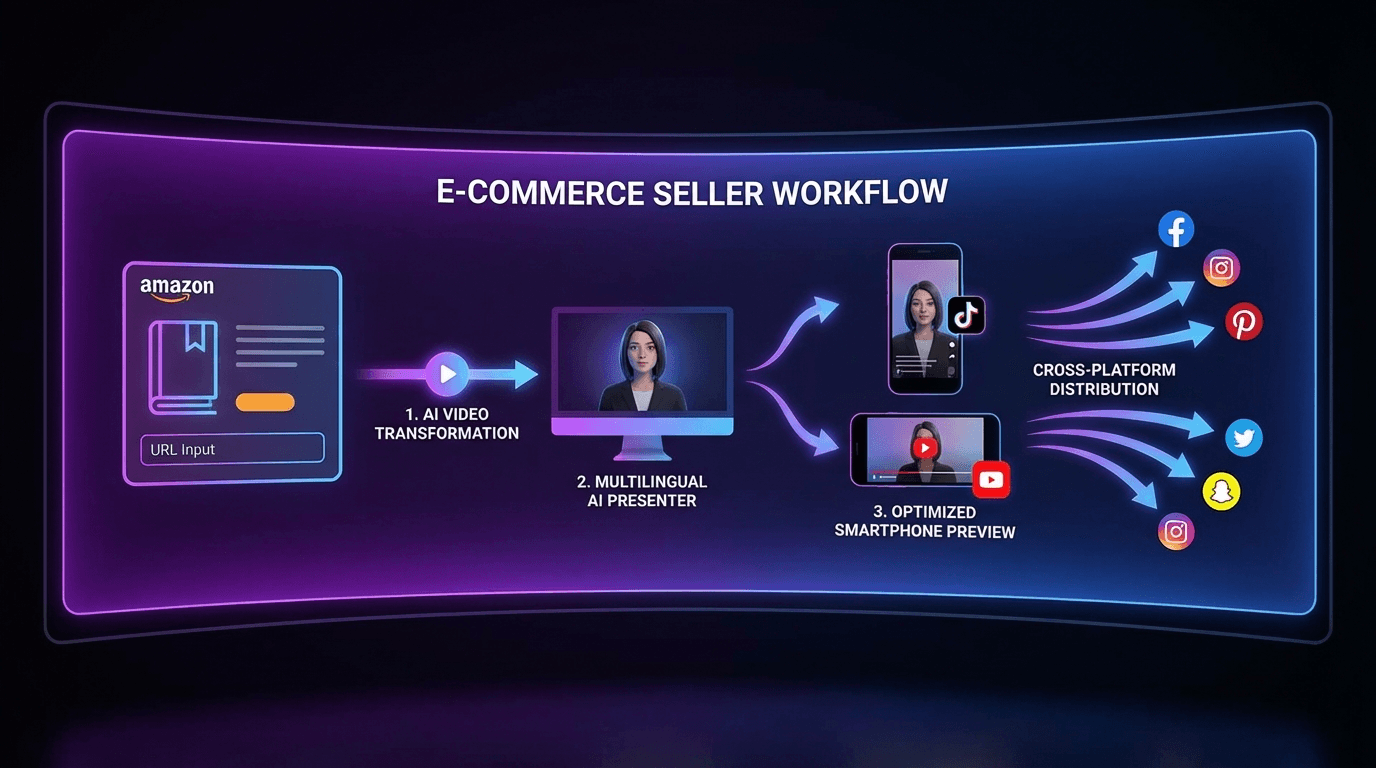
The workflow is straightforward: upload your video or paste a URL from platforms like YouTube, Amazon, or Shopify. The AI transcribes the original audio, translates the script into target languages, generates synthetic voices matching the original speaker's tone, and synchronizes lip movements. Most platforms deliver results in 5-15 minutes.
According to research from leading video translation providers, AI alternatives deliver comparable quality to traditional dubbing at up to 98% cost reduction and 70-90% time savings. Traditional professional dubbing costs $500-2,000 per minute requiring weeks of production, while AI-powered solutions process the same content at $0.50-$1.50 per minute in under 20 minutes.
Top Video Translator Platforms Compared
Keevx: Best for E-Commerce and Cross-Border Marketing
Keevx specializes in converting product URLs directly into multilingual video content with digital avatars. The platform supports 70+ languages across 178 dialects with automatic lip-sync and voice cloning.
Best for: Amazon, Shopify, eBay, and Etsy sellers; advertising agencies; enterprise marketing teams
Key features:
- One-click URL to video conversion from e-commerce platforms
- 234 diverse digital avatars with 169 voice options
- Translate and dub video with automatic lip-sync in 70+ languages
- AI product video generator for image-to-video transformation
- Batch video generation for multiple products
- Cross-platform optimization for YouTube, TikTok, and social media
Pricing: Free trial available; flexible pricing with low trial barriers designed for high-volume production
HeyGen: Best Language Coverage
HeyGen supports over 175 languages and dialects, offering the widest language selection in the market with excellent voice characteristic preservation.
Best for: Global enterprises needing maximum language reach
Key features: 175+ supported languages, AI voice cloning with emotion preservation, automatic lip-sync technology, and subtitle generation
Pricing: Starts at $29/month for basic features; enterprise plans available
Synthesia: Best for Business and Enterprise
Synthesia offers highest-quality lip-sync, professional voice cloning, and enterprise-ready workflows with team collaboration features.
Best for: Corporate communications, training videos, and professional marketing content
Key features: Studio-quality lip-sync, 140+ AI avatars and 120+ languages, team collaboration tools, and API access
Pricing: Starts at $29/month; custom enterprise pricing available
ElevenLabs: Best Voice Quality
ElevenLabs produces the most natural-sounding AI voices in the industry, focusing on voiceover-only dubbing without video lip-sync capabilities.
Best for: Podcasters, audiobook creators, and voice-focused content
Key features: Ultra-realistic voice cloning, emotion preservation, 29 languages, and high-quality audio output
Pricing: Free tier available; paid plans start at $5/month
AI Studios by DeepBrain AI: Best Budget Option
AI Studios offers up to 3 minutes of free lip-synced dubbing with the cheapest per-minute rates among premium platforms.
Best for: Small businesses and independent content creators
Key features: Free 3-minute trial, browser-based editing, AI avatars with lip-sync dubbing, and automatic subtitles
Pricing: Free tier with 3 minutes; paid plans offer lowest per-minute rates
Key Features to Evaluate in Video Translators
Translation Accuracy and Natural Speech
Most top video translator platforms deliver above 90% accuracy in language interpretation depending on source material clarity and complexity. Accuracy factors include accent recognition, technical terminology handling, idiom preservation, and background noise filtering.
When evaluating translation quality, test with your specific content type. Product descriptions require different handling than conversational content or technical tutorials. Platforms like Kapwing cite up to 99% accuracy and allow custom spellings through Translation Rules features.
Voice Cloning and Emotion Preservation
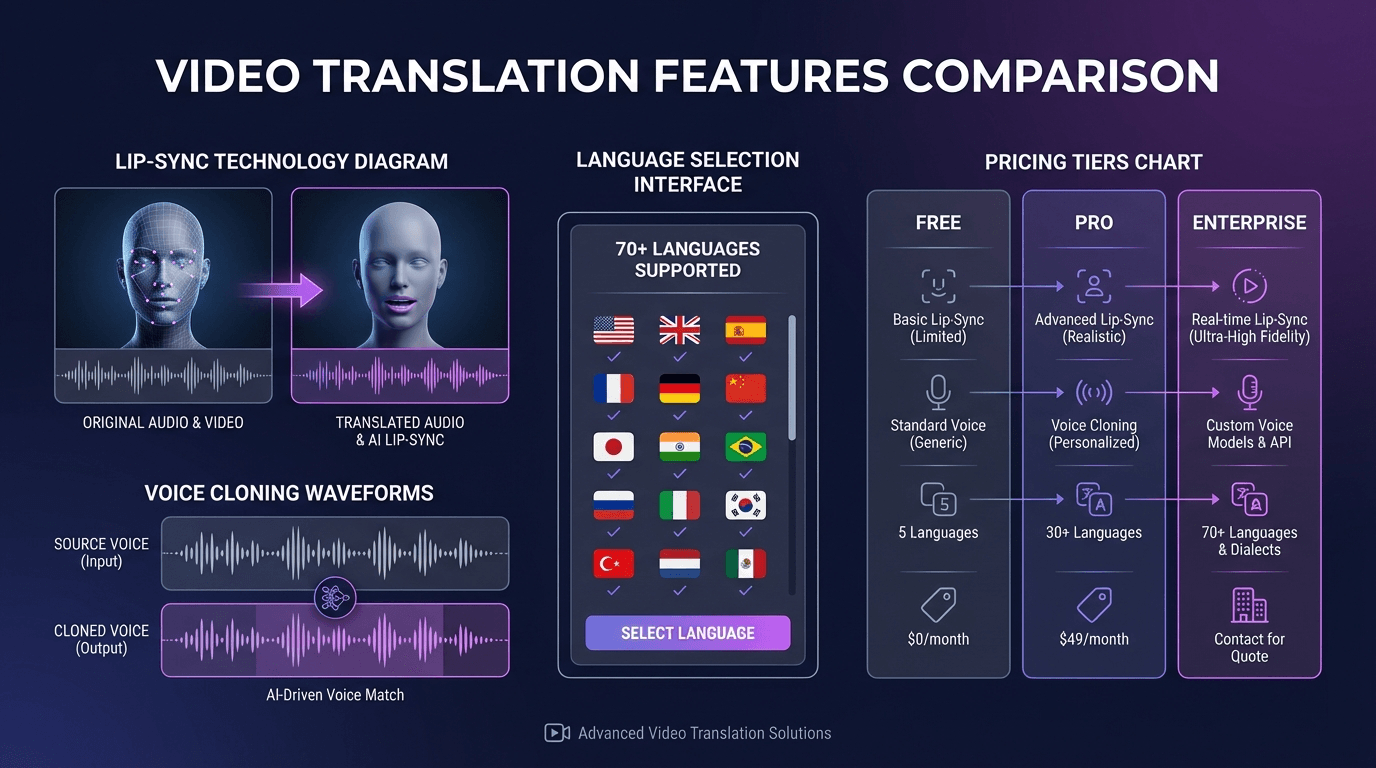
Advanced video translators clone the original speaker's voice characteristics including pitch, tone, speaking pace, and emotional inflection. High-quality voice cloning requires 30-60 seconds of clear audio from the original speaker. The AI analyzes voice patterns and applies them to translated speech, maintaining brand consistency across languages.
Lip-Sync Technology
Lip-sync synchronization makes translated videos appear as if the speaker naturally spoke the target language, significantly improving viewer engagement and content credibility. Voice-only dubbing costs approximately $0.48-$0.80 per minute, while lip-synced dubbing adds $0.30-$0.50 per minute to processing costs. For professional marketing content and product demonstrations, lip-sync justifies the additional investment through higher conversion rates.
Subtitle Generation and Editing
Automatic subtitle generation accompanies most video translation services. Quality platforms allow manual editing to correct transcription errors, adjust timing, and customize appearance. According to HeyGen and Happy Scribe, 85% of social media videos are watched without sound, making accurate subtitles critical for engagement.
Pricing Models and Cost Comparison
Video translator pricing varies significantly based on features, languages, and output quality. Most platforms offer monthly subscriptions with included minutes:
Free/Trial Tiers: 1-3 minutes with watermarks or feature limitations
Basic Plans ($20-$30/month): 10-50 minutes with standard dubbing and limited language options
Professional Plans ($50-$100/month): 50-150 minutes with lip-sync, voice cloning, and premium avatars
Enterprise Plans ($200+/month): Unlimited minutes, API access, custom avatars, and dedicated support
Per-minute costs: standard dubbing ($0.40-$0.80), lip-sync dubbing ($1.00-$1.50), voice cloning ($0.20-$0.50 additional), and custom avatars ($2.00-$5.00 additional).
Keevx's AI video ads feature and batch generation capabilities reduce per-video costs for high-volume users by processing multiple products simultaneously.
Translation Quality: What to Expect
Translation quality determines viewer engagement and conversion rates. English-to-European languages (Spanish, French, German) typically achieve 92-98% accuracy, while English-to-Asian languages (Chinese, Japanese, Korean) range from 88-95%.
Even 95% accuracy means one error every 20 sentences. For marketing content, budget 30-60 minutes of native speaker review per 5-minute video. Most issues concentrate in opening hooks and calls-to-action.
Synthetic voice quality has improved dramatically. Top platforms produce voices indistinguishable from human speakers in blind tests for 70-80% of listeners. Current AI voices meet professional standards for product demonstrations and explainer videos.
Use Cases and Industry Applications
Cross-Border E-Commerce
Online sellers use video translators to localize product demonstrations and how-to content. One English video becomes 10-20 localized versions covering major markets. Keevx's URL-to-video conversion automates this process, generating AI product videos with multilingual voice narration directly from product listings.
Marketing and Advertising Campaigns
Global advertising agencies localize video campaigns while maintaining brand consistency. AI video ads with digital avatars deliver platform-optimized content for YouTube, TikTok, Instagram, and Facebook. Video translation reduces market testing costs from $50,000+ to $2,000-$5,000.
Corporate Training and Education
Multinational companies produce training materials once and distribute globally across 50+ office locations. The Ideas to Video feature converts text-based training documents into engaging video presentations with digital instructors speaking learners' native languages.
Content Creator Expansion
YouTubers and podcasters multiply their audience by publishing in multiple languages. Creators adding 3-5 language versions see 200-400% audience growth within 6 months.
How to Choose the Right Video Translator
Identify your priority markets through sales data or analytics. Focus on 3-5 core languages initially. Spanish, Portuguese, French, German, and Mandarin Chinese collectively reach 2+ billion people.
Match platform features to your content type. Product demonstrations benefit most from lip-sync technology, while tutorial videos prioritize accurate subtitle generation. Test platforms with your actual content during trial periods.
Compare pricing beyond subscription fees. Factor in editing and review time. A platform with 95% accuracy requiring 20% less editing time delivers better ROI than cheaper alternatives needing extensive corrections. High-volume users should negotiate bulk pricing.
Evaluate workflow integration. Direct integration with Shopify, YouTube, and Amazon streamlines production. Avatar and voice cloning features maintain brand consistency across video libraries.
Frequently Asked Questions
How accurate are AI video translators compared to human translation?
Top AI video translators achieve 90-98% accuracy for common language pairs, with accuracy depending on audio quality, accent clarity, and content complexity. AI platforms now meet professional standards for product descriptions, tutorials, and corporate communications. Most businesses use AI translation with selective native speaker review for critical content rather than full human translation.
Can video translators maintain my brand voice across languages?
Yes, advanced platforms clone original speaker voices and preserve emotional tone across translations. Voice cloning requires 30-60 seconds of clear source audio to analyze pitch, pace, and speaking style. Platforms like Keevx offer 169 voice options if you prefer selecting specific voice types rather than cloning existing speakers.
What video formats do translators support?
Most video translator platforms accept MP4, MOV, AVI, and WebM formats with resolutions from 720p to 4K. File size limits typically range from 500MB to 5GB depending on subscription tier. Many platforms also accept direct URLs from YouTube, Vimeo, Amazon, and e-commerce platforms.
How long does video translation take?
Processing time ranges from 5-20 minutes for a 5-minute video depending on selected features. Basic translation and subtitles process fastest, while lip-sync dubbing with voice cloning requires additional rendering time. Most platforms offer priority processing for premium subscribers.
Do I need technical skills to use video translators?
No, modern platforms feature browser-based interfaces with simple upload-select-download workflows requiring no video editing experience. Advanced features like custom pronunciation rules remain optional.
Can I edit translations after AI generation?
Yes, quality platforms provide editing interfaces for correcting transcription errors, adjusting translations, and modifying subtitle timing. This combines AI speed with human quality control for professional results.
Conclusion
Video translators have transformed global content distribution, reducing costs by 98% while maintaining professional quality standards. Platforms like Keevx, HeyGen, and Synthesia deliver minute-level production with video translation capabilities spanning 70-175+ languages.
For e-commerce merchants, URL-to-video conversion, batch generation, and multilingual localization eliminate barriers to international expansion. Marketing teams deploy global campaigns in days. Content creators multiply their audience by 3-5x through strategic language selection.
Start with 3-5 core languages targeting high-potential markets. Test platforms with your actual content during free trials.
Ready to expand your video content globally? Keevx delivers minute-level multilingual video production with 70+ languages, 234 digital avatars, and seamless e-commerce integration.
