
Video Content Strategy 2026: Data-Driven Approaches That Work
Master data-driven video content strategy in 2026 with AI production tools, advanced analytics, and multilingual localization that delivers measurable business outcomes.
TL;DR: Video content strategy in 2026 relies on data-driven decision-making, AI-powered production tools, and performance metrics that go beyond vanity numbers. Success requires combining audience analytics with platform-specific optimization, multilingual localization, and measurable ROI tracking across the entire customer journey.
The landscape of video marketing has evolved from creative experimentation to precision-engineered campaigns. With 93% of marketers reporting solid ROI from video content and 84% seeing direct sales increases, the question is no longer whether video works, but how to optimize every element for maximum impact.
In 2026, video content strategy demands a systematic approach where every creative decision is informed by data, every production leverages automation, and every campaign is measured against concrete business outcomes. This shift from intuition to intelligence separates brands that scale effectively from those that burn budgets on guesswork.
Understanding Modern Video Content Strategy
Video content strategy has matured into a discipline that treats video as business infrastructure. According to Search Engine Journal, modern strategies emphasize sustainable systems rather than one-off uploads. This means establishing clear workflows, defining performance benchmarks, and creating content pillars that serve specific customer journey stages.
The Data-Driven Mindset
Data-driven video strategy focuses on retention curves, click-through rates, conversion attribution, and post-engagement behavior rather than vanity metrics. Advanced analytics platforms provide heatmaps showing where viewers drop off, which segments drive actions, and how audiences respond to variations. This granular feedback transforms video from creative guesswork into scientific iteration.
AI-Powered Production That Scales
By 2026, research indicates that 75% of marketing videos will be AI-generated or AI-assisted. This technological shift enables brands to produce professional video content at unprecedented speed and scale without proportional increases in budget or headcount.
Automation Without Sacrificing Quality
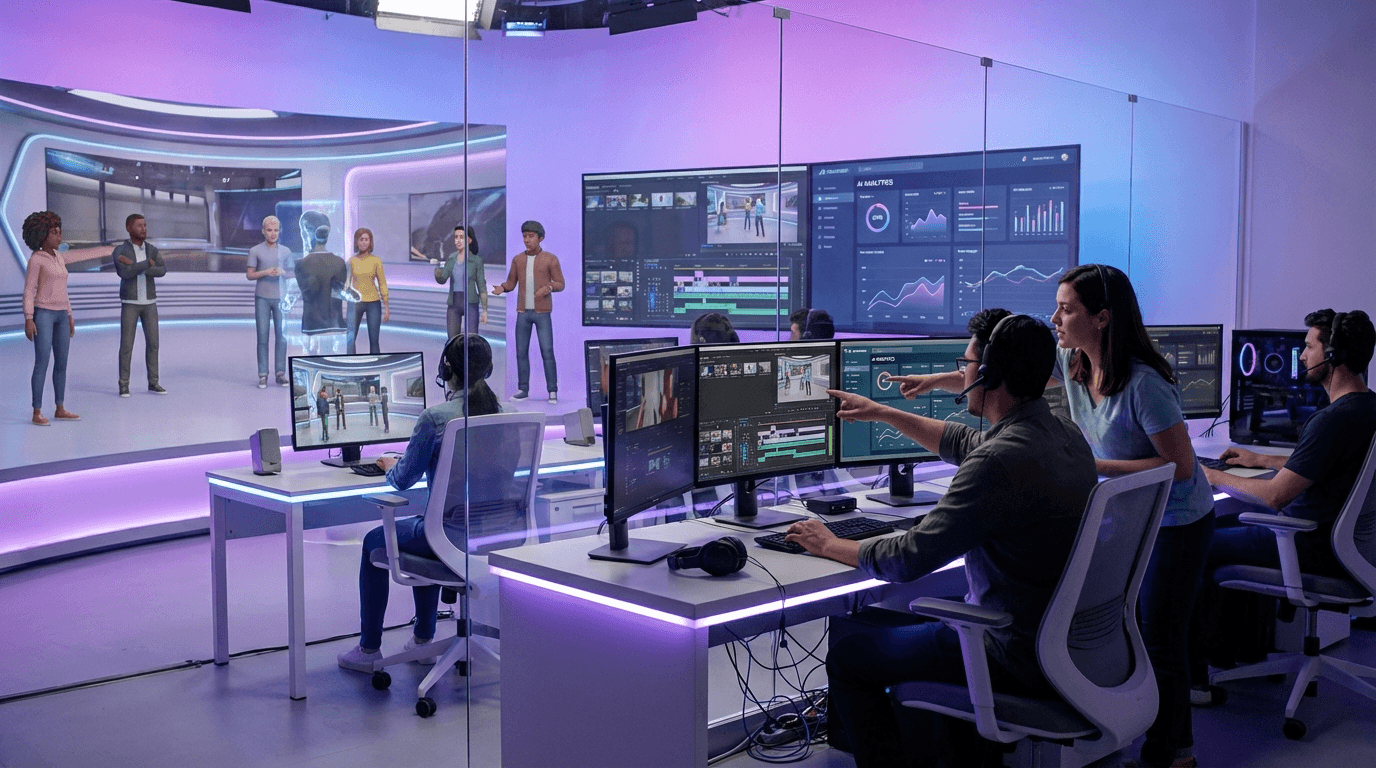
AI avatar platforms like Keevx exemplify this evolution, delivering studio-quality videos in minutes without filming or editing skills. The platform automates script generation, avatar selection, voice synthesis, and video assembly, transforming URLs or topics into conversion-ready content through batch generation capabilities.
For cross-border e-commerce businesses, this automation extends to multilingual video translation with lip-sync across 70+ languages and 178 dialects. What previously required separate production teams for each market now happens through a single workflow, dramatically reducing time-to-market and localization costs.
AI Video Ads for Performance Marketing
Data-driven video strategy integrates directly with advertising platforms through AI video ads optimized for YouTube and TikTok. These tools analyze viral content patterns and replicate successful formats while maintaining brand consistency, allowing marketers to test multiple creative variations without linear production timelines.
The key advantage is iteration speed. When a campaign underperforms, you can generate and test new variations within hours rather than weeks, maintaining advertising momentum while improving efficiency based on real performance data.
Platform-Specific Optimization Strategies
Different platforms reward different content formats and optimization approaches. A data-driven video content strategy treats each distribution channel as a unique environment with specific algorithmic preferences and audience behaviors.
YouTube: Long-Form and Discovery
YouTube's 2026 algorithm prioritizes long-form videos (10+ minutes) in recommendations while using Shorts for discovery. According to Entrepreneur, the optimal mix is 60% long-form for depth and monetization, paired with 40% Shorts for audience acquisition. Use Shorts as top-of-funnel awareness tools that direct viewers to comprehensive videos where deeper engagement and conversions occur.
TikTok and Short-Form Performance
Short-form video dominates mobile attention, with 66% of consumers finding it most engaging. Data-driven strategy focuses on metrics beyond vanity numbers, as outlined in Content Whale's analysis, evaluating watch-through rates, saves, and conversion actions. The highest-performing content combines hook-driven openings, value-dense middle sections, and clear calls-to-action. Testing creative angles through rapid iteration reveals which messaging resonates.
Measuring What Matters: Advanced Analytics

A data-driven approach requires measuring the right performance indicators at each stage of the customer journey. Surface metrics like total views provide limited insight; conversion attribution and engagement depth reveal actual business impact.
Retention Curves and Engagement Depth
Retention curves show exactly where viewers lose interest, enabling surgical improvements to pacing and structure. Channel-specific performance data reveals which platforms deliver the highest-quality traffic. A platform generating 100,000 views with 0.5% conversion underperforms one delivering 10,000 views at 5% conversion, despite higher vanity metrics.
Attribution and Revenue Impact
Connect video performance to revenue through UTM tracking and CRM integration. According to DemandSage statistics, 84% of marketers report video directly increases sales, but only attribution tracking identifies which content drives results. Advanced measurement tracks how video consumption correlates with customer lifetime value, identifying which content generates the most valuable customers.
Content Formats Mapped to the Customer Journey
Strategic video content strategy aligns specific formats with customer journey stages, ensuring each piece serves a clear purpose in moving prospects toward conversion and retention.
Awareness Stage: Educational and Entertaining Content
Top-of-funnel video builds trust through valuable content that solves problems without aggressive selling. Product demos, how-to tutorials, and thought leadership establish expertise and capture attention. Using ideas to video tools accelerates production, transforming topics into ready-to-publish videos that capitalize on current interest.
Consideration Stage: Product-Focused Content
Mid-funnel content showcases specific solutions for audiences evaluating options. AI product videos transform static images into dynamic demonstrations, ideal for e-commerce platforms. Case studies and feature demonstrations serve buyers conducting research, balancing informational value with persuasive messaging.
Decision and Retention: Conversion and Loyalty
Bottom-funnel video removes final objections through testimonials and direct calls-to-action. Post-purchase content including tutorials and success stories maximizes customer lifetime value by improving activation and reducing churn while identifying upsell opportunities.
Multilingual Localization as Competitive Advantage
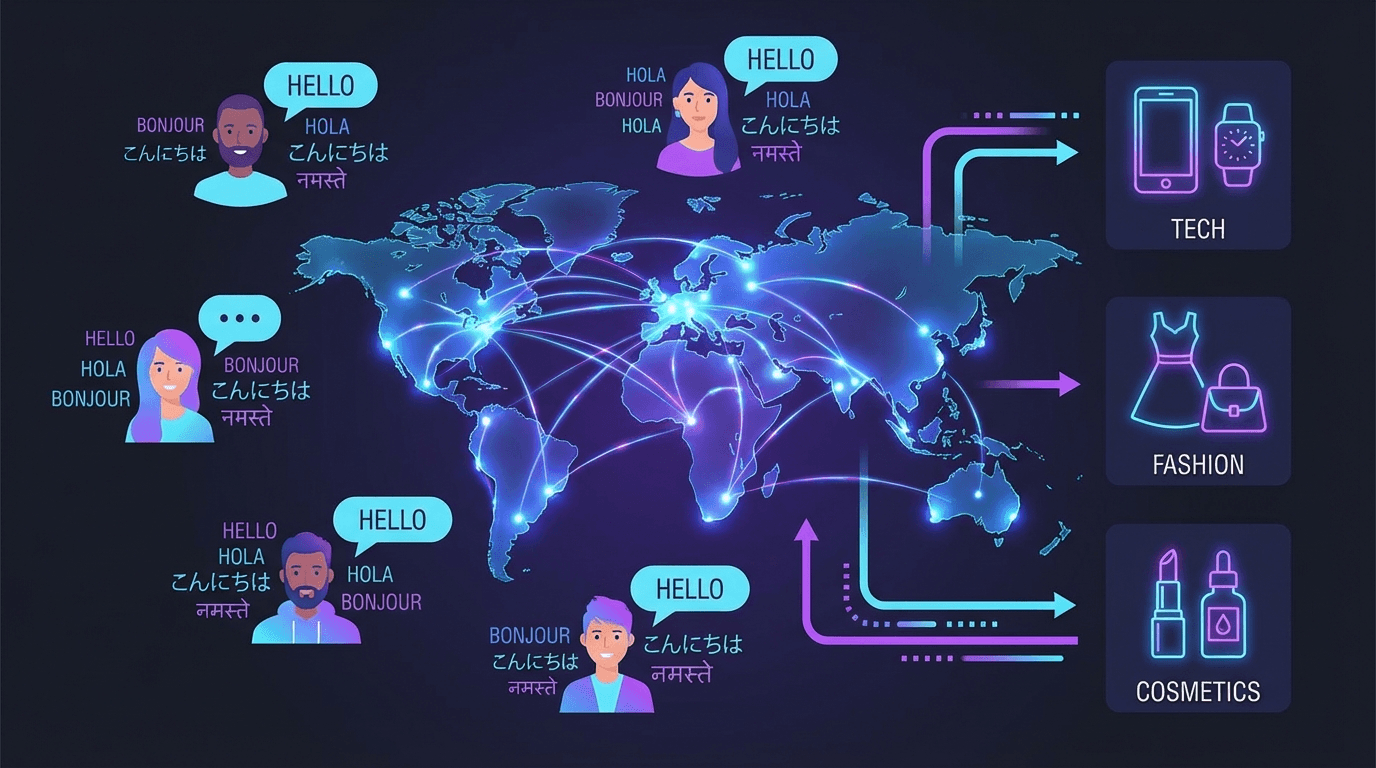
Global markets require localized content, but traditional translation and dubbing create bottlenecks that limit international expansion. Data-driven strategies leverage AI-powered video translation and dubbing with lip-sync to scale across languages without proportional cost increases.
For cross-border e-commerce sellers on Amazon, eBay, Shopify, and Etsy, multilingual video transforms market entry from months-long projects into same-day deployments. Create a product video once, then distribute it across 70+ language markets with localized voiceover, subtitles, and lip-synced avatars that maintain authenticity.
Cultural Adaptation Beyond Translation
Effective localization requires cultural adaptation in color choices, messaging tone, and avatar selection based on local preferences. Market trends analysis tools identify trending content in target regions, allowing brands to adapt successful formats rather than forcing domestic strategies into international markets.
Interactive and Shoppable Video Innovation
Interactive experiences transform passive viewing into active engagement. Companies using interactive elements like clickable hotspots and polls report engagement rates 3.5 times higher than traditional formats, according to Cyberclick's research.
Shoppable video embeds buy buttons directly within the player, collapsing the path from discovery to purchase. Granular click tracking reveals which products generate interest and which call-to-action placements perform best, informing both creative and merchandising strategies.
Creator-Led Content and Authenticity
Professional polish no longer trumps authentic connection. Avatar and voice cloning technology enables brands to scale personal branding while maintaining authentic founder presence. Digital humans deliver scripted content in a founder's voice and likeness, balancing efficiency with credibility when combined with occasional genuine appearances.
Building Your Data-Driven Video System
Transitioning from ad-hoc video creation to systematic strategy requires establishing frameworks for planning, production, distribution, and measurement.
Content Pillars and Editorial Planning
Define 3-5 content pillars that align with business objectives and audience interests. Editorial calendars map these pillars across weeks and months, ensuring consistent output. Data informs pillar selection through search volume analysis and historical performance review, with resources flowing to pillars driving the most qualified traffic and conversions.
Production Workflows and Templates
Standardize production through templates and repeatable workflows. Video templates for common use cases maintain quality while reducing production time. Batch creation processes maximize efficiency. Templates eliminate repetitive decision-making on consistent elements, letting creative energy focus on unique messaging.
Distribution and Promotion Strategy
Map content to appropriate platforms based on format and business goals. Each platform requires optimization for its specific dimensions and best practices. Paid promotion accelerates organic reach for pillar content with proven conversion potential, with budgets flowing toward videos demonstrating strong engagement.
Frequently Asked Questions
What makes a video content strategy data-driven?
A data-driven video content strategy uses analytics to inform every decision, from topic selection and format choice to distribution tactics and budget allocation. This approach measures retention rates, engagement depth, conversion attribution, and ROI rather than relying on view counts or intuition. Success is defined by business outcomes, not creative preferences.
How much should businesses budget for video content in 2026?
Budget depends on goals, industry, and current capabilities. AI-powered tools like Keevx enable professional production starting at minimal investment, while enterprise campaigns with custom production can exceed six figures quarterly. The key is matching spending to measurable outcomes. Start with scalable platforms that prove ROI before expanding to higher-cost productions.
What video length performs best for different platforms?
YouTube prioritizes long-form (10+ minutes) in recommendations but uses Shorts for discovery. TikTok and Instagram favor 15-60 second clips, though 3-minute videos work for educational content. LinkedIn audiences engage with 1-3 minute professional content. The optimal length serves the platform's algorithm and audience expectations while delivering complete value.
How can small teams compete with large video production budgets?
AI avatar platforms, batch generation tools, and template libraries level the playing field. Small teams succeed by focusing on strategic targeting rather than production volume, creating fewer but better-optimized videos for specific audience segments. Authenticity and relevance often outperform production polish, particularly in B2B and niche markets.
What role does AI play in video content strategy?
AI transforms strategy, production, localization, and optimization. AI generates scripts, creates avatars, translates content, analyzes performance, and identifies trending topics. By 2026, 75% of marketing videos incorporate AI assistance, enabling businesses to scale output, reduce costs, and optimize based on data that would be impossible to process manually.
Conclusion
Video content strategy in 2026 separates into two camps: brands guessing at what might work and those using data to know what does work. The competitive advantage goes to businesses that combine AI-powered production efficiency with rigorous performance measurement, creating sustainable systems that generate measurable ROI.
The barrier to professional video has collapsed. Tools that once required production studios now operate through web browsers. The remaining differentiator is strategic intelligence, the ability to identify opportunities through data, execute through automation, and optimize through measurement.
Your video content strategy should treat every piece as an experiment that generates learnings, every campaign as a system that compounds results, and every platform as a unique environment requiring specific optimization. This disciplined approach transforms video from a cost center into a profit driver.
