
How Global Creators Use AI to Expand into New Markets
Learn how creators leverage AI avatars, video translation, and lip-sync technology to execute a global content strategy that reaches audiences in 70+ languages without expensive production costs.
TL;DR: Global creators now use AI video translation, digital avatars, and lip-sync technology to localize content into 70+ languages in minutes. This eliminates expensive production costs while enabling a true global content strategy that resonates with local audiences worldwide.
The global AI-powered content creation market is projected to reach $10.59 billion by 2033, growing at 19.4% annually. Behind this growth is a fundamental shift: creators no longer need studios, translators, or months of production time to reach international audiences. By 2025, over 60% of video content creators use AI to translate and localize videos, cutting production time by nearly 70%. A well-executed global content strategy powered by AI tools gives creators, e-commerce sellers, and marketing teams the ability to expand into new markets without sacrificing quality or cultural relevance.
This guide breaks down exactly how creators use AI to build a global content strategy—from video translation and digital avatars to cross-platform distribution and market analysis.
Why Global Content Strategy Matters Now
Over 75% of online users prefer consuming content in their native language. For creators and businesses, this means even the most engaging video loses impact if it is not understood. The demand is clear: global streaming consumption has increased by 400% since 2020, with non-English content representing over 60% of total viewing time.
A global content strategy goes beyond translation. It involves adapting content to reflect local cultures, idioms, visual preferences, and contextual nuances. The goal is making your content feel native to each market while maintaining your brand voice.
The Cost Barrier Has Collapsed
Traditional localization required hiring voice actors, translators, video editors, and cultural consultants for each market. A single 30-second ad localized for 10 markets could cost tens of thousands of dollars and take months.
AI changes this equation. Creators now produce multilingual content at 50% lower cost compared to traditional methods. The AI video translation market itself is expected to reach $33.4 billion by 2034, reflecting how quickly adoption is accelerating.
AI Video Translation and Dubbing
The core technology enabling global content strategy is AI-powered video translation with automatic dubbing. Modern tools combine voice cloning, lip-sync technology, and large language models to create localized videos that look and sound natural.
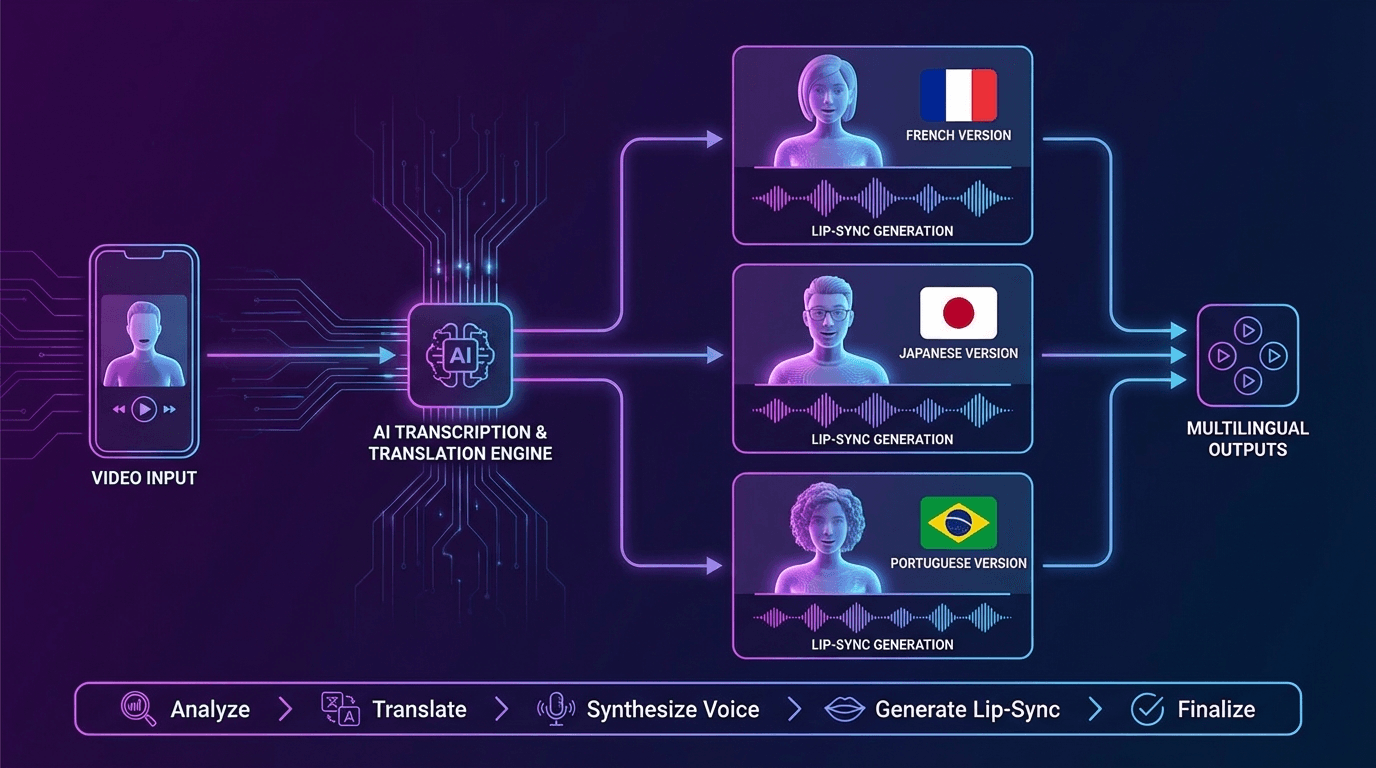
How AI Translation Works
The process is straightforward. Upload your video, select target languages, and the AI handles transcription, translation, voice synthesis, and lip-sync alignment. Platforms supporting video translation and dubbing now achieve about 90% accuracy in preserving the original emotions and tone of the speaker.
The technology goes beyond word-for-word translation. AI adjusts idioms, delivery tone, and even gestures for different regions. This level of intelligence is powered by large language models, enabling translations that feel custom-crafted rather than machine-generated.
Real-World Results
Trivago leveraged AI video translation to localize their TV ads across 30 markets, cutting post-production time in half and saving 3–4 months per campaign. Meta expanded its AI video translation capabilities in 2025 to include Hindi and Portuguese for Reels, with AI mimicking the creator's voice and tone for natural-sounding translations.
Digital Avatars and Voice Cloning
Digital avatars remove another barrier to global content: the need for on-camera talent. Creators use AI avatar and voice cloning technology to create professional videos without filming.
Scalable Presence Across Markets
A digital human can speak any language with consistent quality. For creators, this means producing localized versions of the same video without re-shooting. For businesses, it enables training videos, product demos, and marketing content in dozens of languages from a single recording session.
Modern platforms offer 230+ avatars and 169 voice options supporting multiple regional languages. Combined with voice cloning technology, creators maintain their unique voice identity across all localized content.
Applications Beyond Marketing
Corporate HR teams use AI avatars for multilingual onboarding materials. Educational institutions create course content for international students. App developers produce localized App Store and Google Play promotional videos. The common thread: minute-level production without filming, editing, or technical skills.
E-commerce Product Video Localization
Cross-border e-commerce sellers face a specific challenge: creating product videos for multiple marketplaces in different languages. AI solves this with URL-to-video conversion and batch generation.
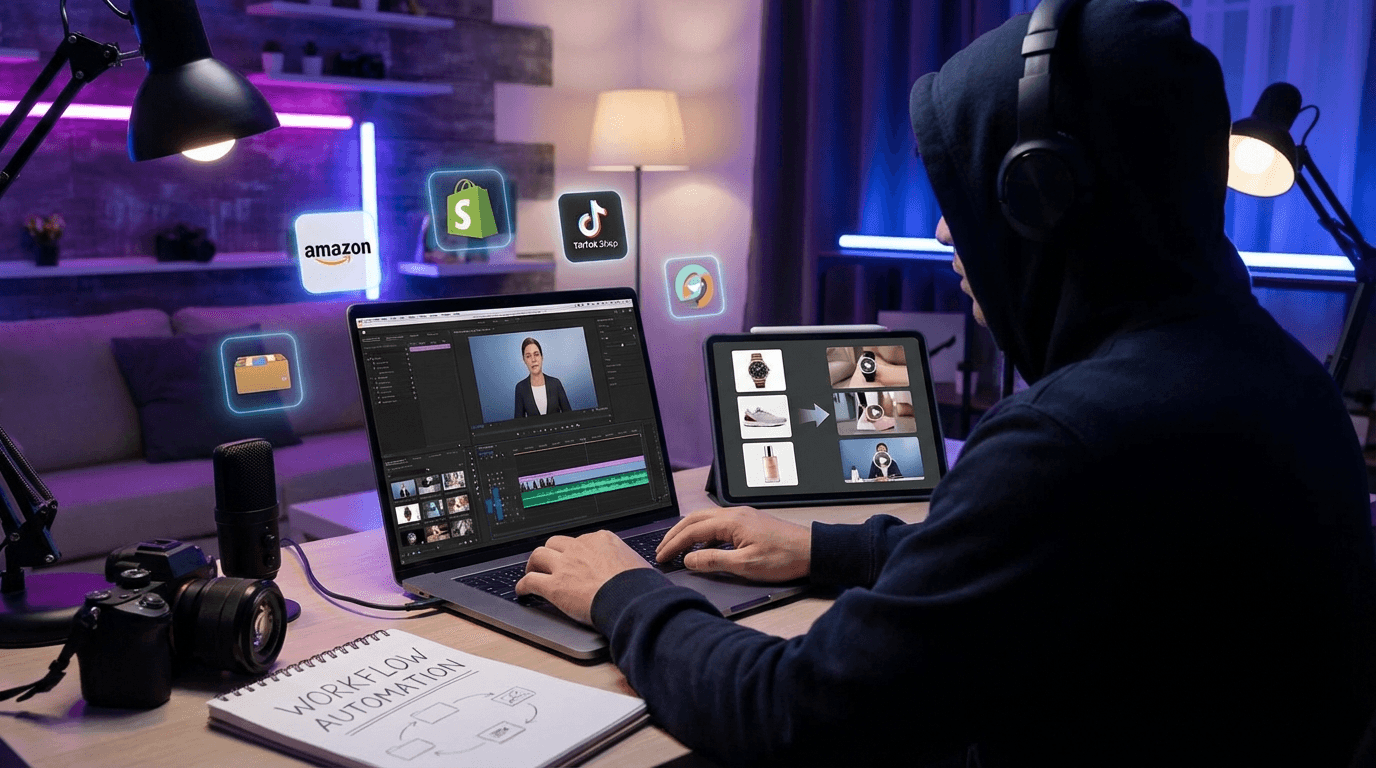
One-Click Product Videos
Tools supporting AI product video creation let sellers paste an Amazon, Shopify, eBay, or Etsy product URL and automatically generate a video. The AI extracts product images, generates a conversion-focused script, and produces a ready-to-use video with avatar narration.
For sellers managing hundreds of SKUs across multiple markets, this transforms what was previously impossible into routine workflow.
Multilingual Marketplace Expansion
The same product video can be localized for different marketplaces with lip-synced voiceovers. A seller targeting Germany, Japan, and Brazil can produce all three versions from a single source video. This approach combines the benefits of localization—native language, cultural relevance—with the efficiency of automation.
Identifying High-Potential Markets
A global content strategy requires knowing which markets to prioritize. AI tools now help creators analyze market trends and identify opportunities before investing in localization.
Data-Driven Expansion
Rather than guessing which markets might respond to your content, AI analyzes search trends, competitor performance, and audience demographics. This tells creators where demand exists and what content formats perform best in each region.
For example, short-form video dominates in the U.S. and parts of Asia, while long-form content performs better on Chinese platforms like WeChat and Weibo. Instagram and TikTok favor visual, fast-paced formats. Understanding these preferences shapes which content to localize and how.
Testing Before Scaling
AI enables rapid testing across markets. Creators can produce localized versions of existing content, measure performance, and scale investment in markets showing traction. This iterative approach reduces risk compared to committing resources to a single market expansion.
Cross-Platform Distribution
A global content strategy succeeds when content reaches audiences where they already spend time. This means optimizing for different platforms across different regions.
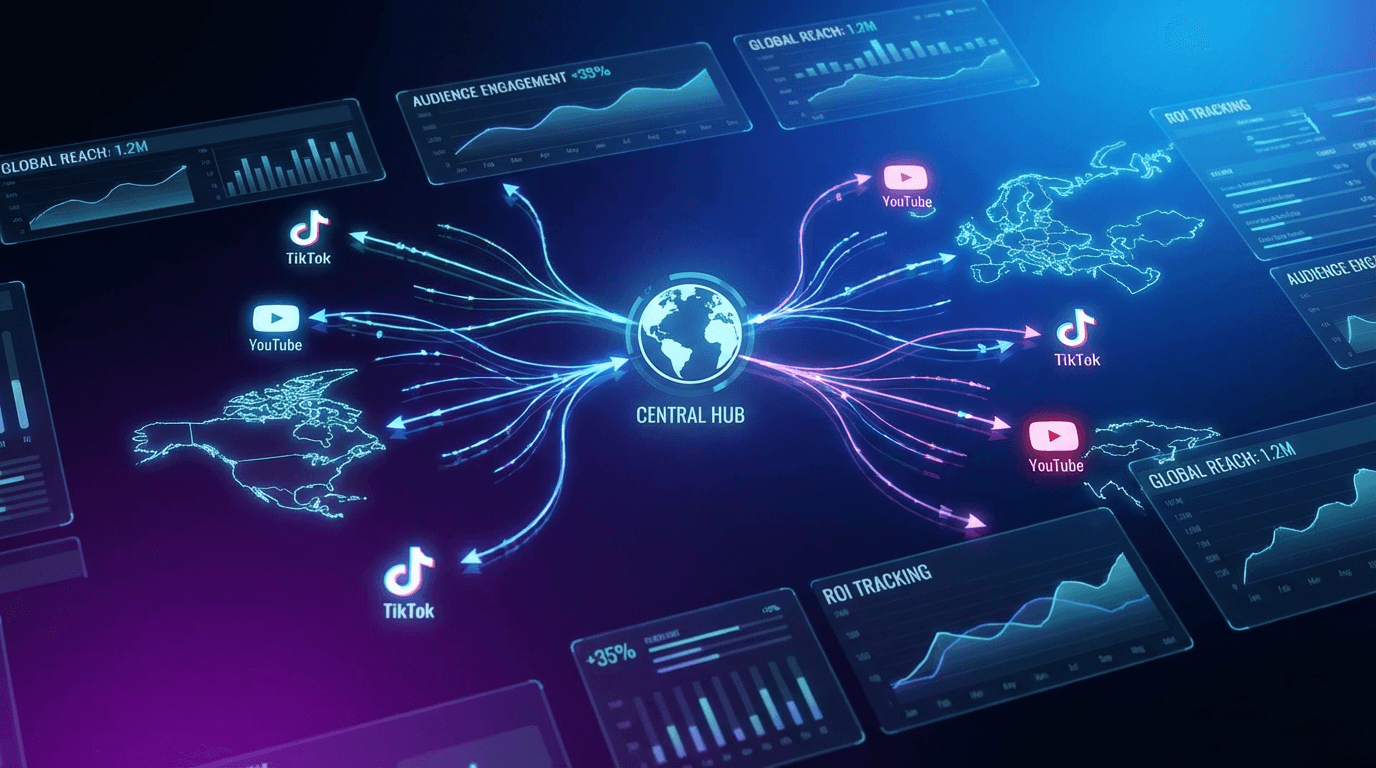
Platform-Specific Optimization
YouTube, TikTok, Instagram Reels, and regional platforms each have different format requirements, algorithm preferences, and audience behaviors. AI tools handle aspect ratio conversion, caption generation, and format optimization automatically.
Cross-platform optimization also includes generating multilingual subtitles, adjusting video length for each platform, and scheduling posts for optimal engagement times in different time zones.
Maintaining Brand Consistency
The challenge of global distribution is maintaining consistent brand voice across markets. AI helps by applying brand guidelines to all localized content—voice and tone, visual style, messaging frameworks. This ensures a seller in Tokyo experiences the same brand as one in Toronto.
Frequently Asked Questions
What is a global content strategy?
A global content strategy is a plan for creating, managing, and distributing content that resonates with audiences across multiple countries and languages. It goes beyond translation to include cultural adaptation, local SEO, and platform-specific optimization for each target market.
How much does AI video translation cost compared to traditional methods?
AI video translation typically costs 50% less than traditional dubbing and localization. Traditional methods require voice actors, studio time, translators, and editors for each language. AI handles transcription, translation, voice synthesis, and lip-sync in a single automated workflow.
Can AI maintain my brand voice across different languages?
Yes. Modern AI tools preserve tone, emotion, and speaking style across translations. Voice cloning technology maintains speaker identity, while large language models adapt messaging for cultural relevance without losing brand consistency. Human review is recommended for high-visibility content.
Which markets should I prioritize for global content expansion?
Prioritize based on data: existing audience demographics, search demand in target languages, competitor activity, and platform preferences in each region. AI market analysis tools help identify where demand exists before committing to full localization investment.
Conclusion
The tools for executing a global content strategy have fundamentally changed. AI video translation, digital avatars, lip-sync technology, and automated localization make it possible for creators to reach audiences in 70+ languages without traditional production costs or timelines.
For e-commerce sellers, this means product videos in every marketplace language. For content creators, it means growing audiences across regions. For marketing teams, it means campaigns that truly resonate with local audiences.
The creators winning in global markets are those adopting these tools now—producing localized content at scale while competitors still rely on expensive, slow traditional methods.
