
AI Voice Cloning: How It Works & What You Can Do With It
Discover how AI voice cloning uses deep learning to replicate voices in seconds. Learn practical applications for content creation, video translation, and multilingual localization.
TL;DR: AI voice cloning uses deep learning to replicate any voice from just seconds of audio. You can use it to create multilingual content, scale video production, and maintain consistent brand voice across all your marketing channels—without recording everything manually.
Imagine creating product videos in 70 languages using your own voice, without speaking a single word in any of them. That's the reality of AI voice cloning in 2025. This technology has evolved from a novelty into a production-ready tool that content creators, e-commerce merchants, and marketing teams use daily to scale their output.
Voice cloning goes beyond simple text-to-speech. It captures the unique characteristics of a specific voice—tone, pitch, cadence, and even emotional nuances—and reproduces them so accurately that listeners often can't distinguish the clone from the original. According to research published in Scientific Reports, people are generally poorly equipped to detect AI-generated voice clones, with the technology achieving over 95% similarity to original voices.
This guide breaks down exactly how voice cloning works, what you can do with it, and how to get started today.
How AI Voice Cloning Technology Works
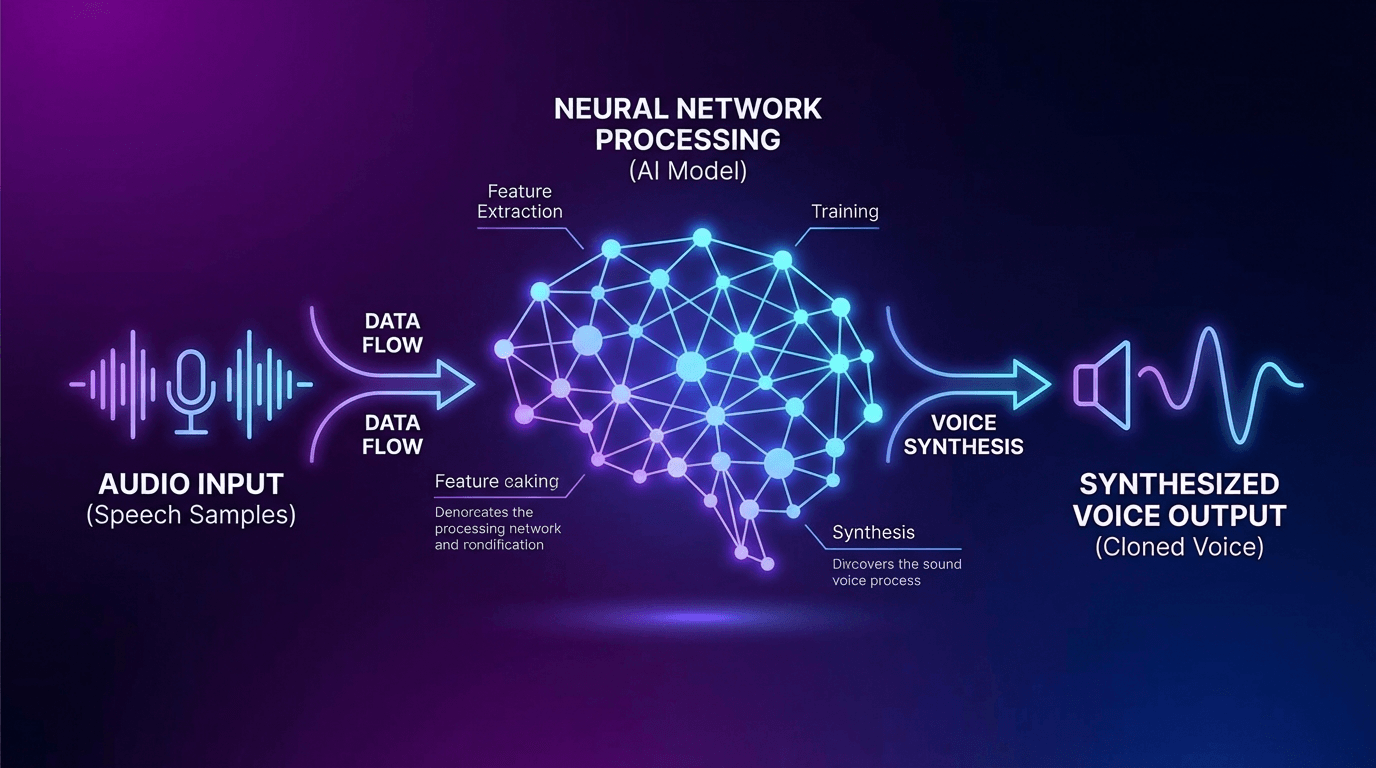
Voice cloning relies on deep neural networks trained on massive datasets of human speech. The process involves several sophisticated stages that transform audio samples into a replicable digital voice model.
The Technical Process
The journey from audio sample to cloned voice follows four main steps:
1. Data Collection and Preprocessing: Voice cloning starts with gathering voice recordings from the target speaker. These recordings are cleaned to remove background noise, normalized for consistent volume, and segmented into labeled chunks for analysis.
2. Feature Extraction: The system converts audio into spectrograms—visual representations of frequencies over time. It extracts features like Mel-frequency cepstral coefficients (MFCCs) that represent the unique sound patterns of the voice.
3. Model Training: Deep learning models including convolutional neural networks (CNNs) and recurrent neural networks (RNNs) train on these audio features. They learn to understand and replicate the specific speech nuances, pronunciation patterns, and vocal characteristics.
4. Voice Synthesis: The trained model generates new speech by converting text into phonemes, predicting audio features, and using advanced vocoders like WaveNet or HiFi-GAN to create natural-sounding audio waveforms.
Instant vs. Professional Voice Cloning
Modern platforms offer two main approaches:
Instant Voice Cloning creates a usable voice model from as little as 3-30 seconds of audio. The process takes about a minute, making it ideal for quick projects. Trade-off: slightly reduced accuracy in capturing subtle vocal nuances.
Professional Voice Cloning requires 30 minutes to 3 hours of audio samples. This approach produces higher-fidelity clones that capture emotional range and speaking style more precisely. Best for long-term brand voice applications.
Tip: For e-commerce product videos, instant cloning typically provides sufficient quality while dramatically reducing production time.
Real-World Applications of Voice Cloning
Voice cloning has moved beyond experimental use into practical business applications. Here's where the technology delivers measurable value.
Multilingual Content at Scale
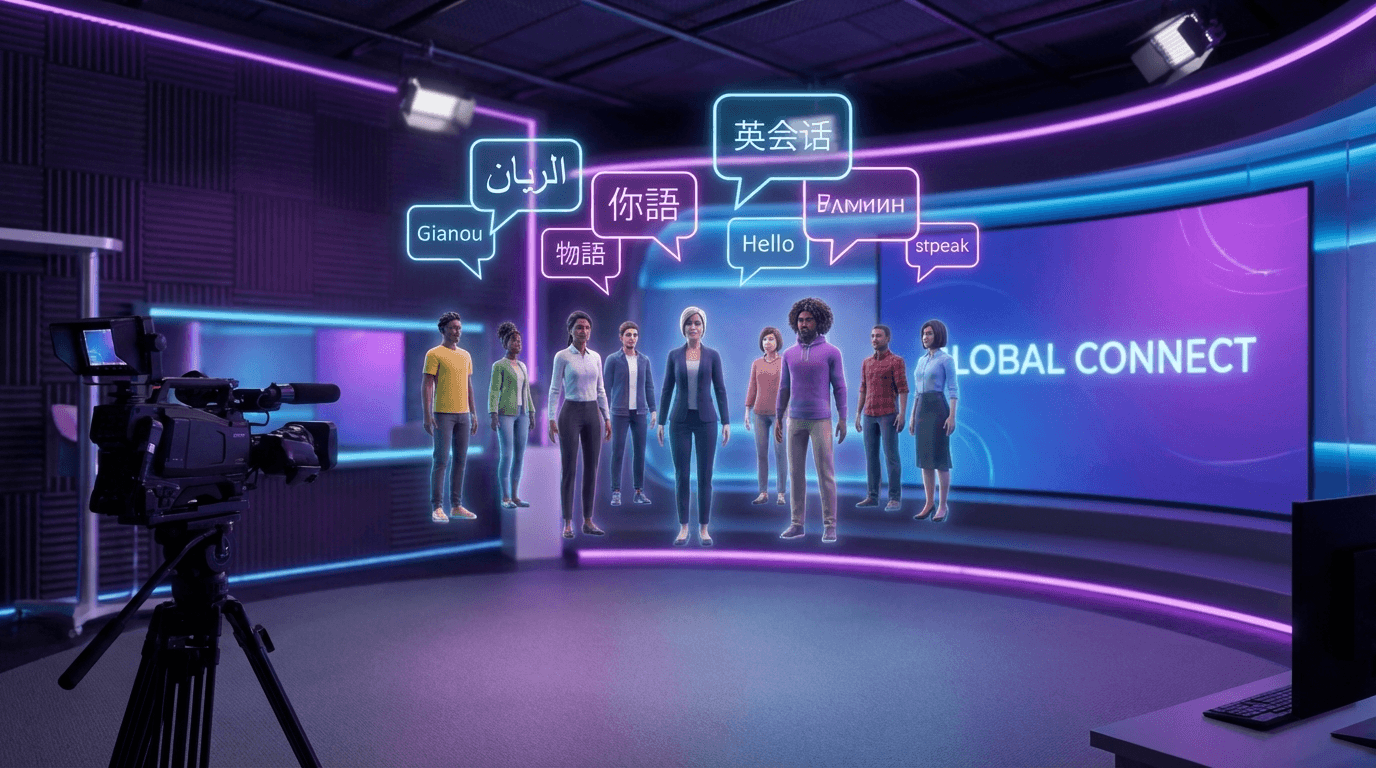
The most transformative application is multilingual localization. Voice cloning allows you to maintain your voice characteristics when speaking languages you don't know. Your English product video can become a Spanish, German, or Japanese video—all with your voice, complete with accurate lip-sync.
For cross-border e-commerce sellers on Amazon, Shopify, or eBay, this means creating localized listings without hiring voice actors for each market. Platforms offering video translation and dubbing can reduce localization costs by up to 60% while cutting production time by 5-10x.
Content Creation and Marketing
Voice cloning enables:
- Podcast production without reading every word yourself
- Audiobook creation from written content
- Video ad narration in your consistent brand voice
- Training materials at scale for HR and education teams
Creators using avatar and voice cloning tools can produce complete video content by simply typing a script. The AI handles the rest.
Customer Service and Accessibility
Voice cloning supports 24/7 automated customer service with human-sounding responses. Companies like Trilogy have used AI voice chatbots to automate 60% of their support tickets while maintaining a consistent, professional voice.
For accessibility, the technology helps individuals who have lost their voice due to medical conditions maintain their personal identity in speech synthesis devices.
How to Clone Your Voice Step by Step
Getting started with voice cloning is straightforward. Here's a practical process that works across most platforms.
Preparing Your Audio Sample
Quality input produces quality output. Follow these recording guidelines:
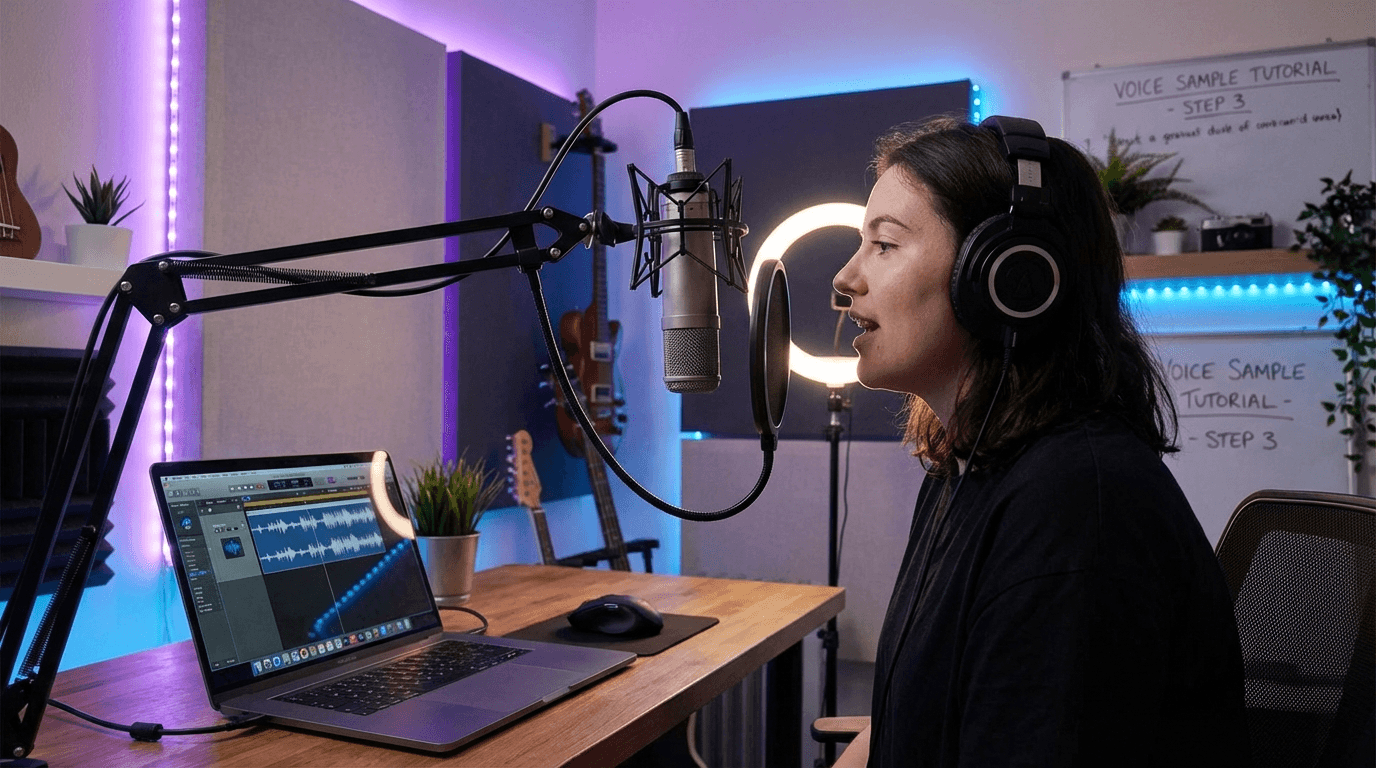
Environment: Record in a quiet room. Background noise confuses the AI and produces lower-quality clones.
Equipment: A USB microphone or even a smartphone in a quiet space works. Professional equipment helps but isn't required.
Speaking Style: Speak naturally. Avoid overacting or exaggerated emphasis. Your normal speaking voice gives the AI the best foundation.
Duration: Aim for 1-10 minutes of varied speech for instant cloning. Include different sentence types, emotions, and pacing for better results.
The Cloning Process
-
Record or upload your audio sample. Most platforms accept MP3, WAV, or direct recording.
-
Let the AI process your voice. Instant cloning takes 1-2 minutes. Professional cloning may take longer.
-
Test with sample text. Generate a few test outputs to evaluate quality before using in production.
-
Adjust settings if available. Some platforms offer stability and clarity controls to fine-tune output.
-
Generate content. Type your script and let the cloned voice produce the audio.
Tip: Save your best audio samples. Platforms that allow data upload for training can produce higher-quality clones with more reference material.
Quality and Accuracy Considerations
Not all voice clones are equal. Understanding quality factors helps you get better results.
What Affects Clone Quality
Sample quality: Clean, noise-free recordings with consistent audio levels produce better clones.
Sample diversity: Varied content—different emotions, sentence structures, and topics—helps the AI capture your full vocal range.
Platform technology: Leading platforms like ElevenLabs achieve results that experts describe as "virtually indistinguishable from real voices."
Language complexity: Some languages clone more accurately than others based on available training data.
Measuring Success
Quality metrics include:
- Voice similarity score: How closely the clone matches the original (typically 90-98% on leading platforms)
- Mean Opinion Score (MOS): Human listener ratings of naturalness
- Speaker verification: Whether listeners correctly identify the clone as the target speaker
Ethical Use and Legal Considerations
Voice cloning sits in an evolving legal and ethical landscape. Using the technology responsibly protects both you and others.
Best Practices for Responsible Use
Consent is non-negotiable. Clone only your own voice or obtain explicit written permission. Specify how the voice will be used and for how long.
Transparency matters. Disclose AI voice use to your audience. Many platforms recommend audio disclaimers or text labels.
Security first. Encrypt voice samples, restrict model access, and use platforms with strong privacy protections.
Usage limits. Never use voice cloning for impersonation, fraud, misinformation, or harassment.
Legal Developments
Regulation is catching up with the technology:
- Tennessee's ELVIS Act (2024) protects voice as personal property
- The FCC declared (February 2024) that AI-generated calls fall under TCPA, requiring explicit consent
- Voice fraud has increased 442% in the last half of 2024 alone, driving stricter enforcement
Getting Started with Voice Cloning
Ready to implement voice cloning in your workflow? Here's how to move forward efficiently.
Choose the Right Approach
For quick experiments and short-form content: Use instant cloning with 30-second samples. Good for testing the technology or producing one-off content.
For ongoing brand content and video production: Invest time in professional cloning with 30+ minutes of samples. The upfront effort pays off in consistent, high-quality output across all content.
For complete video production: Platforms that combine voice cloning with digital avatars, like those offering AI video ads, let you create studio-quality content without filming or editing.
Integration Workflow
- Clone your voice once on your chosen platform
- Create scripts for your content (or use AI script generation)
- Generate audio in your cloned voice
- Combine with avatars or existing video for complete content
- Localize to additional languages using the same voice model
This workflow reduces video production from days to minutes while maintaining your authentic voice across all content.
Frequently Asked Questions
How much audio do I need to clone my voice?
Instant cloning works with as little as 3-30 seconds, though 1-10 minutes produces better results. Professional cloning requires 30 minutes minimum, with 3 hours being optimal for capturing full vocal range.
Is AI voice cloning legal?
Yes, when cloning your own voice or with explicit consent. Laws like Tennessee's ELVIS Act and FCC regulations require consent for commercial use of cloned voices. Always verify local regulations.
Can people detect AI-cloned voices?
Research shows most people cannot reliably distinguish high-quality voice clones from real speech. Leading platforms achieve 95%+ similarity scores, making detection difficult even for experts.
What languages does voice cloning support?
Top platforms support 29-70+ languages. Your cloned voice can speak languages you don't know, with advanced systems maintaining your vocal characteristics across all supported languages.
Conclusion
AI voice cloning has reached production-ready maturity. The technology enables content creators and businesses to scale video production, reach global audiences in their native languages, and maintain consistent brand voice—all while reducing costs and production time dramatically.
The path forward is clear: clone your voice once, and use it across all your content. Whether you're creating product videos for Amazon listings, training materials for global teams, or marketing content for multiple platforms, voice cloning removes the bottleneck of manual recording.
