
AI Dubbing vs Traditional Dubbing: Cost, Speed & Quality
AI dubbing cuts costs by up to 90% and reduces production from weeks to hours. Learn when to choose AI, traditional, or hybrid dubbing for your video localization needs.
TL;DR: AI dubbing cuts localization costs by up to 90% and reduces turnaround from weeks to hours, making it ideal for high-volume content. Traditional dubbing delivers superior emotional depth for premium creative work. Most businesses benefit from a hybrid approach that combines AI speed with human polish.
The global demand for multilingual video content is surging. Over 75% of YouTube views come from non-English-speaking audiences, and streaming platforms report that more than 60% of users regularly watch international content. For businesses expanding into new markets, the choice between AI dubbing and traditional dubbing directly impacts budget, timeline, and content quality.
This guide breaks down the real differences between these two approaches across cost, speed, and quality. Whether you're localizing product demos for cross-border e-commerce, creating multilingual training materials, or scaling video ads for global campaigns, you'll find the data you need to make the right decision.
Understanding the Two Approaches
Before comparing metrics, let's clarify what each method involves.
How Traditional Dubbing Works
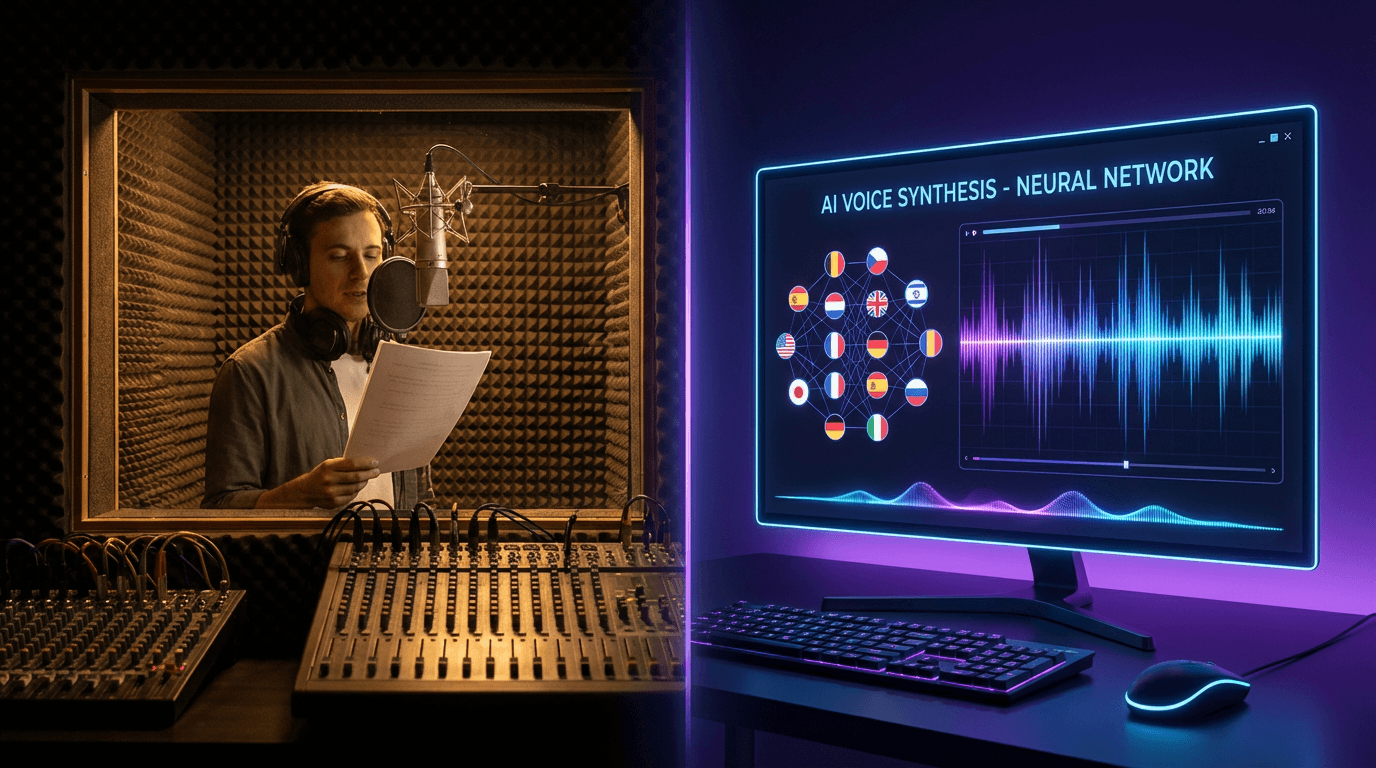
Traditional dubbing requires a coordinated team: translators adapt the script, voice actors record in a professional studio, sound engineers mix and sync the audio, and quality reviewers ensure accuracy. The process typically involves multiple recording sessions, script revisions, and extensive post-production work.
This method has powered the film and television industry for decades. Voice actors bring nuanced performances, adapting jokes, cultural references, and emotional beats for local audiences.
How AI Dubbing Works
AI dubbing automates most of this workflow. The system transcribes original audio, translates the script using neural machine translation, generates synthetic speech through text-to-speech algorithms, and synchronizes the new audio with video timing. Advanced platforms also offer voice cloning to maintain speaker consistency and lip-sync technology for natural visual alignment.
Cost Comparison: The Numbers
Cost differences between these methods are substantial and often determine which approach makes business sense.
Traditional Dubbing Costs
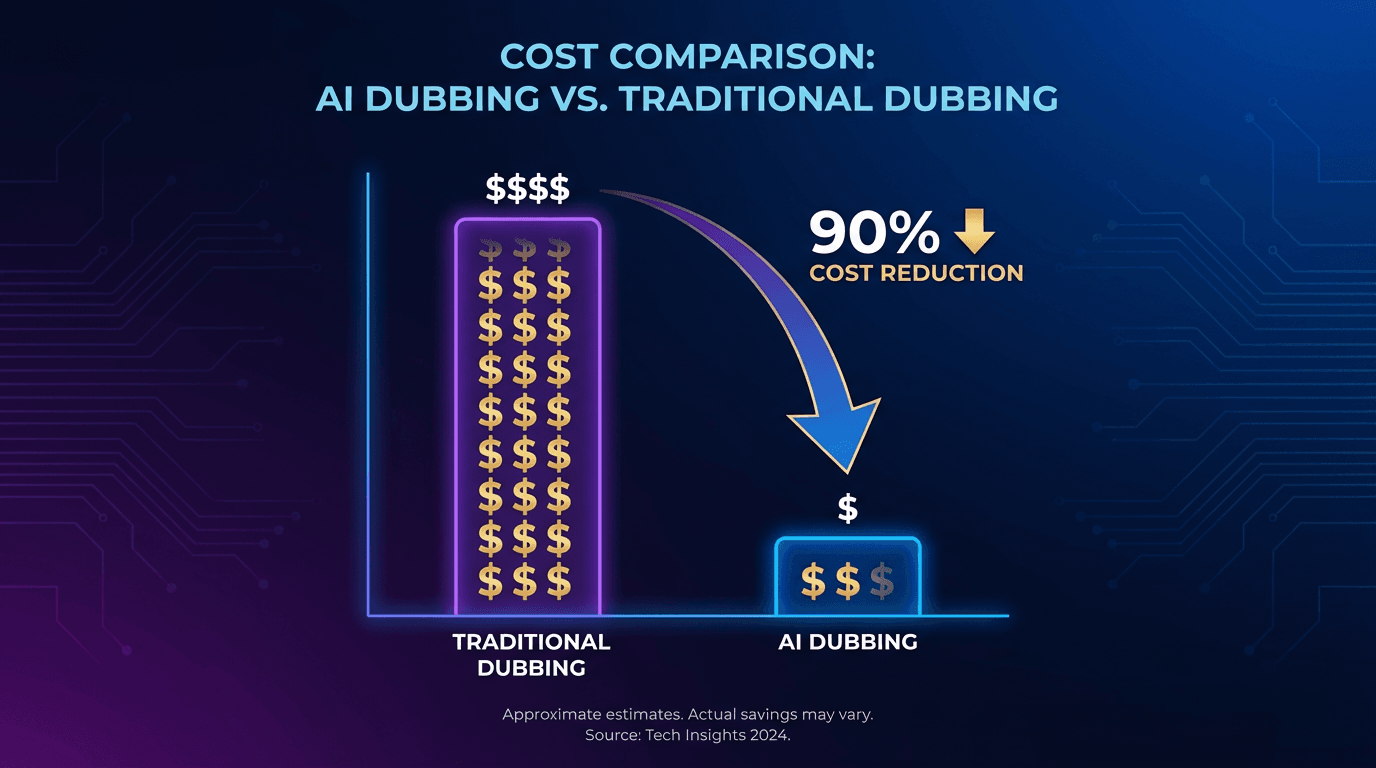
Traditional dubbing typically costs between $100 and $500 per finished minute, depending on language, voice talent, and production quality. For a standard 90-minute film dubbed into three languages, expect to invest $27,000 to $135,000.
These costs scale linearly. Each additional language requires a new voice cast, separate studio sessions, and dedicated quality assurance. A one-hour corporate video translated into just two languages can easily reach $18,000.
AI Dubbing Costs
AI dubbing services range from $1 to $30 per minute, with most enterprise platforms charging between $5 and $10 per minute. That same 90-minute film? AI dubbing brings the cost down to $900 to $2,700 for three languages.
The math becomes compelling at scale. Localizing a library of 100 product videos into 10 languages would cost approximately $1.5 million with traditional methods versus $50,000 to $150,000 with AI.
Tip: For e-commerce sellers managing large product catalogs, AI dubbing makes multilingual video content financially viable for the first time. A single product video can reach 70+ markets without breaking the budget.
Speed and Turnaround Time
Time-to-market often matters as much as cost, especially for seasonal campaigns, product launches, and trending content.
Traditional Dubbing Timeline
A typical traditional dubbing project takes 2-6 weeks per language. Complex projects involving multiple voice actors, extensive cultural adaptation, or premium post-production can stretch to 8-12 weeks. Coordinating schedules across translators, voice talent, and engineers adds unavoidable delays.
AI Dubbing Timeline
AI platforms deliver dubbed content in hours, not weeks. In 2025, studios using AI have reduced dubbing time by over 90%, releasing multilingual versions almost simultaneously with originals. Platforms with video translation and dubbing capabilities can process a 10-minute video in under an hour, including quality review.
For businesses running time-sensitive campaigns, this speed advantage transforms what's possible. A product launch video can go live in 70+ languages on the same day rather than trickling out over months.
Quality Comparison: Where Each Method Excels
Quality is where the conversation gets nuanced. Both methods have distinct strengths.
Traditional Dubbing Quality
Human voice actors deliver performances that AI cannot fully replicate. They capture subtle emotional nuances, adapt comedic timing for cultural context, and bring authentic character interpretations. For close-up dialogue scenes, actors provide natural lip-sync that matches mouth movements.
Traditional dubbing also handles complex linguistic elements better: sarcasm, regional dialects, cultural idioms, and wordplay that loses meaning in direct translation.
AI Dubbing Quality
AI voice quality has improved dramatically. Modern AI avatar and voice cloning technology produces speech that's often indistinguishable from human recordings for corporate, educational, and marketing content. The technology handles factual narration, product descriptions, and instructional content with consistent quality.
Current limitations include subtle emotional expression, spontaneous-sounding delivery, and handling of creative content that requires interpretation rather than translation.
Tip: For most e-learning, corporate training, and product marketing videos, AI dubbing quality meets or exceeds audience expectations. Reserve traditional dubbing for brand flagship content where emotional impact drives results.
When to Choose Each Method
The right choice depends on your content type, budget, timeline, and quality requirements.
Choose AI Dubbing For:
- High-volume content libraries requiring localization across many languages
- Product videos and demos where clarity matters more than emotional performance
- Training materials and e-learning that need consistent delivery
- Social media content with short shelf life and tight turnaround
- Initial market testing before investing in premium localization
- User-generated content and reviews that need quick translation
Choose Traditional Dubbing For:
- Brand commercials where emotional connection drives purchase decisions
- Film and premium entertainment requiring character performances
- Content with complex humor or cultural references needing adaptation
- Legal or compliance videos where precise interpretation matters
- Executive communications representing company leadership
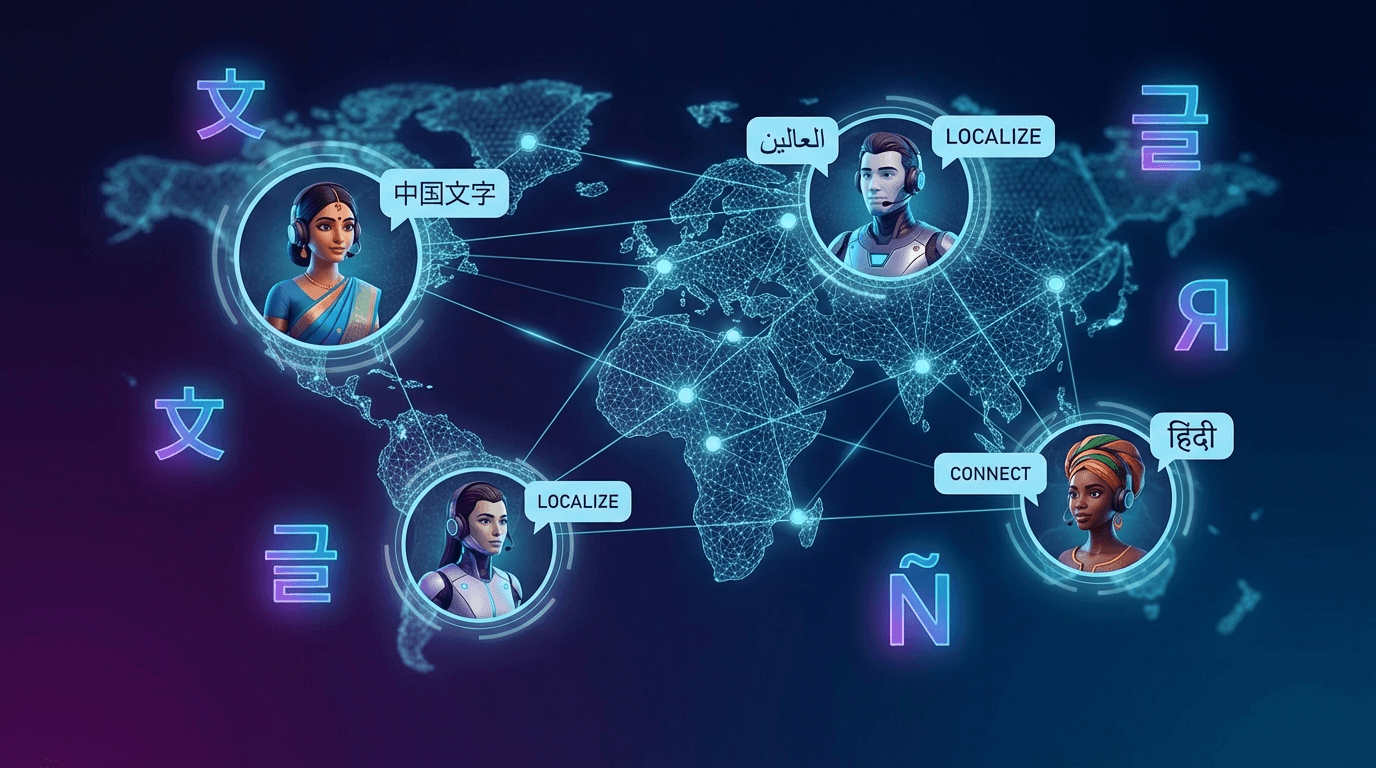
For businesses running global video ad campaigns, AI-powered video ad creation offers the speed and scale needed to test creative variations across markets without traditional production constraints.
The Hybrid Approach: Best of Both
Many organizations now combine AI and traditional dubbing strategically. This hybrid workflow uses AI for first-pass dubbing and volume content while reserving human talent for premium assets.
How Hybrid Workflows Work
- AI generates initial dubbed versions across all target languages
- Human reviewers identify content requiring traditional treatment
- Voice actors re-record high-priority segments or flagged content
- Final quality assurance ensures consistency across the library
This approach captures 80-90% of AI's cost and speed benefits while maintaining quality standards for content that matters most.
Practical Implementation
Start by categorizing your content library. Product tutorials, FAQ videos, and internal training typically perform well with pure AI dubbing. Customer testimonials, brand stories, and executive messages may warrant human voice talent.
Track audience engagement metrics across both methods. Many businesses discover their audiences accept AI-dubbed content more readily than expected, especially for informational content.
Frequently Asked Questions
How accurate is AI dubbing compared to human translation?
AI dubbing accuracy has reached 95%+ for straightforward content in major languages. Complex creative content, technical terminology, and languages with limited training data may require human review. Most platforms include editing tools to correct any errors before publishing.
Can AI dubbing match the original speaker's voice?
Yes, voice cloning technology preserves the original speaker's vocal characteristics, tone, and pacing in the dubbed version. This maintains brand consistency and personal connection, especially important for thought leadership content and recurring presenters.
What languages does AI dubbing support?
Leading platforms support 70-140+ languages and dialects. Coverage varies by provider, with stronger quality for major languages like Spanish, Mandarin, German, and French. Less common languages may have more limited voice options or require additional quality review.
Is AI-dubbed content suitable for professional use?
AI dubbing now meets professional standards for corporate communications, marketing content, e-learning, and product videos. Fortune 500 companies and major content platforms use AI dubbing for production content, not just drafts.
How does lip-sync work with AI dubbing?
Advanced AI dubbing includes lip-sync technology that adjusts the translated audio timing to match the speaker's mouth movements. Some platforms also modify video to achieve more precise visual alignment, creating natural-looking results for speaker-focused content.
Conclusion
The AI dubbing versus traditional dubbing decision comes down to your specific needs. AI dubbing delivers 90% cost savings and dramatically faster turnaround, making multilingual video accessible at scale. Traditional dubbing remains the standard for premium creative content where emotional performance drives results.
For most business applications, AI dubbing provides the practical path to global reach. E-commerce sellers, training departments, and marketing teams can now localize content libraries that would have been financially impossible with traditional methods.
Consider starting with AI dubbing for your volume content while testing audience response. Many organizations find the hybrid approach offers the right balance of efficiency and quality for their brand standards.
Ready to explore AI dubbing for your video content? Experience minute-level production with lip-sync and 70+ language support.
