
AI Video Translator Tools: Complete Comparison 2026
Discover which AI video translator delivers the best lip-sync, voice cloning, and multilingual support for your content. Compare features, accuracy, and real-world performance.
TL;DR: AI video translator tools in 2026 deliver 95-98% translation accuracy with lip-sync and voice cloning across 100+ languages. Leading platforms like Keevx, Synthesia, and HeyGen enable minute-level production at costs 15x lower than traditional dubbing, transforming global content distribution for e-commerce, marketing, and education.
Breaking into global markets no longer requires expensive dubbing studios or weeks of post-production. Modern AI video translator tools convert content into dozens of languages while preserving original voices, syncing lip movements, and maintaining emotional tone.
According to industry research, 68% of global businesses now use AI translation tools for marketing and training videos. What took translation agencies weeks and cost thousands now happens in minutes at a fraction of the price. This guide compares leading platforms based on translation accuracy, language support, voice cloning quality, and pricing to help you choose the right solution.
How AI Video Translator Technology Works
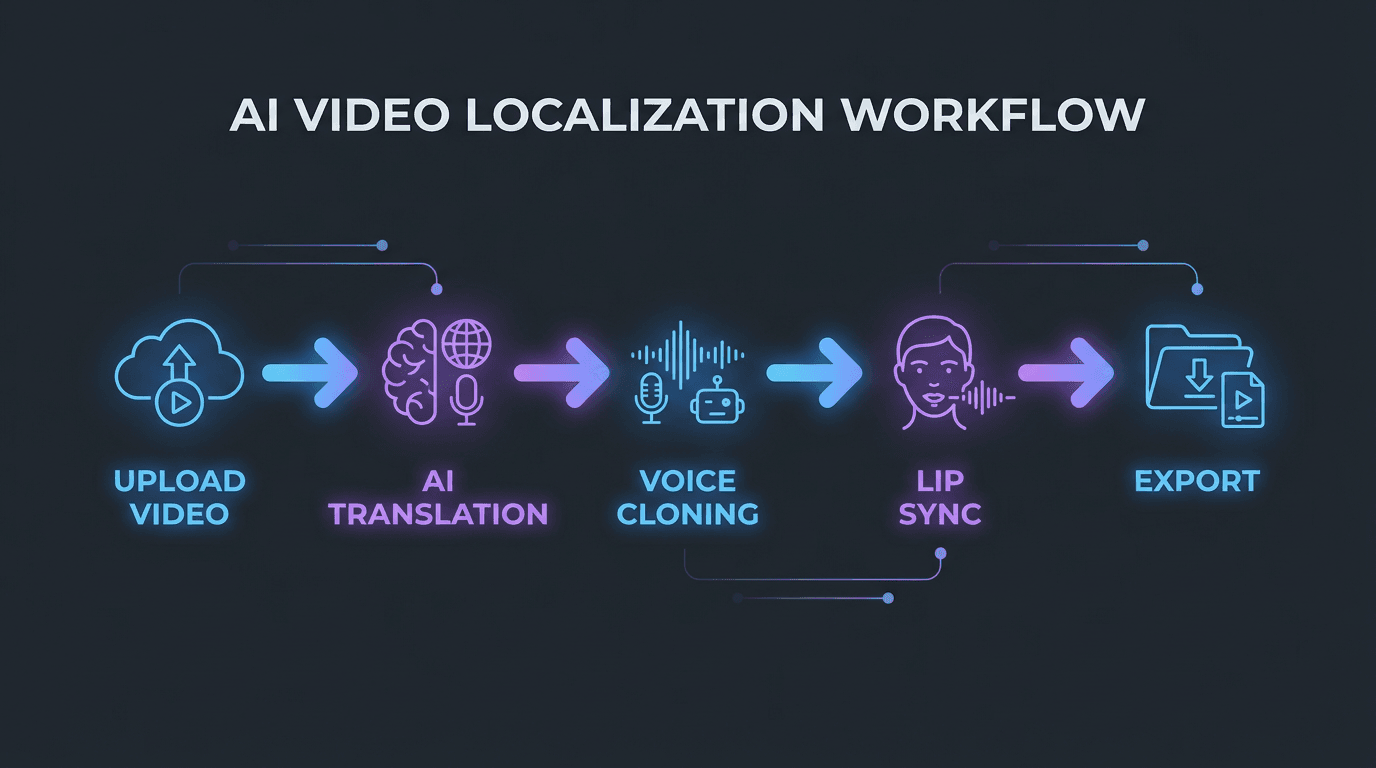
AI video translator tools combine multiple technologies to transform content across languages. Understanding this workflow helps evaluate which platforms deliver on their promises.
Modern platforms process videos through five stages: AI transcribes spoken content, neural machine translation converts text while preserving context, voice cloning replicates the speaker's tone and emotion, text-to-speech generates natural audio, and lip-sync algorithms adjust facial movements to match translated speech.
According to Synthesia's testing, leading tools achieve 95-98% accuracy comparable to professional human translators. The technology leverages neural networks trained on millions of hours of multilingual speech data.
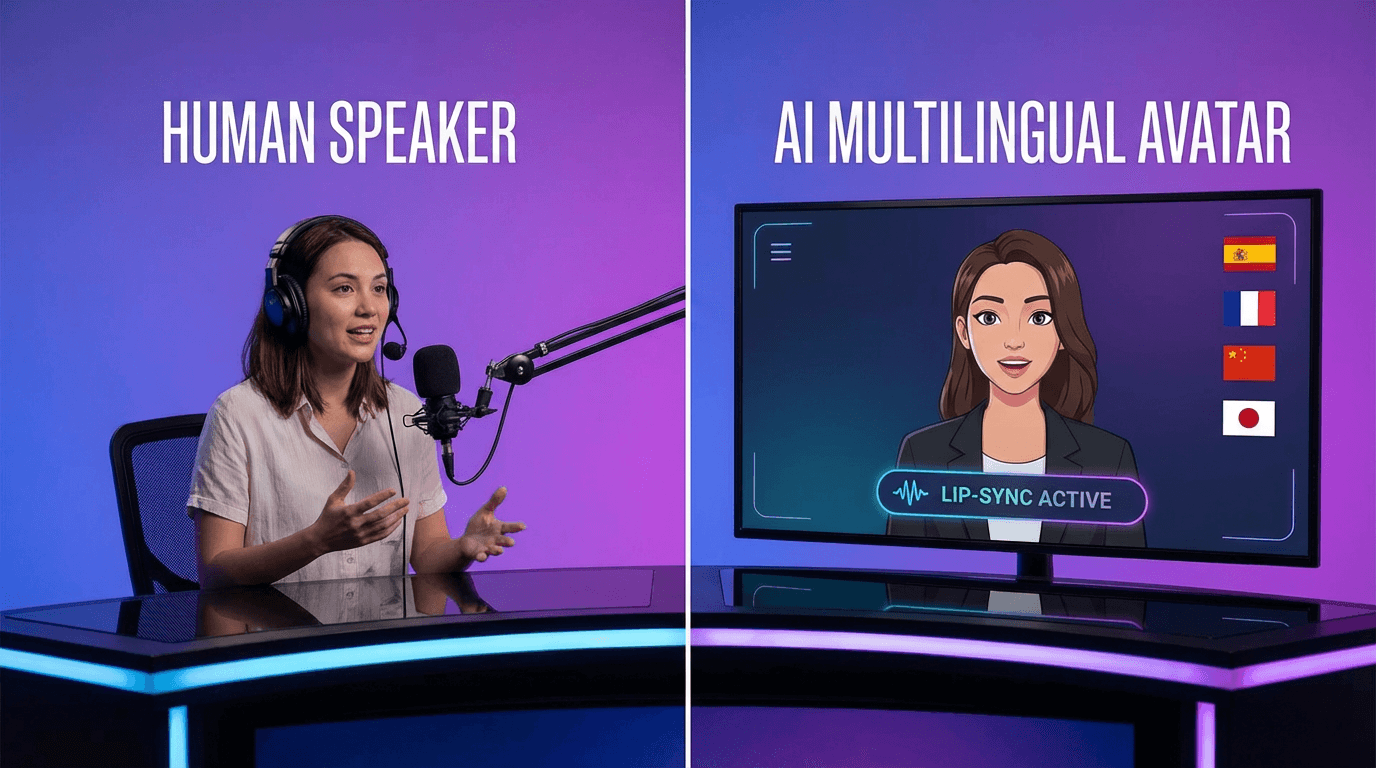
What separates modern AI video translators from basic subtitle generators is voice preservation. Advanced platforms analyze vocal characteristics including pitch, timbre, speaking rate, and emphasis patterns, then generate translated audio that sounds like the original speaker learned the target language. Keevx offers 234 diverse avatars and 169 voice options supporting regional language variations.
The most sophisticated platforms adjust facial movements to match translated speech patterns. HeyGen delivers industry-leading lip-sync across 175+ languages, analyzing phoneme patterns in both source and target languages to adjust mouth movements frame by frame.
Key Features to Compare in Video Translation Tools
Not all AI video translator platforms serve the same use cases. These feature categories help identify which tool matches your workflow.
Language Support and Processing Speed
Language counts vary significantly. HeyGen supports 175+ languages, while ElevenLabs focuses on 29 languages with exceptional voice quality. HappyScribe offers transcript translation in 120+ languages but lacks AI dubbing.
For e-commerce, dialect coverage matters more than raw numbers. Spanish speakers in Mexico differ from Spain; Mandarin and Cantonese require distinct handling. Platforms specializing in regional variations deliver better localized marketing results.
Most platforms complete 10-minute videos in 10-30 minutes. Keevx emphasizes minute-level production for batch generation, enabling simultaneous localization across multiple marketplaces. Traditional dubbing agencies require days or weeks for the same output.
Voice Quality and Subtitle Generation
Voice cloning quality determines whether translated content sounds natural or artificial. Leading platforms offer two approaches: clone your specific voice or select from pre-trained voice libraries. Custom cloning requires sample audio; the AI analyzes vocal characteristics to generate translations preserving your unique sound.
All modern platforms generate subtitles automatically, but customization options vary. Look for tools allowing font selection, positioning, styling, and timing adjustments. Subtitle accuracy depends on translation quality; tools with context-aware AI deliver better results than word-for-word translations.
Pricing Models
Pricing structures fall into three categories: per-minute charges, monthly subscriptions, or credit-based systems. Per-minute pricing works for occasional projects; subscriptions suit regular creators; credit systems provide flexibility for variable volumes.
Free tiers typically limit video length (1-10 minutes) or add watermarks. Canva's translator offers free translation for 30+ languages, while enterprise platforms require custom quotes for high-volume needs.
Best AI Video Translator Tools Compared
This comparison examines leading platforms across features, performance, and ideal use cases.
Keevx
Best for: Cross-border e-commerce and rapid multilingual production
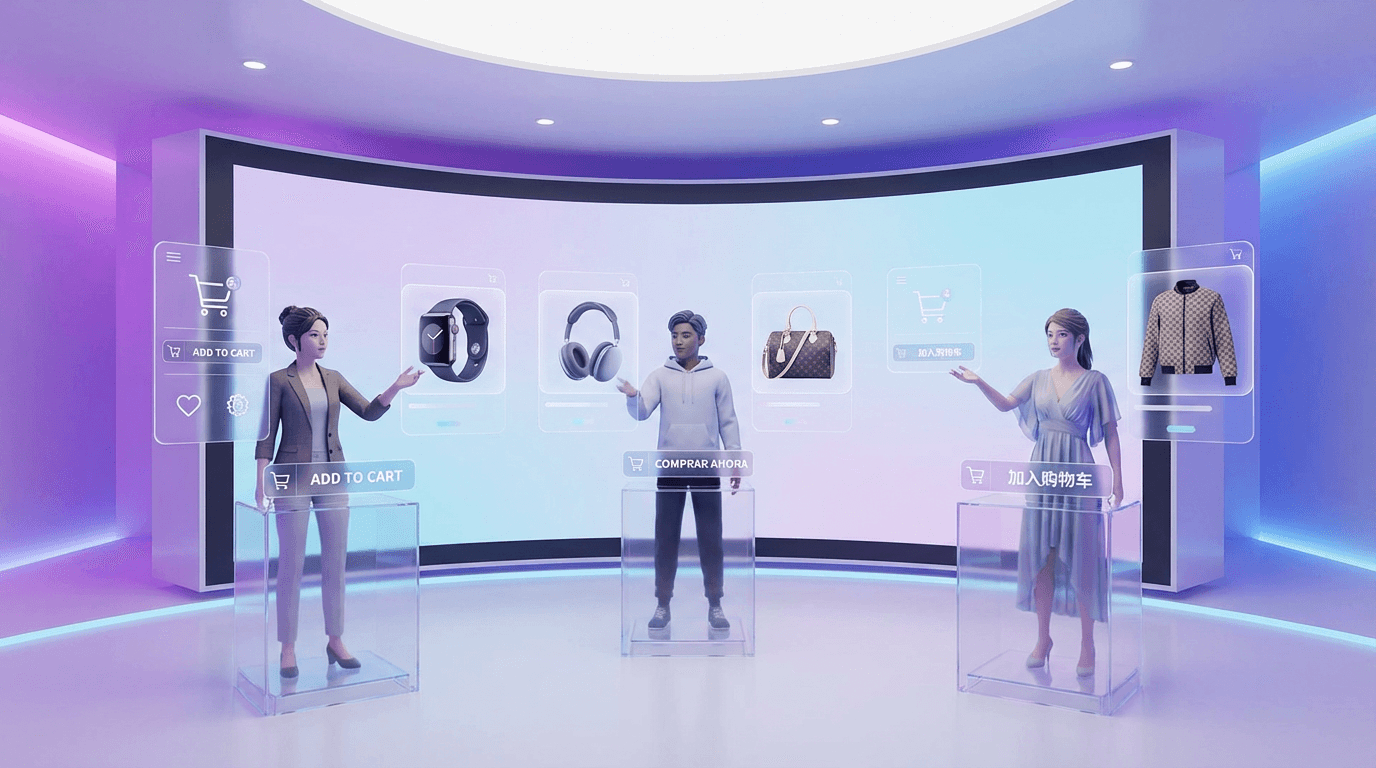
Keevx specializes in e-commerce video localization with video translation and dubbing in 70+ languages (178 dialects) with lip-sync. The platform automates the entire pipeline from script generation to final video.
Key differentiators include one-click URL to video conversion for Amazon, Shopify, eBay, and Etsy listings. Upload a product link; AI generates conversion-ready scripts, selects avatars, and produces localized videos in minutes. Batch generation serves sellers managing catalogs across multiple international marketplaces.
The platform provides 40+ industry-specific video templates, 234 digital avatars representing diverse demographics, and cross-platform optimization for YouTube, TikTok, and social commerce. Pricing emphasizes accessibility with low trial barriers and flexible plans scaled to business size.
Synthesia
Best for: Enterprise-grade quality and business workflows
Synthesia consistently delivers the highest-quality lip-sync and voice cloning. The platform supports 130+ languages with 240+ AI avatars optimized for corporate and educational content.
Businesses using Synthesia report 340% increases in Spanish viewership and 420% growth in Chinese audiences. The platform excels at enterprise workflows with team collaboration, brand kits, and approval systems. Pricing targets businesses with plans starting at professional tiers.
HeyGen
Best for: Maximum language coverage
HeyGen supports 175+ languages with full voice cloning and lip-sync capabilities. The platform offers 300+ AI voices and handles 40 languages for personalized presentations. Recent updates added instant avatars and API access for automated workflows. Pricing includes free trials with limited minutes, scaling to enterprise plans.
ElevenLabs
Best for: Premium voice quality
ElevenLabs creates the most emotionally rich AI voices available, translating content across 29 languages with exceptional vocal realism. The platform focuses exclusively on audio without lip-sync or subtitle features. Ideal for podcasts, audiobooks, and audio-focused content where visual synchronization isn't required.
Rask AI
Best for: YouTubers and content creators
Rask AI serves creators with affordable pricing and creator-focused features. Multi-speaker detection automatically identifies different voices, applying appropriate voice cloning to each. Free trials let creators test quality before committing, with accessible paid plans for solo creators and small teams.
HappyScribe
Best for: Text-based translation and subtitles
HappyScribe emphasizes transcript accuracy across 120+ languages without voice dubbing or lip-sync. The hybrid approach combines AI speed with optional human review for critical content. Best suited for creators needing subtitles rather than full dubbing. The platform offers the first 10 minutes free.
Use Cases for AI Video Translation
Different industries leverage video translation technology in distinct ways.
E-Commerce and Product Marketing
Cross-border sellers localize product demonstrations and promotional content. Amazon sellers expanding to Europe translate videos into German, French, Spanish, and Italian simultaneously, launching across marketplaces in timeframes previously required for a single market. Shopify merchants leverage translated videos across social commerce channels.
Content Creation and YouTube
Research from Feisworld shows creators who translate popular videos see 200-400% viewership increases. A successful English tutorial reaches Spanish, Portuguese, Hindi, and Mandarin speakers representing billions of potential viewers. The strategy works best for evergreen educational content with long shelf life.
Corporate Training and Education
Global organizations deliver standardized training content in every employee's native language. Educational institutions offer courses to Spanish, Portuguese, French, German, and Mandarin-speaking students with consistent quality. Employees absorb information more effectively in native languages, improving comprehension and reducing training time.
Advertising and Marketing
Marketing agencies produce localized ad variations for international campaigns. AI translation enables cost-effective testing: create one master video, translate into target languages, measure performance, then scale what works. App developers use translated promotional videos to improve App Store and Google Play conversion rates across regions.
Choosing the Right Platform for Your Needs
Selection criteria depend on content type, volume, and business model.
For E-Commerce Sellers
Prioritize platforms offering URL-to-video conversion, batch generation, and marketplace optimization. Processing speed matters more than 150+ languages. Look for template libraries suited to product videos and avatar diversity matching target demographics.
For Content Creators
Translation quality and natural voice determine audience retention. Test platforms with sample content during free trials. Subtitle customization matters: YouTube tolerates larger subtitles; TikTok requires minimal text overlay.
For Enterprise and Corporate
Focus on workflow integration, team collaboration, and brand consistency. Security features matter for regulated industries. API access enables integration with content management systems.
Budget Considerations
Free trials let you test translation quality before committing. Calculate cost per video rather than per minute. Factor setup time into total cost.
Common Challenges and Limitations
Technical terminology and proper nouns require custom glossaries for consistent translation. Cultural context presents challenges; idioms and humor rarely translate directly. Voice cloning quality depends on source audio clarity. Lip-sync quality varies by language pairing, with similar phonetic structures producing more convincing results.
Frequently Asked Questions
What is the most accurate AI video translator?
Leading platforms like Synthesia, HeyGen, and Keevx deliver 95-98% translation accuracy according to independent testing. Accuracy depends on source audio quality, language pairing, and content complexity.
How long does AI video translation take?
Most platforms process 10-minute videos in 10-30 minutes with standard settings. Precision lip-sync modes may require 1-2 hours. Keevx emphasizes minute-level production for batch processing.
Can AI video translators preserve my original voice?
Yes, modern voice cloning replicates tone, pacing, and emotional characteristics. Quality depends on source audio clarity; professional recordings produce the most convincing results.
What's the difference between AI dubbing and voice-over?
Dubbing replaces original dialogue with translated speech matching mouth movements and timing. Voice-over adds narration over original audio. AI video translators typically provide dubbing with lip-sync.
Do AI video translators work with multiple speakers?
Advanced platforms like Rask AI and HeyGen offer multi-speaker detection, identifying different voices and applying appropriate voice cloning to each speaker.
How much does AI video translation cost?
Free tiers offer 1-10 minutes with watermarks or limited features. Subscriptions range from $20-50/month for creators to $200+/month for enterprises. Per-minute pricing typically runs $2-10 depending on features.
What languages do AI video translators support?
Support ranges from 29 languages (ElevenLabs) to 175+ (HeyGen). Keevx supports 70+ languages covering 178 dialects. Dialect coverage often matters more than raw language counts for natural-sounding localization.
Conclusion
AI video translator technology has eliminated traditional barriers to global content distribution. What required weeks and thousands of dollars in dubbing now happens in minutes at a fraction of the cost, with accuracy approaching human-level translation.
E-commerce sellers benefit from Keevx's rapid production and marketplace integration. Enterprises prioritize Synthesia's quality. Content creators leverage Rask AI's affordable pricing. Organizations needing maximum coverage choose HeyGen's 175+ languages.
Start with clear requirements: identify priority languages, content volume, and quality standards. Test multiple platforms during free trials. Audience engagement provides the best validation of translation quality.
Ready to transform your content for global audiences?
