
Video Localization Strategy: Reaching 170+ Language Markets
Discover how to scale video content across 170+ language markets using AI-powered localization strategies that drive engagement, boost conversions, and maximize ROI.
TL;DR: Video localization adapts your content for global audiences across 170+ languages through subtitles, dubbing, and AI-powered lip-sync technology. With 56% of consumers valuing native language content over price, strategic localization drives engagement and revenue growth in international markets.
The global video localization market is projected to exceed $4 billion by 2026, growing at 7.2% annually. This growth reflects a fundamental shift in how businesses approach international expansion. Video localization goes beyond simple translation—it adapts your content linguistically, culturally, and contextually for specific regional audiences across 170+ language markets.
For cross-border e-commerce merchants, advertising agencies, and enterprise marketing teams, video localization has transformed from a cost center into a revenue driver. Research shows that 72% of consumers are more likely to purchase products with localized information, while 90% of EU internet users prefer browsing websites in their native language.
What Is Video Localization?
Video localization is the process of adapting audiovisual content to match the linguistic, cultural, and contextual preferences of target markets. Unlike basic video translation that only converts spoken words, localization encompasses subtitles, voiceovers, on-screen text adaptation, cultural reference modification, and visual element adjustments.
The distinction matters for business outcomes. Translation converts language. Localization creates cultural resonance—ensuring your message delivers the same emotional impact in Tokyo, São Paulo, and Berlin.
Video Localization vs Video Translation
Video translation focuses exclusively on converting spoken dialogue and text from one language to another. Video localization includes translation but extends to cultural adaptation, regional dialect selection, measurement unit conversion, date format adjustments, and visual element modifications for cultural appropriateness.
For example, a product demo video for Amazon sellers requires more than word-for-word translation. It needs culturally appropriate demonstrations, region-specific pricing displays, and adapted calls-to-action that resonate with local shopping behaviors.
Core Elements of Video Localization
Effective video localization combines multiple technical and creative components that work together to create authentic viewing experiences across language markets.
Subtitles and Closed Captions
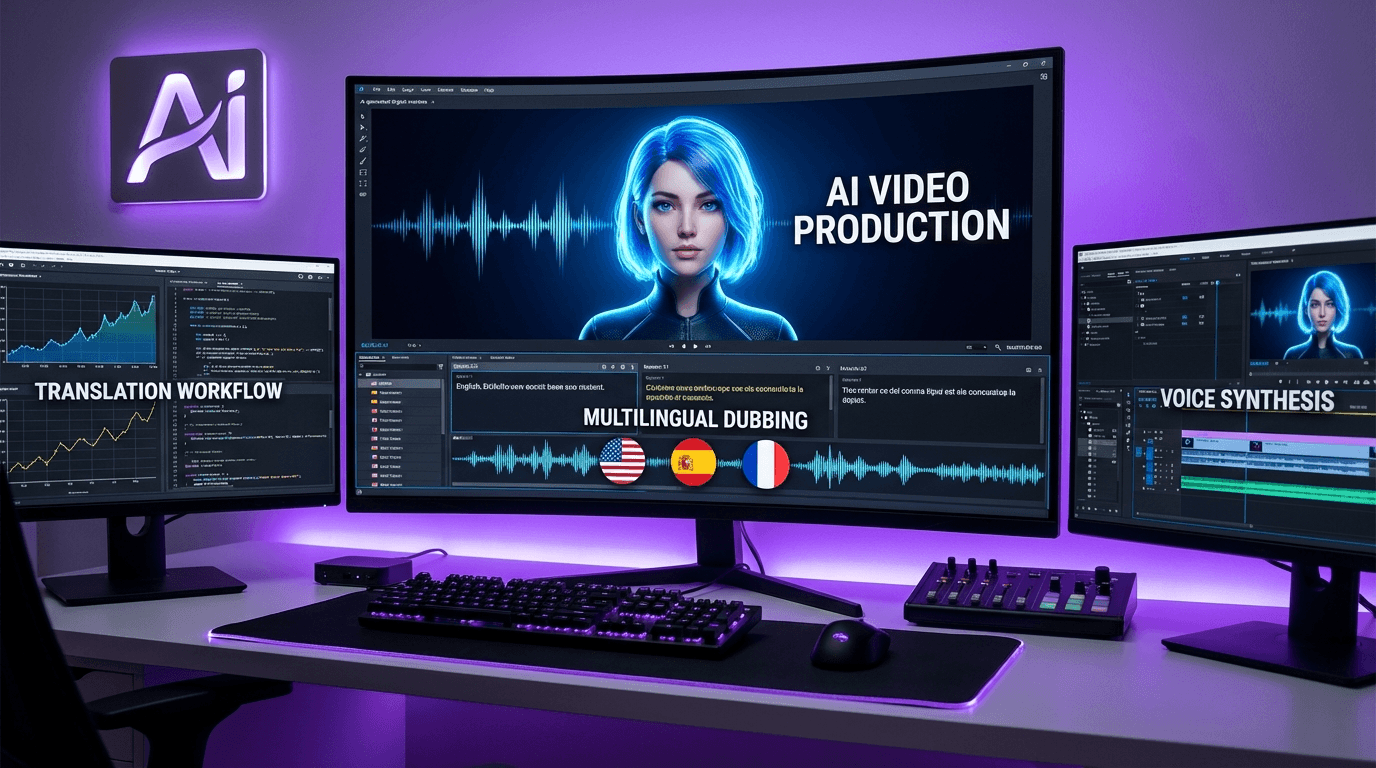
Subtitles translate spoken dialogue into on-screen text while maintaining audio synchronization. Subtitle localization requires attention to reading speed (160-180 words per minute) and text expansion. AI-powered video translation and dubbing tools automate subtitle generation while maintaining lip-sync accuracy across 70+ languages.
Dubbing and Voiceovers
Dubbing replaces original audio with recorded dialogue in the target language, matching tone and timing. Professional dubbing requires native voice talent who understand cultural nuances. AI voice cloning technology enables consistent brand voice across languages while reducing production time from weeks to minutes.
On-Screen Text and Graphics Adaptation
On-screen elements—titles, captions, product labels, and calls-to-action—require separate localization workflows. German translations run 30% longer than English, while Arabic and Hebrew require right-to-left layout adjustments. Design videos with modular text layers that can be swapped during localization.
Cultural Adaptation and Sensitivity
Cultural localization adapts humor, references, gestures, and color symbolism for regional appropriateness. Colors carry different meanings across cultures—white represents purity in Western markets but mourning in many Asian countries. Work with native cultural consultants to identify and address these nuances before launch.
Building Your 170+ Language Market Strategy
Reaching 170+ language markets requires strategic prioritization rather than attempting simultaneous global launches. Follow this framework to maximize ROI while minimizing complexity.
Market Prioritization and Audience Research
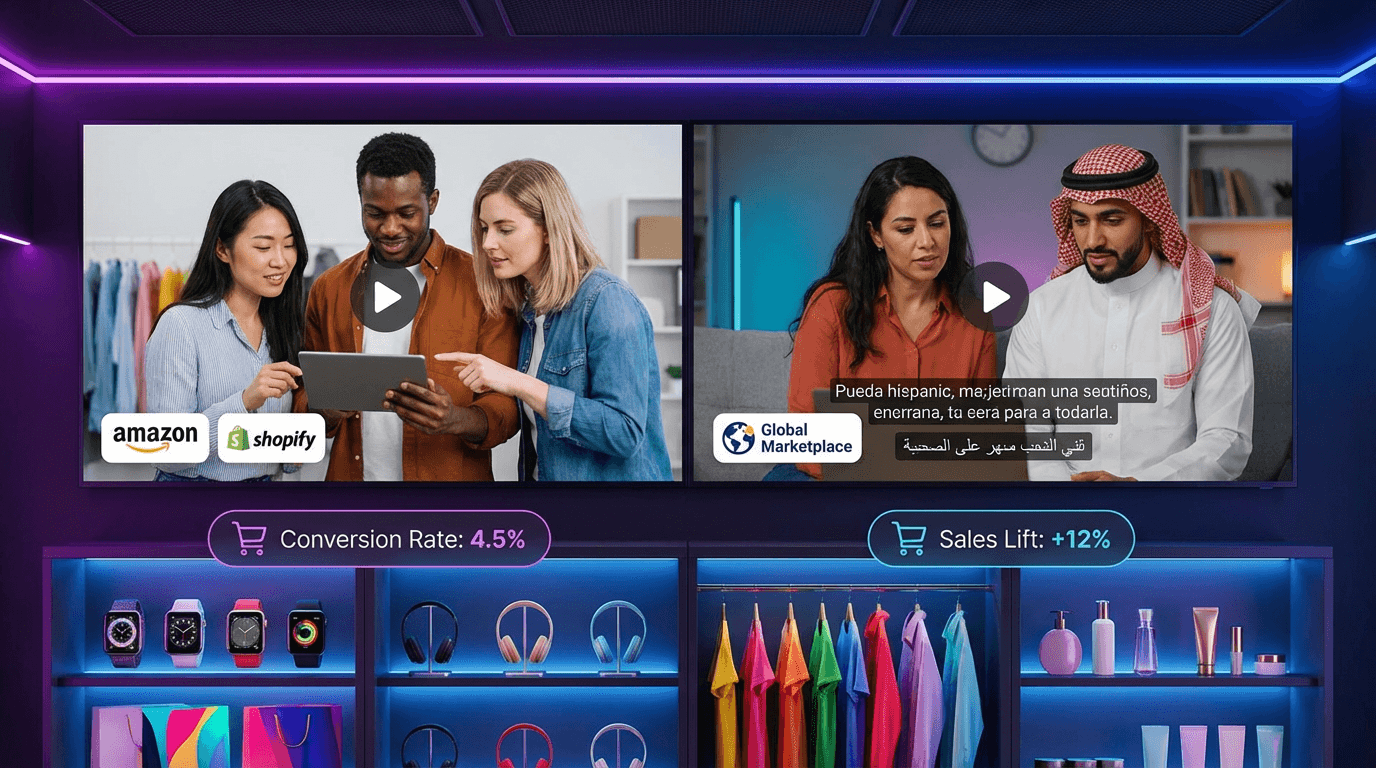
Start with data-driven market selection by analyzing existing customer base, website traffic by geography, and total addressable market size by language region. E-commerce businesses should prioritize markets with established logistics infrastructure. Amazon sellers should focus on Amazon's 20+ international marketplaces, while Shopify merchants target regions with high cross-border shopping adoption.
Selecting Target Languages and Dialects
The top 10 languages cover approximately 60% of global internet users: English, Mandarin Chinese, Spanish, Arabic, Portuguese, Japanese, Russian, German, French, and Hindi. Dialect selection impacts authenticity—matching regional dialects increases engagement by 40% compared to generic language versions. For initial market entry, focus on English, Spanish, and Mandarin Chinese for strongest ROI.
Content Selection and Localization Priorities
Prioritize content with evergreen value, high conversion impact like product demos, and training materials used repeatedly. Start with 3-5 hero videos that showcase your core value proposition. E-commerce merchants can begin by converting product images into localized video content for high-margin SKUs.
Choosing the Right Localization Method
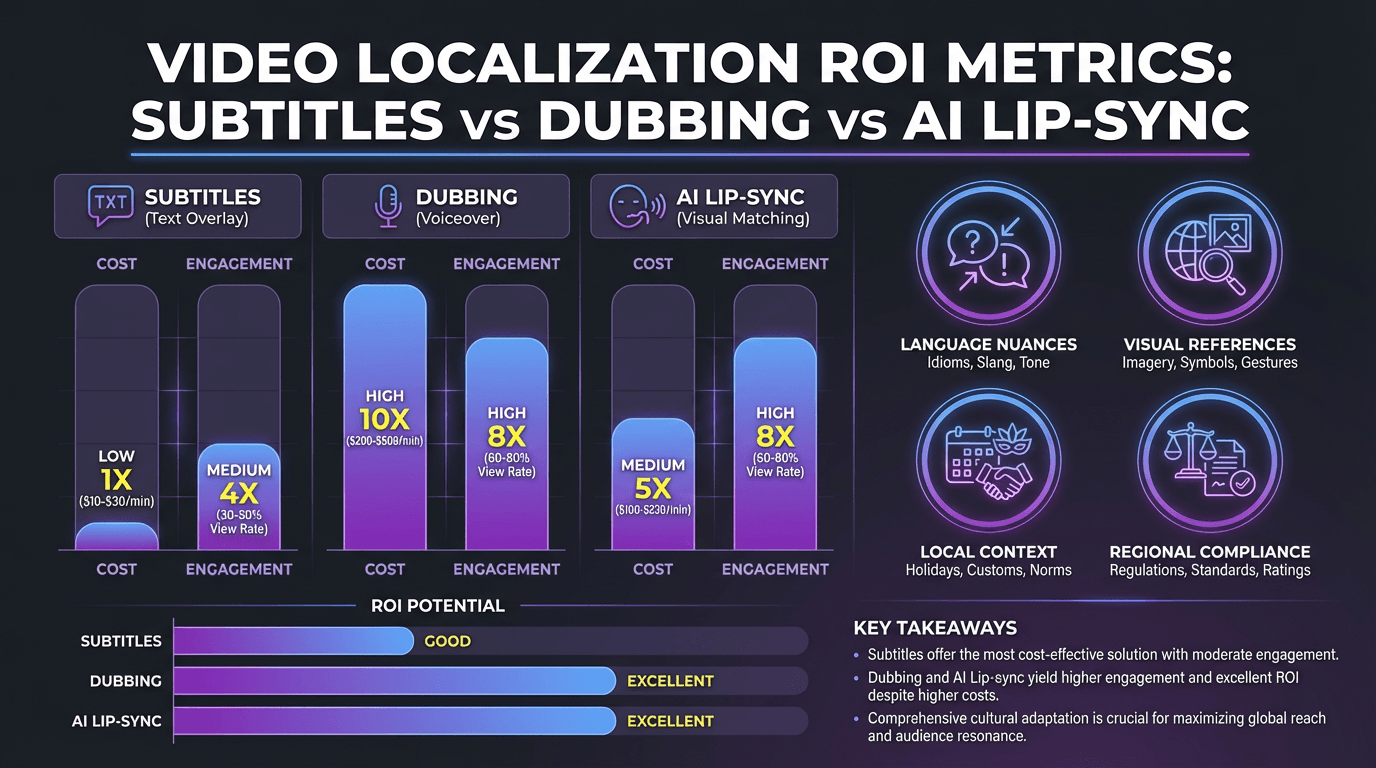
Three primary localization methods offer different trade-offs between cost, production time, and viewer immersion. Select based on content type, budget constraints, and audience preferences.
Subtitles: Cost-Effective Market Entry
Subtitles represent the most budget-friendly localization method, typically costing 60-80% less than dubbing. Production timelines run 3-5 days for professional services, or minutes with AI automation.
Best for: Tutorial content, social media videos, budget-conscious market testing, and content with strong visual storytelling.
Dubbing: Premium Immersive Experience
Dubbing delivers immersive viewing experiences by replacing original audio with native language recordings. Traditional dubbing requires 2-3 weeks and costs $100-$300 per finished minute.
Best for: Premium brand content, entertainment and storytelling, markets with strong dubbing preferences (Germany, Italy, Spain, France show 70%+ preference), and corporate presentations.
AI Lip-Sync: Speed and Scale
AI-powered lip-sync technology represents the frontier of video localization in 2026. These systems modify speaker mouth movements to match translated dialogue phonemes, creating authentic dubbed experiences at a fraction of traditional costs.
Platforms with digital avatars with voice cloning capabilities generate localized versions in minutes. Production costs drop to $10-$30 per finished minute while supporting 70+ languages with 178 dialect variations.
Best for: High-volume content production, rapid market testing, avatar-based explainer videos, e-commerce video ads, and scenarios demanding consistent brand voice across markets.
AI-Powered Localization Tools
The video localization landscape has shifted dramatically with AI automation. Tools that previously required specialized expertise and weeks of production time now deliver results in minutes.
Keevx: Minute-Level Multilingual Production
Keevx combines AI avatars, automated video production, and multilingual localization in a unified platform designed for non-technical users. The system automates the complete localization pipeline: content input (URLs, topics, or scripts), AI script generation optimized for conversion, avatar and voice selection from 234 diverse digital humans and 169 voice options, and automated video production with built-in translation and lip-sync across 70+ languages.
Best for: Cross-border e-commerce merchants needing rapid product video localization, advertising agencies managing multi-market campaigns, enterprise teams producing multilingual training content, and businesses requiring consistent brand presence across 170+ language markets.
Key advantages include one-click URL-to-video conversion for Amazon, eBay, Shopify, and Etsy products, batch generation capabilities for scaling across product catalogs, and cross-platform optimization for YouTube, TikTok, and social distribution.
Integration with E-Commerce Platforms
Leading localization platforms offer direct integrations with e-commerce systems, enabling automated workflows from product listing to localized video deployment across Amazon, Shopify, eBay, Etsy, Google Play, and Apple App Store.
Scaling Across E-Commerce Platforms
Cross-border e-commerce businesses face unique localization challenges: high SKU volumes requiring efficient batch processing, frequent product updates demanding agile localization workflows, platform-specific requirements across marketplaces, and competitive pricing pressure limiting per-video budgets.
Amazon Multi-Market Strategy
Amazon operates 20+ international marketplaces, each with distinct language and cultural requirements. Successful Amazon localization strategies prioritize high-margin products and best-sellers, leverage Enhanced Brand Content (EBC) and A+ pages with localized video, optimize for Amazon's algorithm preferences in each marketplace, and adapt product positioning for regional competitive landscapes.
Amazon's algorithm gives preference to listings with video content, and localized videos perform significantly better than English-only alternatives in international markets. Sellers using AI-powered video ads adapted for local languages report 40-60% higher conversion rates compared to untranslated content.
Shopify and App Store Optimization
Shopify's international features support multi-currency and multi-language stores. Create language-specific landing pages with embedded localized video and implement automatic geolocation redirects. Google Play and Apple App Store require localized video previews—create 15-30 second preview videos for each target market with localized on-screen text and voiceovers.
Measuring Localization ROI
Track key metrics to quantify returns: video completion rates by language version, click-through rates on localized calls-to-action, conversion rate changes post-localization, and revenue attribution by language market. Completion rate improvements of 30-50% are common when comparing properly localized content against English-only versions. AI-powered platforms reduce production time from 2-3 weeks to minutes, enabling businesses to test multiple markets simultaneously.
Frequently Asked Questions
What is the difference between video translation and video localization?
Video translation converts spoken words and text from one language to another. Video localization adapts the entire viewing experience—including dialogue, on-screen text, cultural references, visual elements, and contextual details—to resonate authentically with target regional audiences. Localization ensures your message maintains its intended emotional impact across different cultures.
How many languages should I localize my videos into?
Start with 3-5 high-priority languages based on your existing customer data, website traffic patterns, and strategic market expansion goals. The top languages by commercial value typically include English, Spanish, Mandarin Chinese, German, French, Japanese, and Portuguese. Test performance and ROI in initial markets before scaling to additional languages.
What is the average cost of video localization?
Costs vary by method: subtitles run $3-$10 per minute, professional dubbing costs $100-$300 per minute, and AI-powered localization averages $10-$30 per minute. Total costs depend on video length, number of target languages, and turnaround time.
How long does video localization take?
AI-powered platforms deliver localized videos in minutes, subtitle creation requires 3-5 business days, and professional dubbing takes 2-3 weeks. Minute-level production with AI tools has become the standard for rapid multi-market deployment.
Should I use subtitles or dubbing for my videos?
Use subtitles for budget-friendly testing, tutorials, and social media. Choose dubbing for premium brand content and markets with strong dubbing preferences (Germany, Italy, Spain, France). AI lip-sync technology offers a cost-effective middle ground combining dubbing's immersion with subtitle-level production speed.
How do I ensure cultural appropriateness in localized videos?
Work with native speakers during script adaptation. Avoid literal translations of idioms and humor. Research color symbolism and gesture meanings. Test localized content with small audience segments before full launch.
Conclusion
Video localization unlocks revenue growth across 170+ language markets by creating authentic connections with international audiences. The strategy combines careful market prioritization, appropriate localization method selection, and AI-powered tools that deliver professional results at scale.
Start with high-value content targeted at 3-5 priority languages. Use data-driven metrics to measure engagement, conversion, and ROI across markets. Scale successfully with platforms that automate production workflows while maintaining cultural authenticity.
The businesses winning in cross-border markets treat localization as a competitive advantage rather than a cost center. With AI-powered platforms delivering minute-level production timelines and 70+ language support with lip-sync capabilities, the barriers to global video presence have never been lower.
